
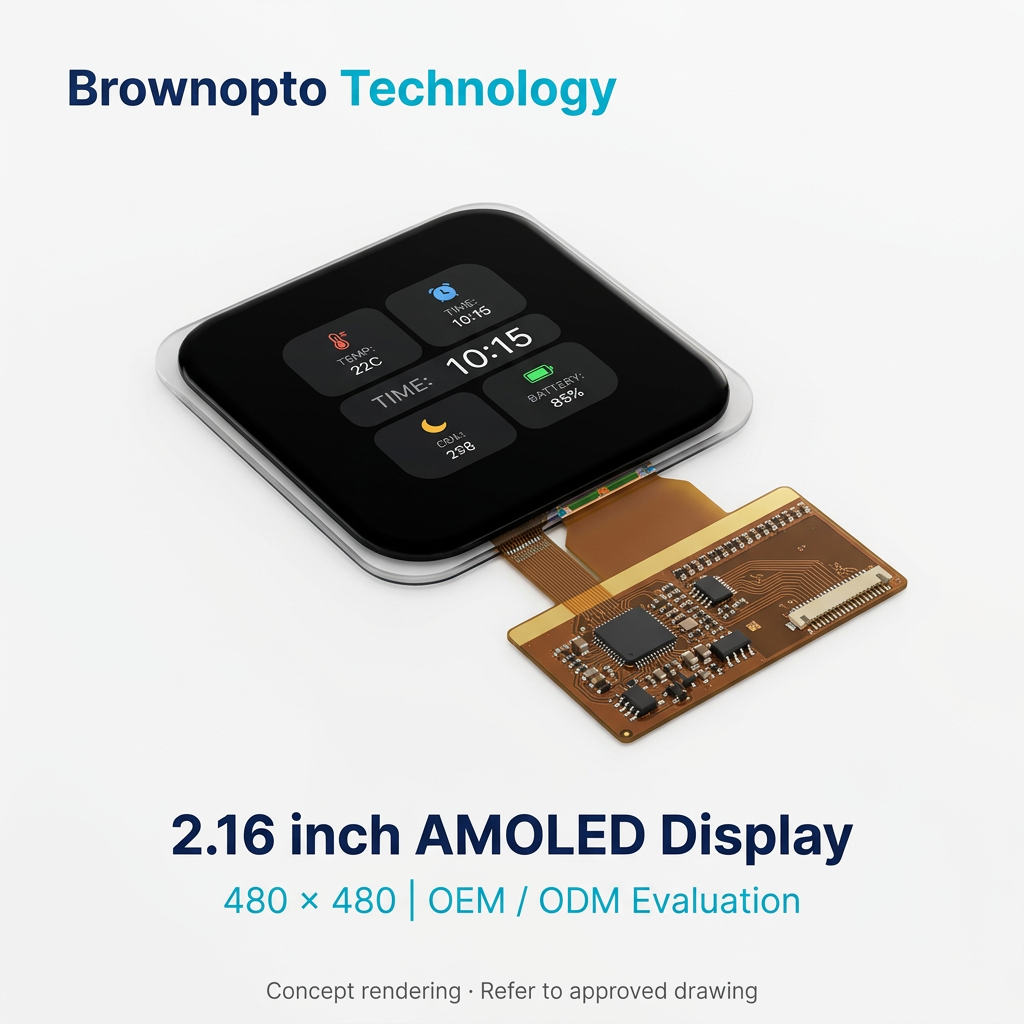

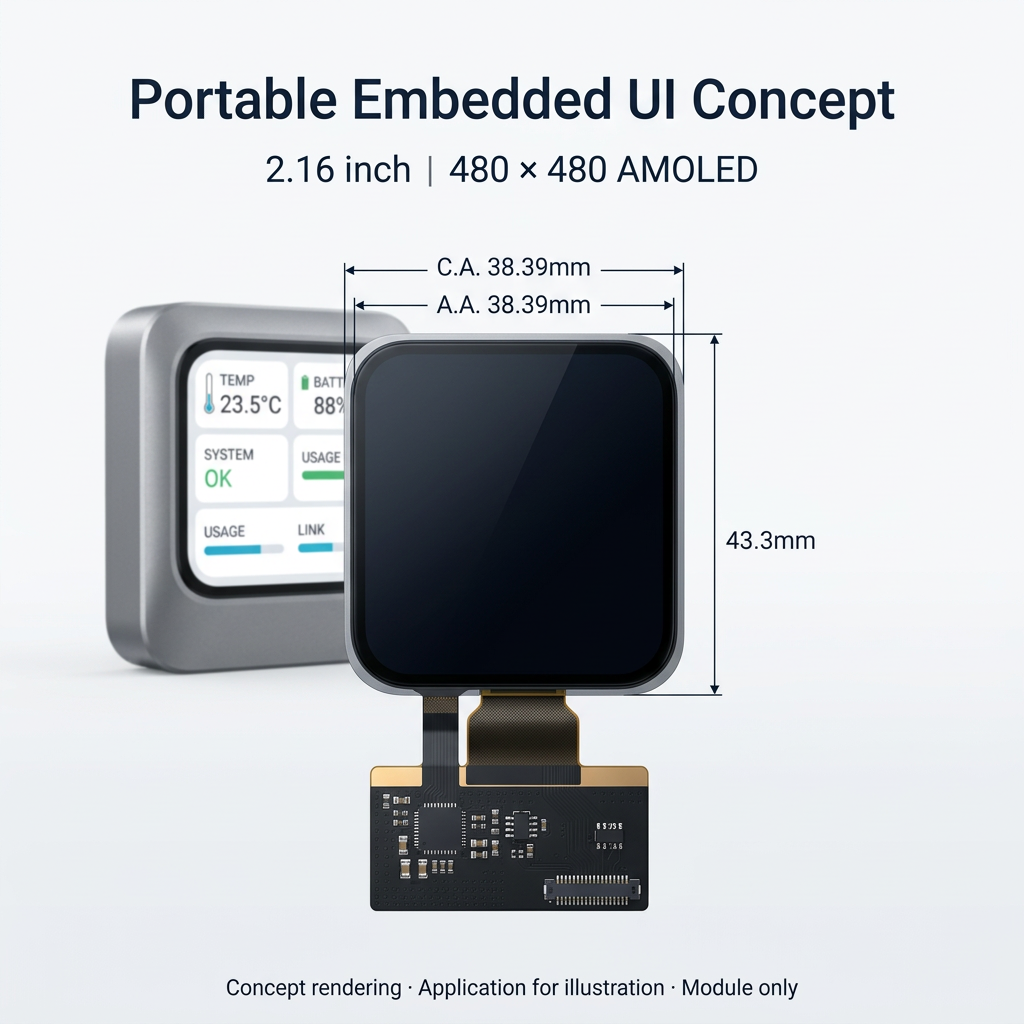
2.16 Inch AMOLED Display Module 480×480 for Smart Control, Wearable UI, and Compact Display Devices
This 2.16 inch AMOLED display module is a compact high-resolution display solution for smart control panels, wearable-related products, compact embedded terminals, and premium small-screen electronics requiring a 480 × 480 square AMOLED screen with touch capability.
With QSPI / MIPI interface positioning, CO5300 driver IC, CST9220 touch IC, 700 cd/m² brightness, 50000:1 contrast ratio, and 314 PPI, this module is highly relevant for buyers searching terms such as 2.16 inch AMOLED display, 480x480 AMOLED module, QSPI AMOLED display, MIPI AMOLED module, CO5300 AMOLED screen, and CST9220 touch display.
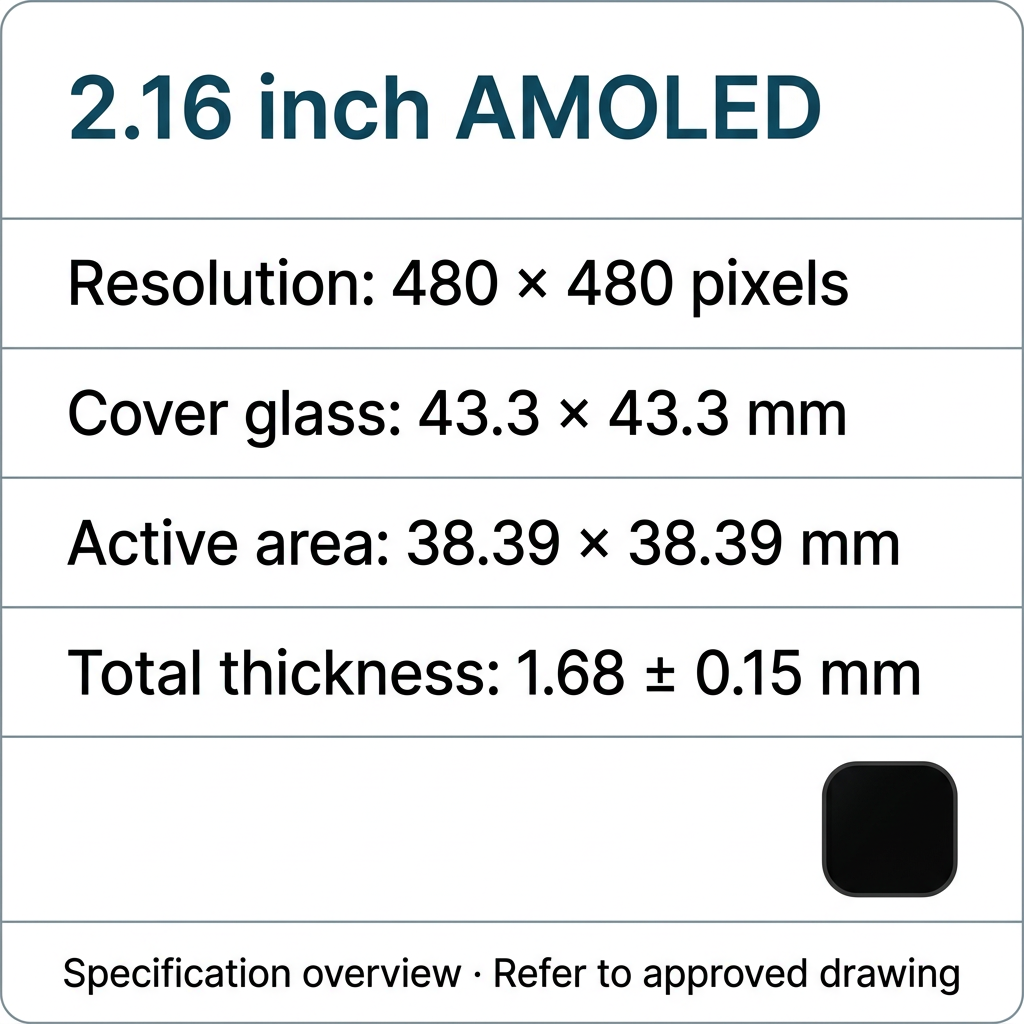
Quick Spec Summary
Application Scenario

2.16 Inch AMOLED Display in Smart Device and Embedded UI Applications
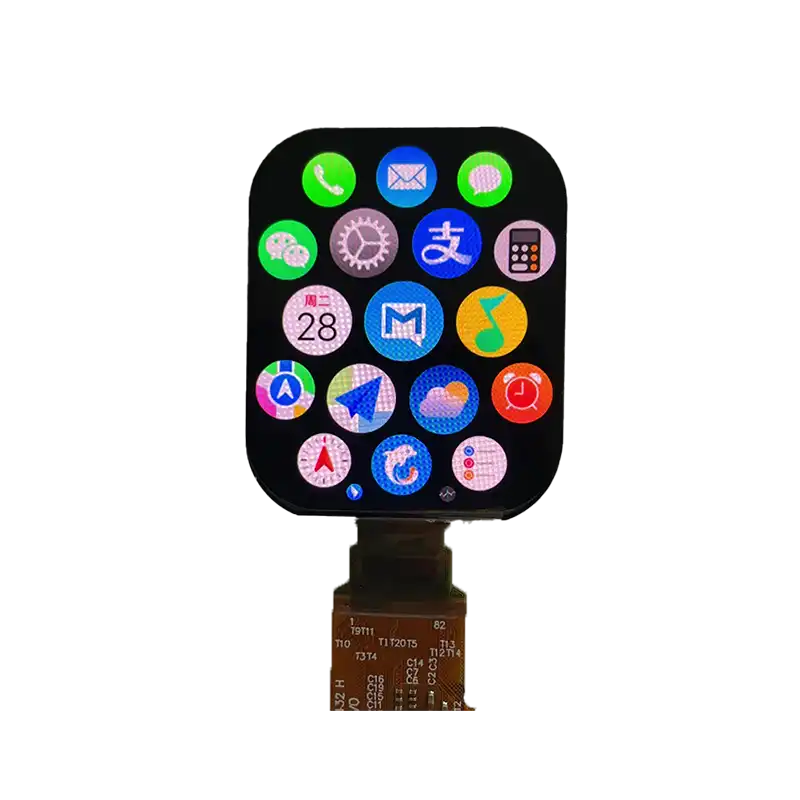
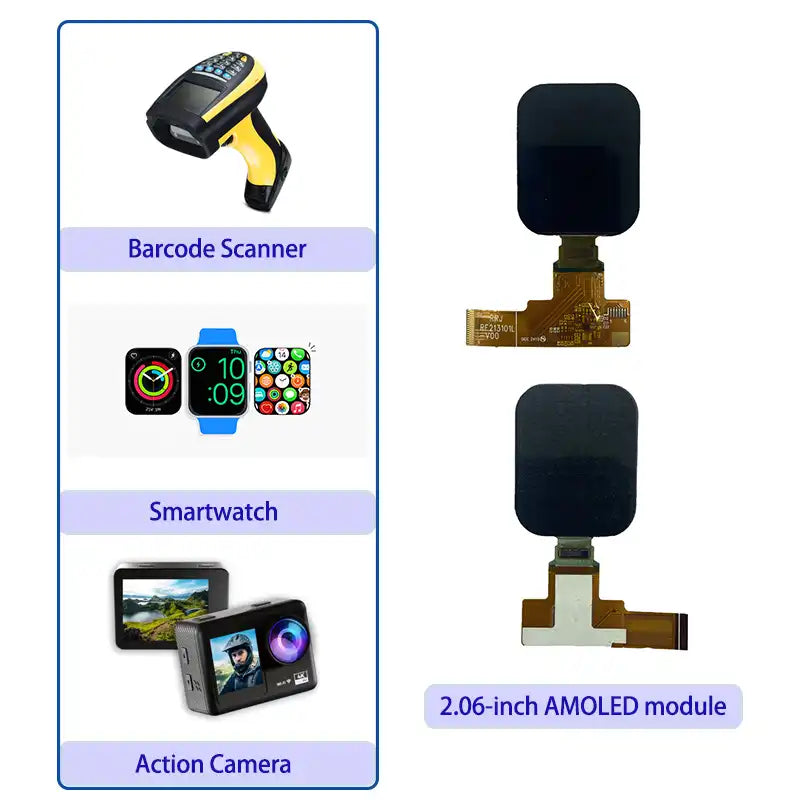
Reserved area for inserting square AMOLED product application images, helping explain use cases visually and improving image-related SEO relevance.
High-Resolution Small AMOLED Module
With 480RGB × 480 resolution on a 2.16 inch display, this module supports premium icon rendering, compact data dashboards, refined graphics, and modern embedded UI presentation.
Flexible Interface Options
The module is specified with QSPI / MIPI interface positioning, which makes it easier to evaluate across different display control solutions and processor platforms.
Integrated Touch-Oriented Architecture
With CST9220 touch IC, defined touch pins, and compact structure, the module is suitable for projects requiring a small AMOLED display with touch integration.
Technical Specifications
| Product Name | 2.16 Inch AMOLED Display Module |
|---|---|
| Model | BR0216F002AMT004-1 V1 |
| Display Type | LTPS-AMOLED |
| Display Mode | Transmissive OLED |
| Display Size | 2.16 inch |
| Resolution | 480RGB × 480 |
| Display Shape | Square / Rounded-Corner Square |
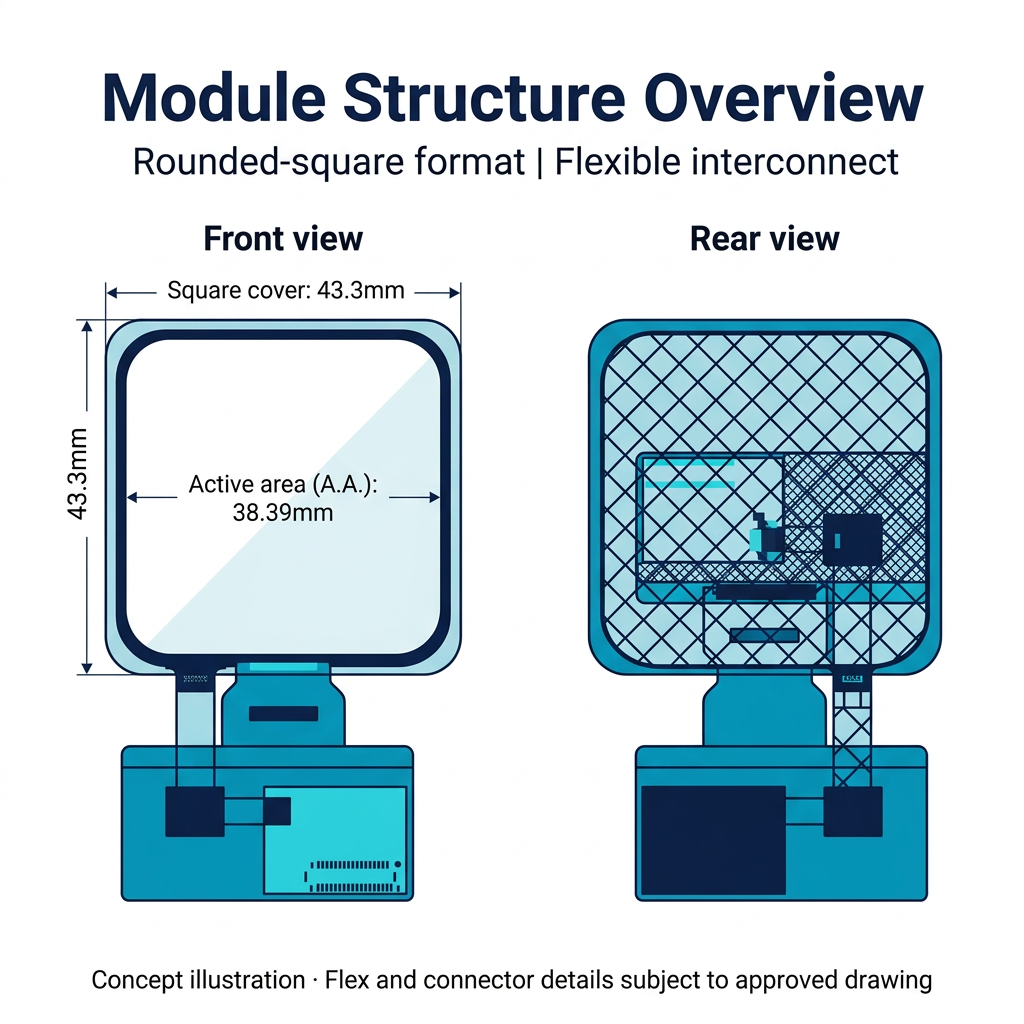
| Active Area | 38.39(H) × 38.39(V) mm |
| Module Outline | 40.29(H) × 41.09(V) × 0.8(T) mm |
| TP Viewing Area | 38.99(H) × 38.99(V) mm |
| TP Outline | 43.3(H) × 43.3(V) × 0.7(T) mm |
| Display Colors | 16.7M |
| Interface | QSPI / MIPI |
| Driver IC | CO5300 |
| Touch IC | CST9220 |
| Brightness | 700 cd/m² typ |
| Contrast Ratio | 50000:1 |
| Color Gamut | 108% |
| PPI | 314 |
| Viewing Direction | All / Best Image |
| Viewing Angle | 80° min |
| Response Time | 2 ms typ, 4 ms max |
| Operating Temperature | -20°C to 70°C |
| Storage Temperature | -30°C to 80°C |
| Frame Frequency | 60 Hz typ |
| Power Supply | VDD 4.5~6.5V, VCI 2.7~3.6V, IOVDD 1.65~3.3V |
Note: The datasheet shows different temperature limits between the module parameter page and the absolute maximum ratings page. For front-end product-page use, the module parameter values are used here. Final engineering confirmation should refer to the latest approved specification.
Interface and Integration Notes
Main Interface Definition
The interface definition lists touch and display-related signals including TP_INT, TP_RST, TP_SDA, TP_SCL, IOVCC, VCI, VBAT, RESET, CSX, SDI RDX, DCX, WRX SCL, and TE.
MIPI Differential Lines
For MIPI-oriented design evaluation, the module includes D1P, D1N, CLKP, CLKN, D0P, and D0N, which helps hardware teams evaluate signal-level compatibility.
Touch Architecture
The module uses CST9220 as the touch IC. For projects needing a 2.16 inch AMOLED touch display, this makes the model more commercially attractive for compact UI products and smart device development.
Best-Fit Applications
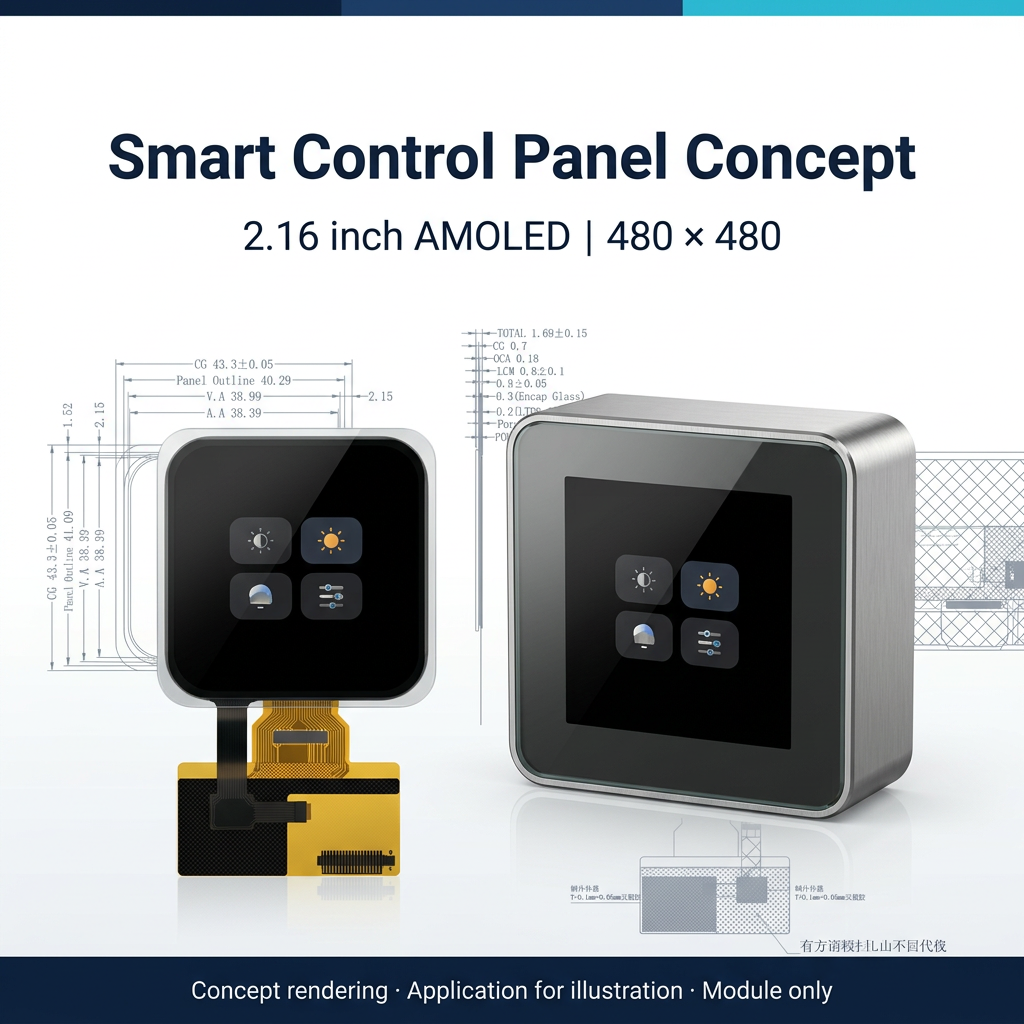
Smart Control Panels
Suitable for compact intelligent control interfaces where a high-resolution square AMOLED display helps create a premium UI experience.
Portable Embedded Devices
Useful for handheld terminals, compact instruments, portable electronics, and small smart devices needing vivid AMOLED output and touch support.
Premium Consumer Electronics
Can be used in compact display products requiring 480x480 AMOLED resolution, high contrast, strong color, and refined visual quality.
Why This 2.16 Inch AMOLED Module Has Strong Search Value
Frequently Asked Questions
1. What is a 2.16 inch AMOLED display used for?
A 2.16 inch AMOLED display module is commonly used for smart control panels, portable embedded products, compact premium electronics, and other devices needing a high-resolution small display with touch capability.
2. What resolution does this 2.16 inch AMOLED module support?
This module supports 480RGB × 480 resolution, making it suitable for refined graphics, small control interfaces, and detailed on-screen content.
3. Does this 2.16 inch AMOLED display support touch?
Yes. The datasheet lists CST9220 as the touch IC and includes touch-related pins such as TP_INT, TP_RST, TP_SDA, and TP_SCL.
4. Which interface does this AMOLED display use?
The module is specified with QSPI / MIPI interface positioning, making it adaptable for different system architectures and sourcing requirements.
5. Which driver IC and touch IC are used in this module?
The display driver IC is CO5300, and the touch IC is CST9220.
6. What brightness and contrast does this 2.16 inch AMOLED screen offer?
The module lists 700 cd/m² typical brightness and 50000:1 contrast ratio, which are useful for premium small-screen UI presentation.
7. What should engineers confirm before final selection?
Engineers should confirm the final interface mode, initialization code, touch integration method, processor compatibility, and the latest approved operating/storage specification before mass-production use.
SEO / GEO Content Block
If you are looking for a 2.16 inch AMOLED display, a 480x480 AMOLED module, a small AMOLED touch display, or a QSPI / MIPI AMOLED display module, this model offers a strong combination of compact size, high pixel density, touch capability, and interface flexibility.
This module is especially relevant for buyers and engineers comparing small AMOLED solutions for smart terminals, compact control products, portable electronics, and embedded user interfaces. With CO5300 driver IC and CST9220 touch IC, it also matches search behavior around control compatibility and touch-enabled AMOLED integration.
From an answer-engine perspective, this page is written to address practical sourcing questions such as what the module is used for, what resolution it supports, whether it includes touch, what interface it uses, and how it fits smart control or compact-display product development.
You may also like
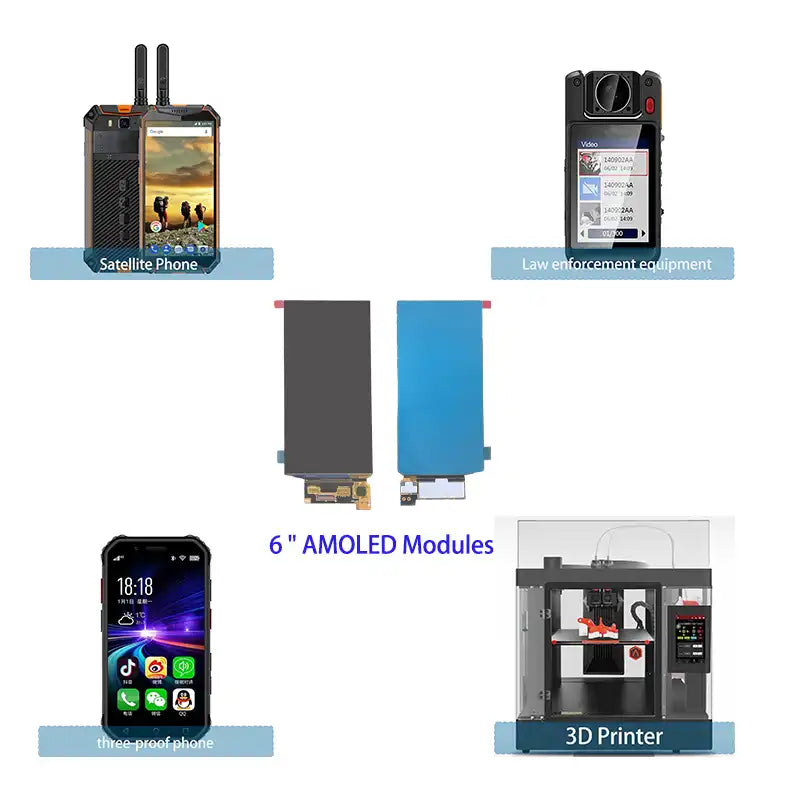
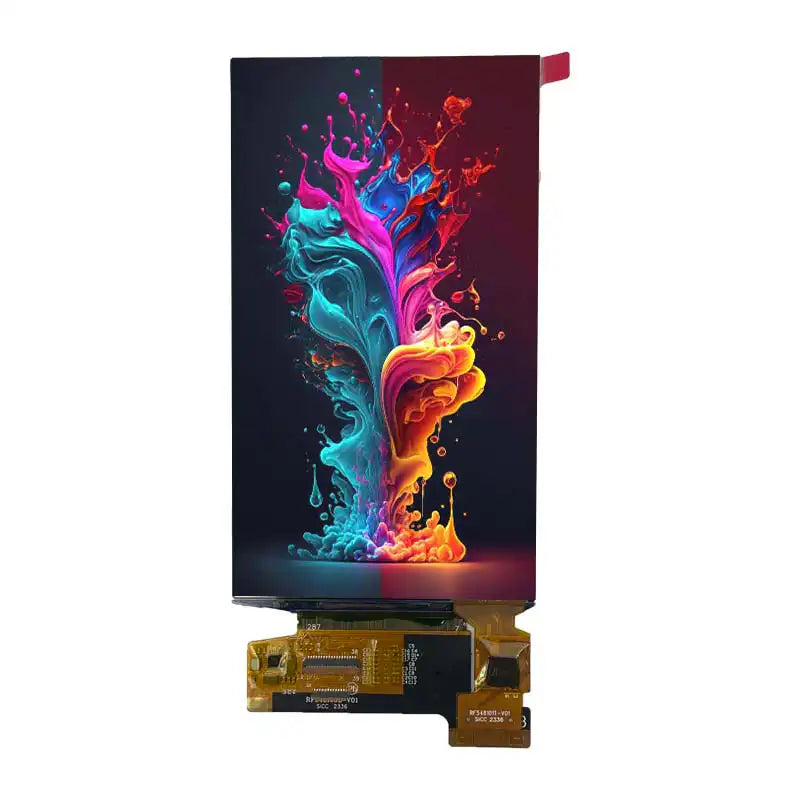
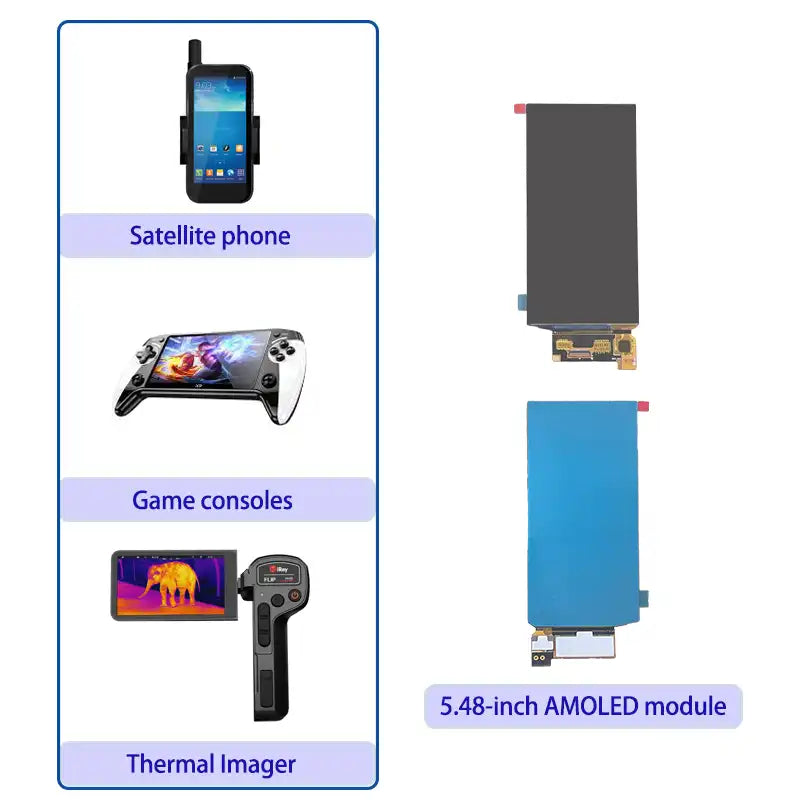
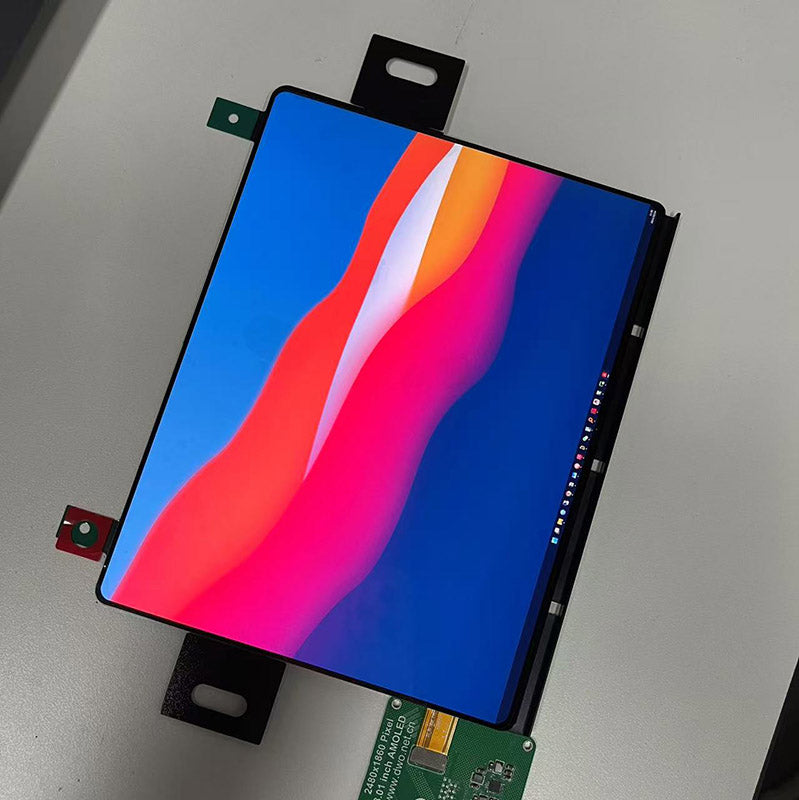
Featured collection

OLED Custom Solutions
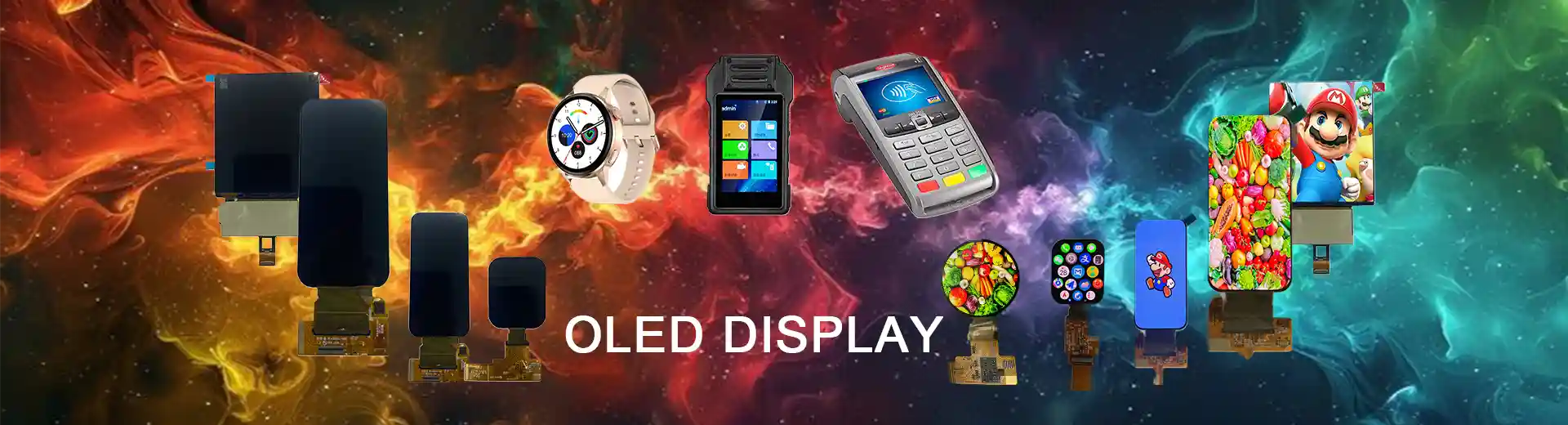
Our company offers custom-made OLED solutions, tailored to your unique display needs, ensuring high-quality, precision, and satisfaction.
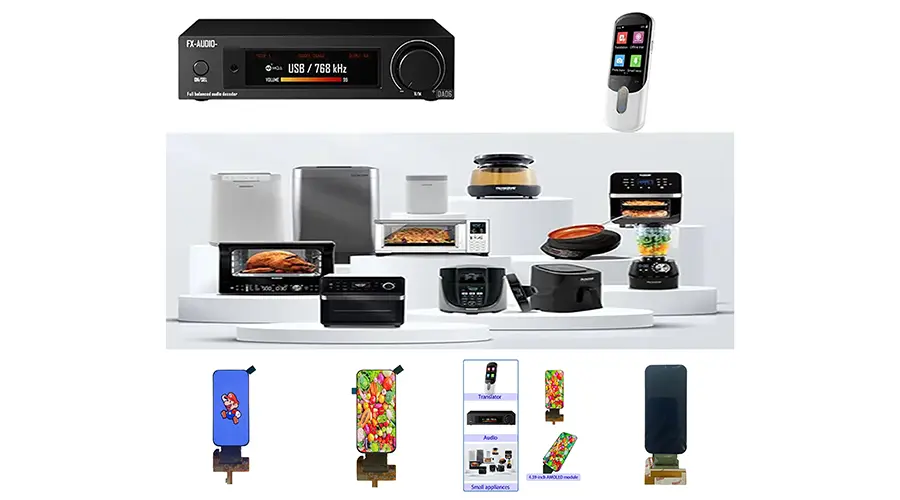
Size & Shape Customization
Tailor AMOLED dimensions and shapes (round, irregular, flexible/foldable) for wearables, phones, or industrial devices. Adjust form factors to match product design needs.
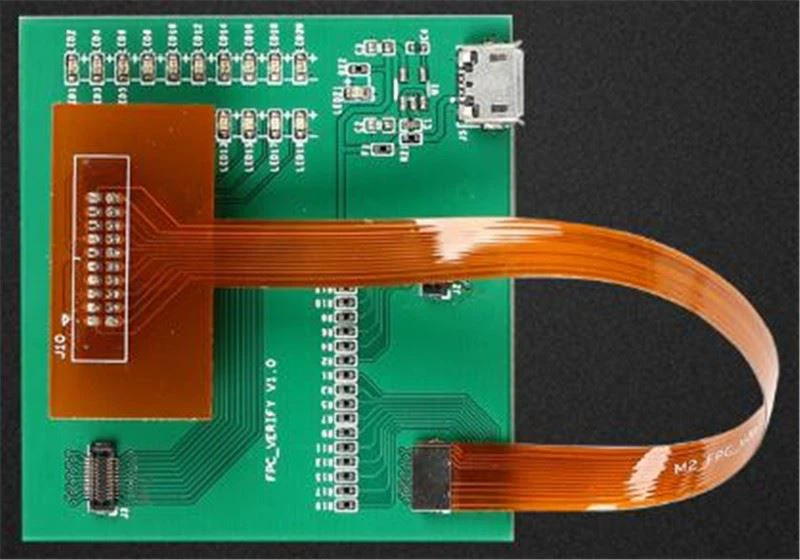
Resolution & Pixel Optimization
Offer HD to 4K+ resolutions and pixel densities for clarity. Enhance color accuracy and contrast for premium smartphones, tablets, VR/AR, and high-end displays.
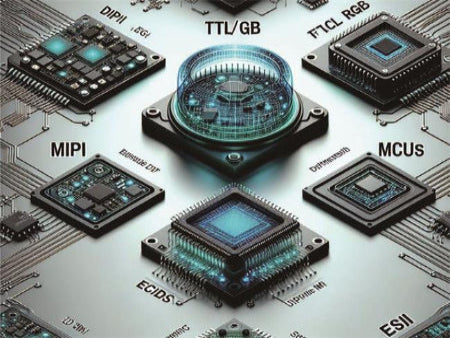
Interface & Driver Integration
Configure MIPI DSI/LVDS interfaces and driver ICs for seamless hardware compatibility. Add capacitive touch support for mobile, automotive, or industrial systems.
Optical & Durability Enhancements
Add anti-glare coatings, higher brightness, and IP-rated protection. Optimize for extreme temperatures, ensuring durability in outdoor, military, or harsh environments.
FAQ
Questions about OLED Displays
1. What factors affect the cost of a custom OLED?
- Size & complexity: Larger or flexible designs increase costs.
- Resolution/pixel density: Higher specs (e.g., 4K) require advanced manufacturing.
- Material quality: High-end materials (e.g., anti-glare coatings) add to pricing.
- Minimum order quantity (MOQ): Smaller batches may incur higher per-unit costs.
2. How long does it take to produce a custom OLED?
- Lead time: Typically 4–8 weeks after design approval, depending on complexity.
- Prototyping: Sample production takes 2–3 weeks for verification.
- Mass production: Delays may occur for high-volume orders or specialized components.
3. Can I request a flexible or foldable OLED?
- Yes, but with limitations:
- Flexibility: Curved designs require specialized substrates (e.g., polyimide).
- Durability: Foldable OLEDs need reinforced layers to prevent cracking.
- Cost: Flexible/foldable options are 20–50% more expensive than rigid panels.
4.How is the reliability of custom OLEDs tested?
- Key tests:
- Lifetime testing: Accelerated aging (e.g., 85°C/85% RH for 1,000 hours).
- Mechanical stress: Flexibility/folding endurance (100,000+ cycles for foldables).
- Environmental resistance: UV exposure, humidity, and thermal shock testing.
- Performance metrics:
- Luminance retention: >90% brightness after 10,000 hours.
- Color stability: Delta E < 3 for consistent color accuracy.
- Supplier accountability: Reputable manufacturers provide test reports and warranties (e.g., 2–5 years).
5.What industries benefit most from custom OLEDs?
- Consumer electronics: Smartphones, wearables, tablets.
- Industrial/medical: Control panels, diagnostic displays.
- Automotive: Dashboard screens, infotainment systems.
- Retail/entertainment: Digital signage, AR/VR headsets.