
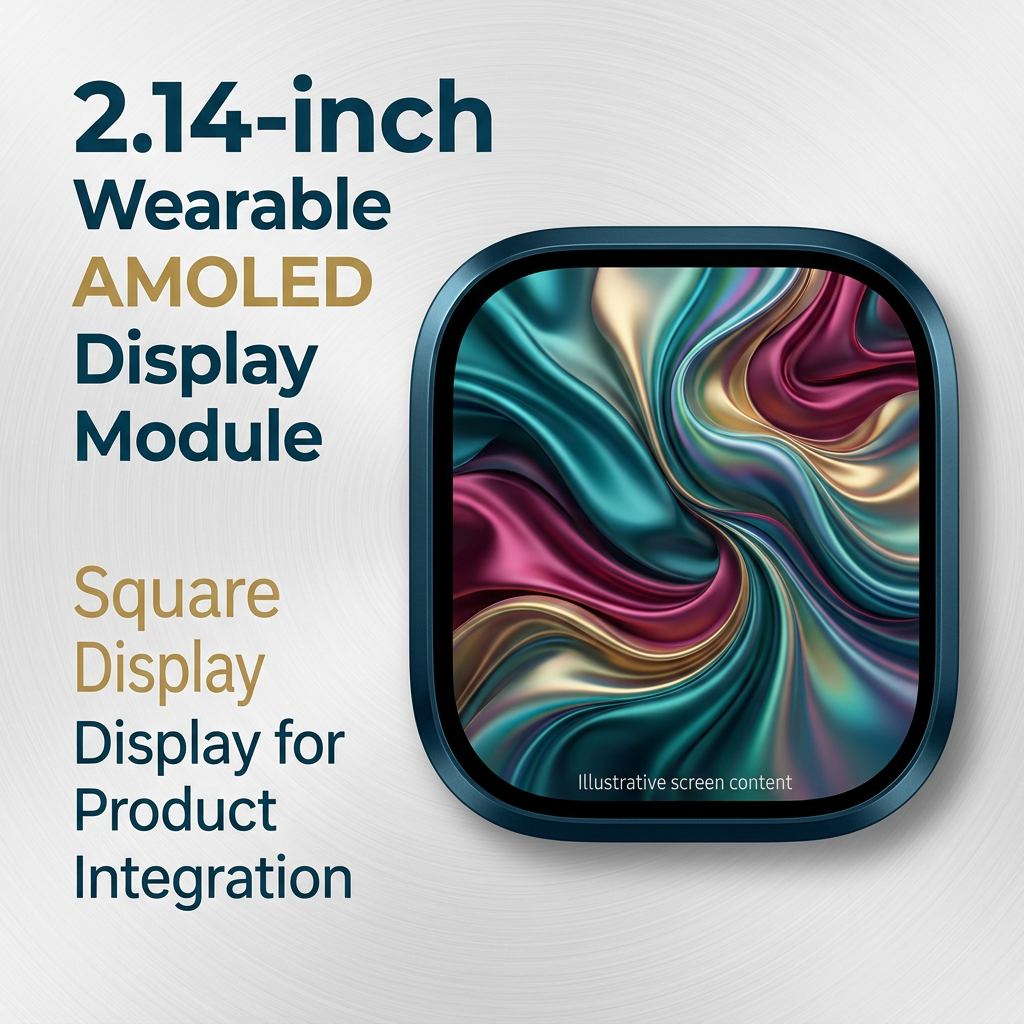
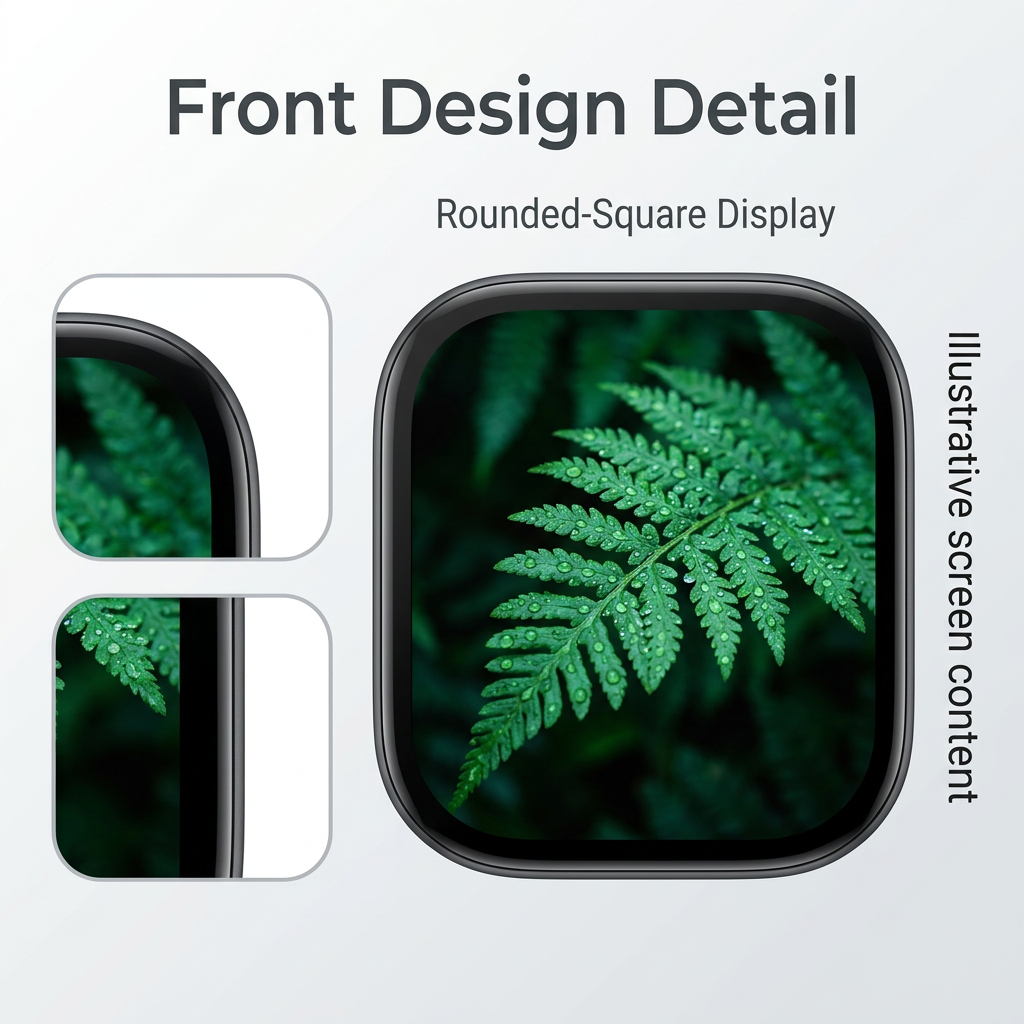
2.14 Inch Wearable AMOLED Display Module 480×480
Quick Product Summary
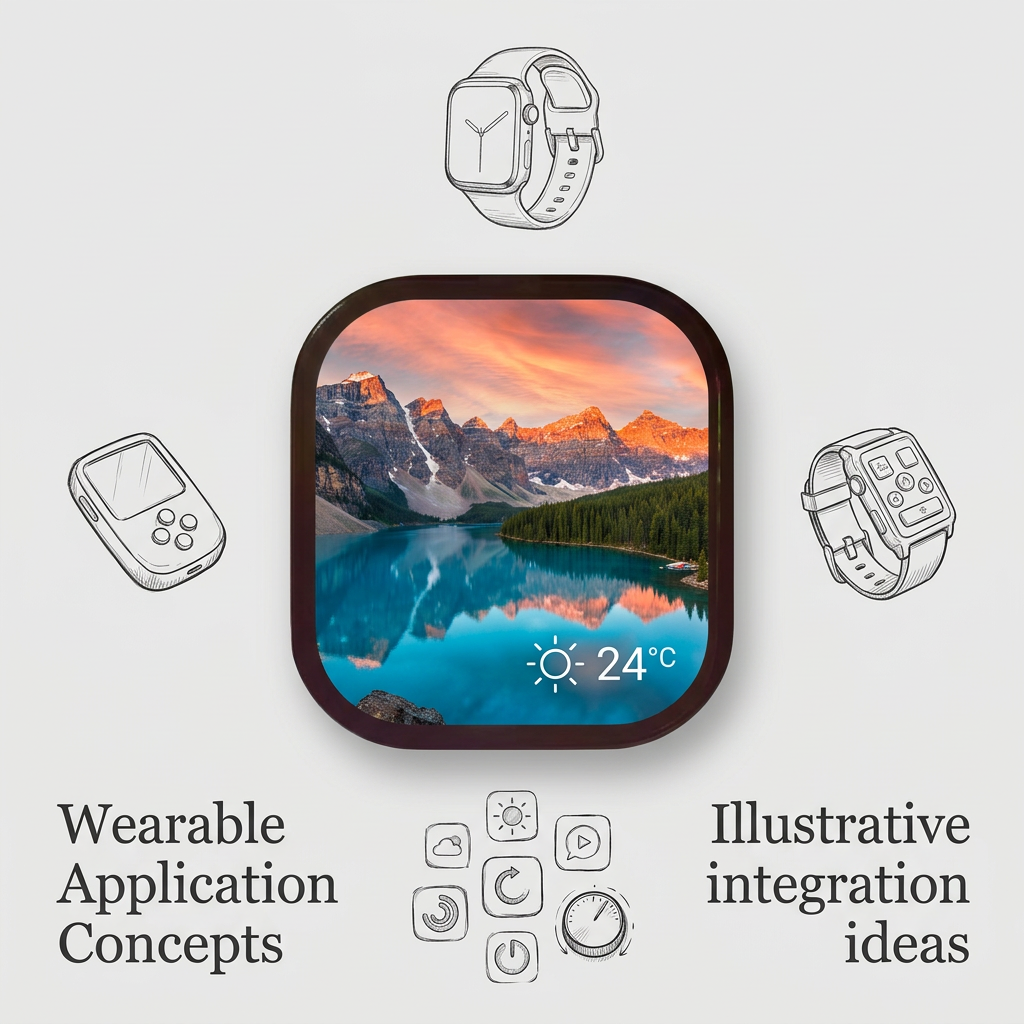
The 2.14 Inch AMOLED Display Module from Brownopto belongs to our Wearable Series and is designed for smartwatch and advanced wearable applications requiring a high-resolution square AMOLED display, touch integration, and MIPI DSI interface support. It combines a 480 × 480 resolution, compact rounded-square structure, and premium AMOLED visual performance for next-generation wearable product development.
- Series: Wearable Series
- Product type: 2.14 inch AMOLED display module for smartwatch and wearable device applications
- Core specifications: 480 × 480 resolution, AMOLED panel, MIPI DSI interface, CO5300 driver IC, CST9220 touch IC
- Display structure: rounded-square AMOLED module with lens and touch integration
- Brightness reference: 800 nits typical brightness, 850 nits maximum brightness, and 1000 nits typical in boost mode
- Best for: smartwatches, wearable electronics, premium touch-enabled devices, and compact AMOLED UI products
- Main advantage: 2.14 inch wearable AMOLED display with 480 × 480 resolution, square visual layout, and touch support
- Recommended use: smartwatch development, wearable HMI design, OEM / ODM integration, and premium display evaluation projects
- Selection note: suitable for customers requiring a square AMOLED wearable module with touch function and higher pixel density
Product Overview
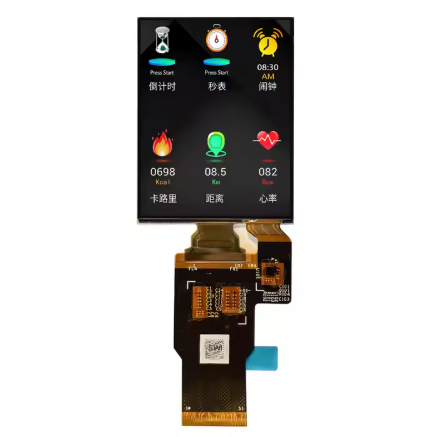
The 2.14 inch AMOLED display module from Brownopto is part of the Wearable Series and is built for smart wearable devices requiring a sharp square display format, touch function, and MIPI DSI integration. With a 480 × 480 resolution, AMOLED display technology, MIPI DSI interface, and integrated touch architecture, this module is suitable for smartwatch-style UI development and premium wearable product design.
According to the specification, the module features an active area of 38.39 × 38.39 mm, an LTPS glass outline of 44.10 × 45.10 mm, a module thickness of 2.93 mm with lens, and a PPI of 317. These characteristics make it a strong option for customers who want a square AMOLED module with good pixel density and modern wearable integration capability.
For customers looking for a 2.14 inch wearable AMOLED display with touch capability, premium brightness, and square 480 × 480 visual output, this model is well suited for smartwatch and advanced wearable display applications.

Key Features
- Wearable Series Design: Suitable for smartwatch and wearable electronics requiring a square AMOLED touch display.
- 2.14 Inch AMOLED Display: Offers a practical wearable display size with a balanced square layout for modern UI content.
- 480 × 480 Resolution: Supports clear icons, readable text, and refined interface presentation for wearable products.
- 317 PPI Pixel Density: Provides a higher-density display effect suitable for premium compact wearable interfaces.
- MIPI DSI Interface: Designed for advanced wearable platforms requiring differential display signaling.
- Integrated Touch Support: Includes CST9220 touch IC and dedicated touch reset, interrupt, and I2C communication pins.
- Premium AMOLED Performance: 800 nits typical brightness with boost mode up to 1000 nits typical.
- CO5300 Driver IC: Listed in the electrical specification for display driving control.
Who This Product Is Best For
Technical Specifications
| Product Name | 2.14 Inch AMOLED Display Module |
|---|---|
| Series | Wearable Series |
| Brand | Brownopto |
| Model Reference | AMOLED2.14 |
| Display Mode | AMOLED |
| Display Size | 2.14 Inch |
| Resolution | 480 × 480 |
| LTPS Glass Outline | 44.10 × 45.10 mm |
| Active Area | 38.39 × 38.39 mm |
| Pixel Pitch | 79.98 × 79.98 μm |
| Module Thickness | 2.93 mm (with lens) |
| PPI | 317 |
| Driver IC | CO5300 |
| Touch IC | CST9220 |
| Interface Type | MIPI DSI |
| Display Interface Pins | MDSI_CLKP, MDSI_CLKN, MDSI_D1P, MDSI_D1N |
| Touch Interface Pins | TP_RST, TP_INT, TP_SDA, TP_SCL, TP_VDD |
| Reset / Sync Pins | RST, TE |
| Main Power Pins | VBAT, VCI_EN, IOVDD |
| Operating Temperature | -20°C to +70°C |
| Storage Temperature | -40°C to +80°C |
| Brightness | 750 / 800 / 850 cd/m² (Min / Typ / Max, full white) |
| Boost Brightness | 900 / 1000 cd/m² (Without CG) |
| Brightness Uniformity | 85% |
| Contrast Ratio | 10000 |
| Response Time | 2 ms typ, 3 ms max |
| Viewing Angle | 85° |
| Gamma | 1.9 / 2.2 / 2.5 |
| Flicker | -30 dB |
| Crosstalk | 1.1% |
| Color Shift | 3.5 min, 6 max JNCD at θL = 30° |
| Color Gamut | NTSC 97% min, 108% max |
| OLED Life Time | 200 hrs at 600 nits, 25°C, white color pattern; 1000 nits listed as TBD |
| AMOLED Positive Power ELVDD | 3.25 / 3.3 / 3.35 V |
| AMOLED Negative Power ELVSS | -3.35 / -3.3 / -3.25 V |
| Panel GEOA Power VDD | 5.8 / 6 / 6.2 V |
| Panel GEOA Power VEE | -6.2 / -6 / -5.8 V |
| Panel Reference Power VINT | -3 V typ |
| Vdata Voltage VGMP | 4.4 V typ |
| Vdata Voltage VGSP | 1.2 V typ in normal mode, 0.8 V typ in HBM mode |
| Digital Power Supply VDDIO | 1.65 / 1.8 / 1.95 V |
| Analog Power Supply VCI | 2.65 / 2.8 / 2.95 V |
| Normal Mode | 60 Hz, 25°C, 600 nits, Command Mode |
| HBM Mode | 60 Hz, 25°C, 1000 nits, Command Mode |
| Idle Mode | 15 Hz, 25°C, 50 nits |
| Deep Standby Mode | IVCI max 3 uA, IVDDIO max 3 uA |
Note: Before final project integration, please confirm MIPI DSI compatibility, touch architecture, mechanical size, firmware adaptation, and power sequence requirements with the target wearable platform.
Designed for Wearable Applications
This 2.14 inch AMOLED display module is designed for wearable products that require a square AMOLED display, touch interaction, and compact premium visual output. It is especially suitable for smartwatch-style UI projects that benefit from a balanced 480 × 480 layout and relatively high pixel density.
- Wearable-oriented structure: Suitable for smartwatch and touch-enabled wearable product development.
- Square visual layout: 480 × 480 resolution supports balanced UI composition and smartwatch-style interface design.
- Touch interaction support: Includes CST9220 touch IC and touch I2C communication pins for system integration.
- Bright AMOLED visual output: 800 nits typical brightness and up to 1000 nits typ in boost mode help improve visibility.
- Pixel density advantage: 317 PPI helps support a premium compact display effect for wearable products.
Interface and Integration Notes
This 2.14 inch wearable AMOLED display uses a MIPI DSI interface and includes integrated touch support. The interface structure in this model is different from the 2.08-inch version, so the signal naming should be matched carefully during platform integration.
- Display clock: MDSI_CLKP and MDSI_CLKN are used for DSI clock differential signaling.
- Display data: MDSI_D1P and MDSI_D1N are used for DSI differential data signaling.
- Display reset: RST is listed as the reset signal for proper initialization.
- Frame synchronization: TE is listed as the tearing effect output to synchronize MCU frame writing.
- Main power pins: VBAT, VCI_EN, and IOVDD are listed for power-related connections.
- Touch section: TP_RST, TP_VDD, TP_INT, TP_SDA, and TP_SCL are provided for touch power and I2C communication.
Display and Optical Performance Notes
This 480 × 480 AMOLED wearable display module offers a premium visual solution for smartwatch and compact smart products that require touch support, square display composition, and stronger brightness performance.
- Full white brightness: 750 / 800 / 850 cd/m²
- Boost brightness: 900 / 1000 cd/m² without CG
- Brightness uniformity: 85%
- Contrast ratio: 10000
- Response time: 2 ms typ, 3 ms max
- Viewing angle: 85°
- Color gamut: NTSC 97% min, 108% max
- Flicker: -30 dB
- Crosstalk: 1.1%
Electrical and Power Reference
The specification includes normal mode, HBM mode, idle mode, and deep standby references, supporting engineering evaluation for different wearable operating conditions.
- AMOLED positive power ELVDD: 3.25 / 3.3 / 3.35 V
- AMOLED negative power ELVSS: -3.35 / -3.3 / -3.25 V
- Panel GEOA power VDD: 5.8 / 6 / 6.2 V
- Panel GEOA power VEE: -6.2 / -6 / -5.8 V
- Panel reference power VINT: -3 V typ
- Vdata voltage VGMP: 4.4 V typ
- Vdata voltage VGSP: 1.2 V typ in normal mode and 0.8 V typ in HBM mode
- Digital power supply VDDIO: 1.65 / 1.8 / 1.95 V
- Analog power supply VCI: 2.65 / 2.8 / 2.95 V
- Normal mode current: IELVDD / ELVSS 39.47 mA typ, 45.39 mA max
- HBM mode current: IELVDD / ELVSS 69.43 mA typ, 79.84 mA max
- Idle mode IVDDIO: 0.8 mA typ, 1 mA max
- Deep standby: IVCI max 3 uA and IVDDIO max 3 uA
Product Selection Notes
This model is suitable for customers who need a 2.14 inch wearable AMOLED display module with touch support, square high-resolution output, and MIPI DSI communication for smartwatch or compact premium wearable device development.
- Choose this model when your project requires a square 2.14 inch AMOLED screen with touch capability.
- Use it for smartwatch UI projects that benefit from 480 × 480 resolution and more balanced square visual composition.
- Confirm MIPI DSI compatibility with your processor or display control solution before final selection.
- Verify signal definition carefully because this model uses pins such as MDSI_CLKP, MDSI_CLKN, MDSI_D1P, and MDSI_D1N.
- Check mechanical outline and thickness because this module uses a 44.10 × 45.10 mm glass outline and 2.93 mm thickness with lens.
- Use lifetime wording cautiously because the datasheet lists OLED life time as 200 hrs at 600 nits under the specified test condition.
Application Scenarios
This 2.14 inch AMOLED display module is suitable for wearable and compact smart device applications requiring AMOLED visual quality, square display composition, and touch interaction.
Reliability and Handling Reference
According to the datasheet, this module includes environmental, electrical, and mechanical reliability references for wearable product development, packing evaluation, and shipment planning.
- Operating temperature: -20°C to +70°C
- Storage temperature: -40°C to +80°C
- High temperature operation: 70°C / 240 hrs
- Low temperature operation: -20°C / 240 hrs
- High temperature storage: 80°C / 240 hrs
- Low temperature storage: -40°C / 240 hrs
- High temperature humidity operation: 60°C / 93% RH / 240 hrs
- Thermal shock: -40°C to 85°C, dwell time 0.5 hr, 100 cycles
- Air discharge: ±4 / ±6 / ±8kV, 150pF / 330Ω, module level without CG
- Contact discharge: ±1 / ±2kV, 150pF / 330Ω, module level without CG
- Packing vibration-proof test: 2g, f = 10 → 55 → 10Hz, each X / Y / Z direction for 30 min
- Packing drop test: 60 cm height, 6 faces, 3 edges, and 1 corner
- Storage recommendation: 0°C to 40°C, relative humidity ≤ 80% for long-term storage
- Handling note: Avoid excessive pressure, unsuitable solvents, mechanical impact, and electrostatic exposure.
Packaging and Delivery
The module is packed according to the provided packing specification, including tray arrangement, vacuum bag packing, and carton protection, helping reduce transportation and storage risk.
- Selling Units: Sample support and bulk order supply available
- Customization Support: Wearable project review, interface confirmation, and integration support available
- Shipping: Worldwide shipping supported according to order arrangement and destination
- Packing reference: Tray loading, vacuum packaging, and carton packing are shown in the specification
Frequently Asked Questions
1. What is this 2.14 inch AMOLED display mainly designed for?
This module is mainly designed for smartwatch products, wearable electronics, touch-enabled AMOLED devices, and other compact smart products requiring a square AMOLED display format.
2. What resolution does this wearable AMOLED display support?
It supports 480 × 480 resolution, suitable for smartwatch UI rendering, readable text, and refined icon presentation.
3. What interface does this 2.14 inch AMOLED module use?
This model uses a MIPI DSI interface with differential display signaling for wearable platform integration.
4. Does this module support touch function?
Yes. The specification lists CST9220 as the touch IC and includes TP_RST, TP_VDD, TP_INT, TP_SDA, and TP_SCL for touch integration.
5. What brightness does this wearable AMOLED display offer?
It offers 800 cd/m² typical brightness and 850 cd/m² maximum brightness under full white condition, with 1000 cd/m² typical boost brightness without CG.
6. What are the key mechanical dimensions?
The LTPS glass outline is 44.10 × 45.10 mm, the active area is 38.39 × 38.39 mm, and the module thickness with lens is 2.93 mm.
7. Which ICs are used in this module?
The datasheet lists CO5300 as the driver IC and CST9220 as the touch IC.
8. What are the operating and storage temperature ranges?
The operating temperature range is -20°C to +70°C, and the storage temperature range is -40°C to +80°C.
9. Is this display suitable for smartwatch and wearable devices?
Yes. With its 2.14 inch AMOLED panel, 480 × 480 resolution, MIPI DSI interface, and touch support, it is suitable for smartwatch and wearable electronic applications.
10. What should be confirmed before selecting this wearable AMOLED module?
Before final selection, customers should confirm MIPI DSI compatibility, touch integration design, mechanical size and thickness allowance, power architecture, and firmware adaptation for the target wearable platform.
Why Choose This 2.14 Inch Wearable AMOLED Display Module
The 2.14 Inch AMOLED Display Module from Brownopto is a strong choice for customers developing premium wearable products that require a square high-resolution AMOLED screen, touch support, MIPI DSI connectivity, and smartwatch-level visual quality.
For buyers looking for a reliable 2.14 inch wearable AMOLED display, a 480 × 480 smartwatch AMOLED module, or a square MIPI DSI touch AMOLED display for wearable devices, this model is suitable for engineering evaluation, OEM / ODM development, and advanced wearable product integration.
You may also like
Featured collection
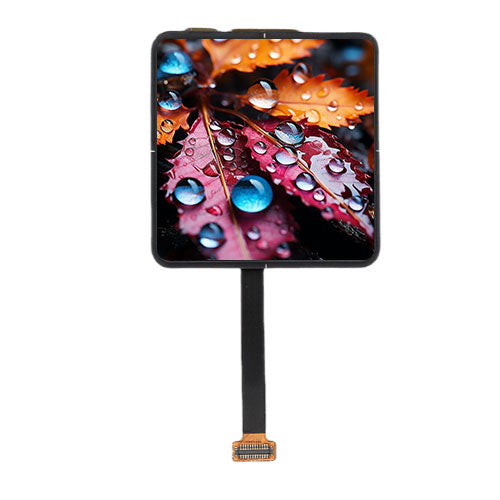
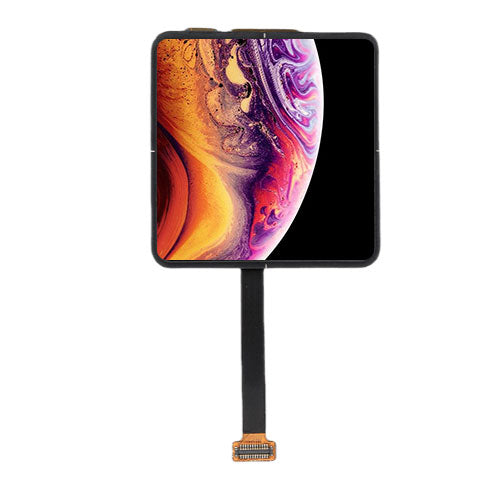
OLED Custom Solutions
Our company offers custom-made OLED solutions, tailored to your unique display needs, ensuring high-quality, precision, and satisfaction.
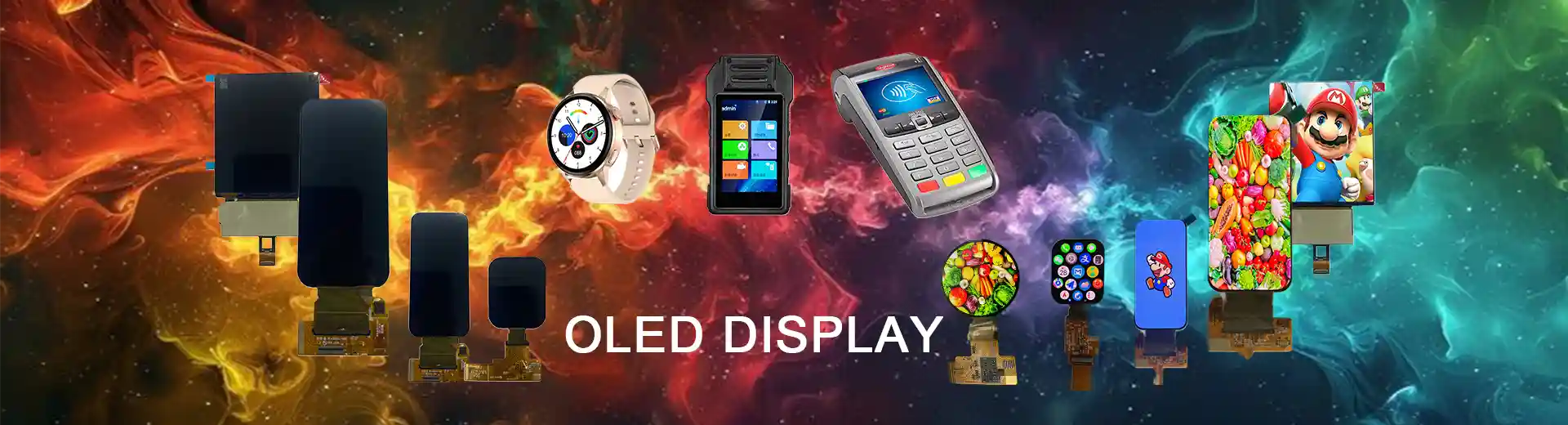
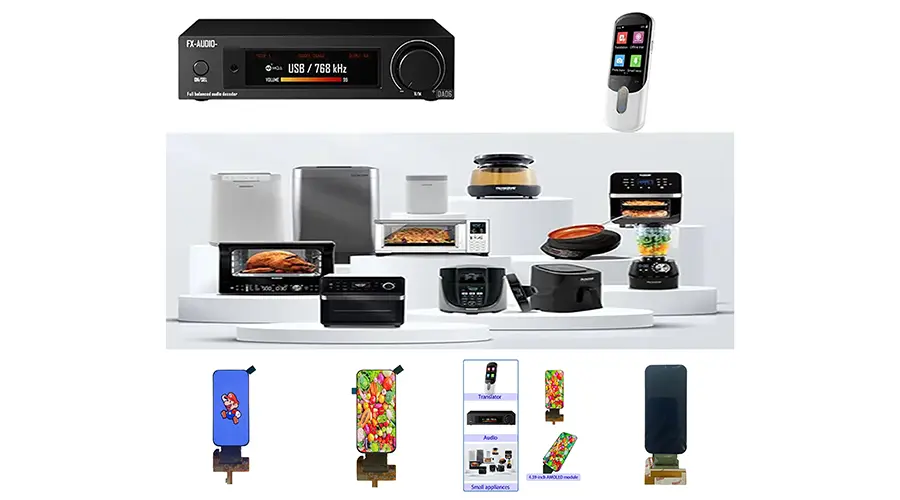
Size & Shape Customization
Tailor AMOLED dimensions and shapes (round, irregular, flexible/foldable) for wearables, phones, or industrial devices. Adjust form factors to match product design needs.
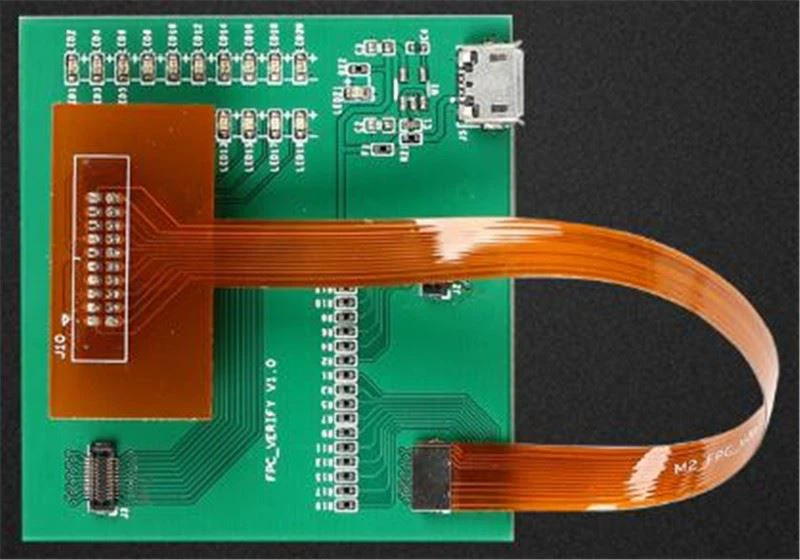
Resolution & Pixel Optimization
Offer HD to 4K+ resolutions and pixel densities for clarity. Enhance color accuracy and contrast for premium smartphones, tablets, VR/AR, and high-end displays.
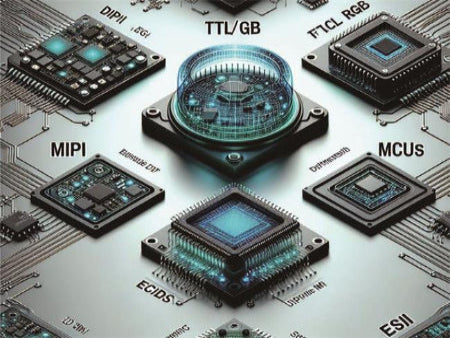
Interface & Driver Integration
Configure MIPI DSI/LVDS interfaces and driver ICs for seamless hardware compatibility. Add capacitive touch support for mobile, automotive, or industrial systems.
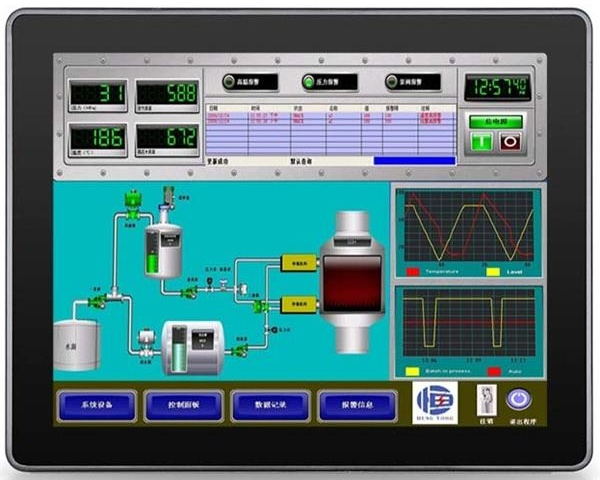
Optical & Durability Enhancements
Add anti-glare coatings, higher brightness, and IP-rated protection. Optimize for extreme temperatures, ensuring durability in outdoor, military, or harsh environments.
FAQ
Questions about OLED Displays
1. What factors affect the cost of a custom OLED?
- Size & complexity: Larger or flexible designs increase costs.
- Resolution/pixel density: Higher specs (e.g., 4K) require advanced manufacturing.
- Material quality: High-end materials (e.g., anti-glare coatings) add to pricing.
- Minimum order quantity (MOQ): Smaller batches may incur higher per-unit costs.
2. How long does it take to produce a custom OLED?
- Lead time: Typically 4–8 weeks after design approval, depending on complexity.
- Prototyping: Sample production takes 2–3 weeks for verification.
- Mass production: Delays may occur for high-volume orders or specialized components.
3. Can I request a flexible or foldable OLED?
- Yes, but with limitations:
- Flexibility: Curved designs require specialized substrates (e.g., polyimide).
- Durability: Foldable OLEDs need reinforced layers to prevent cracking.
- Cost: Flexible/foldable options are 20–50% more expensive than rigid panels.
4.How is the reliability of custom OLEDs tested?
- Key tests:
- Lifetime testing: Accelerated aging (e.g., 85°C/85% RH for 1,000 hours).
- Mechanical stress: Flexibility/folding endurance (100,000+ cycles for foldables).
- Environmental resistance: UV exposure, humidity, and thermal shock testing.
- Performance metrics:
- Luminance retention: >90% brightness after 10,000 hours.
- Color stability: Delta E < 3 for consistent color accuracy.
- Supplier accountability: Reputable manufacturers provide test reports and warranties (e.g., 2–5 years).
5.What industries benefit most from custom OLEDs?
- Consumer electronics: Smartphones, wearables, tablets.
- Industrial/medical: Control panels, diagnostic displays.
- Automotive: Dashboard screens, infotainment systems.
- Retail/entertainment: Digital signage, AR/VR headsets.