
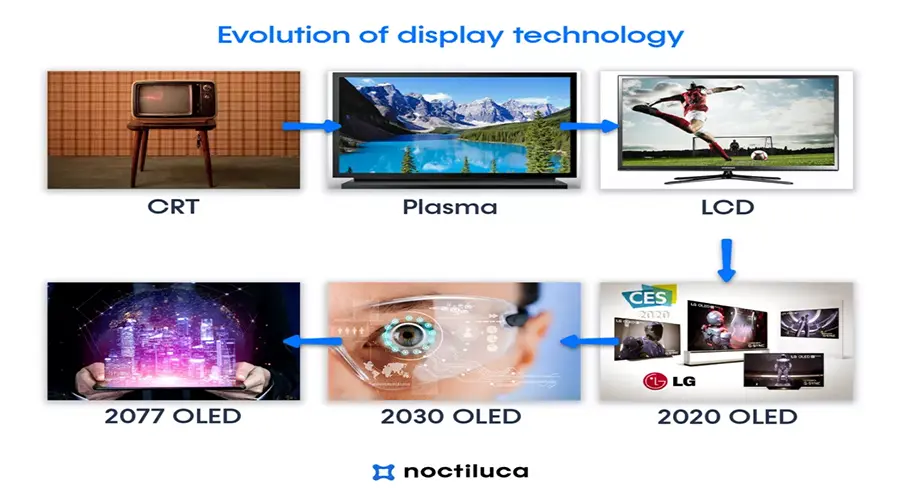
As we approach the end of 2025, OLED Display technology continues to redefine how products communicate information, deliver immersive visuals, and differentiate in competitive markets. While large-format OLED panels dominate consumer discussions, the most significant growth for B2B buyers is happening in small and mid-size AMOLED displays from 1 to 8 inches.
From industrial HMI and medical devices to automotive controls and AR/XR systems, OLED Display modules are becoming a strategic component rather than a simple screen. This article provides a forward-looking analysis of OLED Display trends for 2025–2026, with a strong focus on AMOLED modules for professional and industrial applications.
Executive Summary: OLED Display in 2025–2026
Key Takeaways
- OLED Display adoption continues expanding beyond consumer electronics into industrial and professional markets.
- 1–8 inch AMOLED displays are becoming the preferred choice for compact, high-value devices.
- Key drivers include ultra-thin design, high contrast, fast response time, and flexible integration.
- Challenges such as burn-in, brightness management, and long-term supply must be addressed through proper design and sourcing.
Global OLED Display Market Overview (2025–2026)
The global OLED Display market is transitioning from volume-driven consumer devices to value-driven B2B applications. While smartphones remain the largest segment, growth momentum is accelerating in sectors that demand reliability, visual performance, and industrial-grade customization.
Small and mid-size AMOLED displays from 1 to 8 inches are particularly attractive because they balance cost, performance, and design flexibility. Manufacturers are investing heavily in improving yield, lifetime, and brightness to meet the stricter requirements of industrial, automotive, and medical customers.

Key OLED Display Technology Trends for 2025–2026
1. Higher Efficiency and Longer Lifetime
Material improvements and pixel compensation algorithms are extending OLED Display lifetime significantly. For B2B buyers, this means AMOLED displays can now meet multi-year operational requirements when paired with proper UI and brightness control.
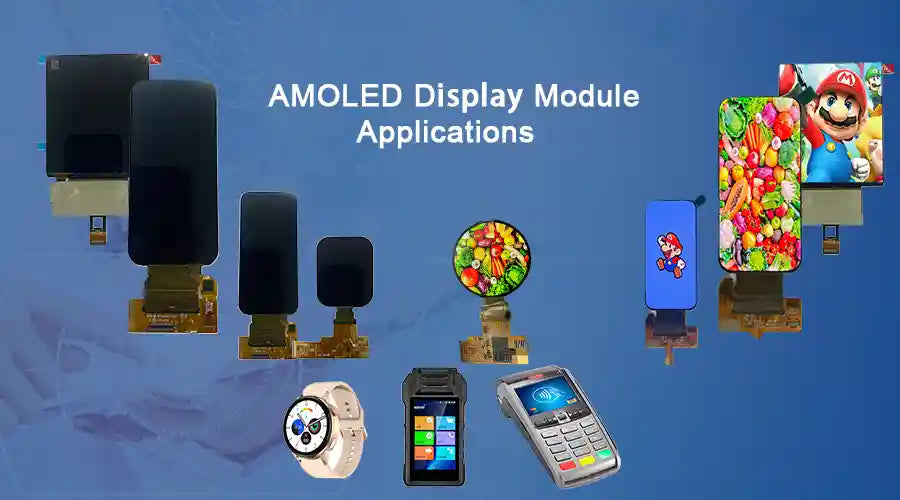
2. Advanced 1–8 Inch AMOLED Modules
The 1–8 inch AMOLED category has matured rapidly. These displays offer:
- High resolution in compact form factors
- MIPI DSI and eDP interfaces
- On-cell or OGS touch integration
- Ultra-thin mechanical structures
3. Flexible and Curved OLED Designs
Flexible AMOLED displays enable curved surfaces, edge designs, and space-saving layouts, especially valuable in automotive interiors and compact industrial equipment.
4. Improved Brightness and Outdoor Readability
Peak brightness levels above 800 to 1000 nits are increasingly available for small OLED Display modules, supported by circular polarizers and AR coatings to improve sunlight readability.
OLED Display Applications Driving Growth
Industrial HMI and Control Panels
AMOLED displays provide superior contrast and fast response for machine interfaces, diagnostics screens, and smart factory equipment. Dark UI themes help reduce power consumption and mitigate burn-in risks.
Medical and Laboratory Equipment
Medical devices benefit from OLED Display clarity, wide viewing angles, and accurate color rendering. Small AMOLED displays are widely used in portable diagnostic tools and monitoring equipment.
Automotive and Transportation
From dashboard controls to auxiliary displays, OLED technology enables sleek, curved, and integrated designs while maintaining high readability and fast response.
AR and XR Devices
1–2 inch AMOLED displays are essential in AR/XR systems due to their fast pixel response, deep blacks, and high pixel density.

OLED Display vs LCD, Mini-LED, and MicroLED
| Technology | Strengths | Limitations | Best Use Cases |
|---|---|---|---|
| OLED Display | High contrast, ultra-thin, fast response | Brightness management, burn-in risk | Premium B2B devices, compact systems |
| LCD / Mini-LED | High brightness, cost stability | Thicker, limited contrast | Outdoor displays, cost-sensitive projects |
| MicroLED | Extreme brightness, long lifetime | High cost, limited availability | Future large-scale or specialty displays |
Challenges Facing OLED Display Adoption
- Burn-in and image retention: Requires UI design optimization and pixel shifting.
- Environmental sensitivity: Moisture protection and proper encapsulation are critical.
- Supply chain stability: Long-term availability and EOL planning are essential for B2B projects.
Opportunities for B2B Buyers Using 1–8 Inch AMOLED Displays
For B2B buyers, OLED Display technology enables:
- Product differentiation through premium visuals
- Thinner, lighter, and more compact designs
- Custom shapes, interfaces, and touch solutions
- Higher perceived value in professional equipment
How to Choose the Right OLED Display in 2025–2026
- Define the application environment, such as indoor, outdoor, automotive, or industrial use.
- Select the appropriate size and resolution within the 1–8 inch AMOLED range.
- Match the interface, such as MIPI, eDP, or SPI, with your main controller.
- Evaluate brightness, power consumption, and lifetime trade-offs.
- Work with suppliers that offer customization support and long-term supply planning.

OLED Display Outlook Beyond 2026
Beyond 2026, OLED Display technology will continue evolving alongside MicroLED rather than being replaced by it. Small and mid-size AMOLED displays will remain essential for compact, high-performance devices requiring superior visual quality and industrial design flexibility.
Conclusion: Preparing for the OLED Display Era
The 2025–2026 period marks a critical stage for OLED Display adoption in B2B markets. With improved reliability, higher brightness, and expanding customization options, 1–8 inch AMOLED displays are becoming a strategic component in modern product design.
If your next product requires high contrast, fast response, and a premium user experience, OLED Display technology deserves serious consideration.


コメントを書く
このサイトはhCaptchaによって保護されており、hCaptchaプライバシーポリシーおよび利用規約が適用されます。