
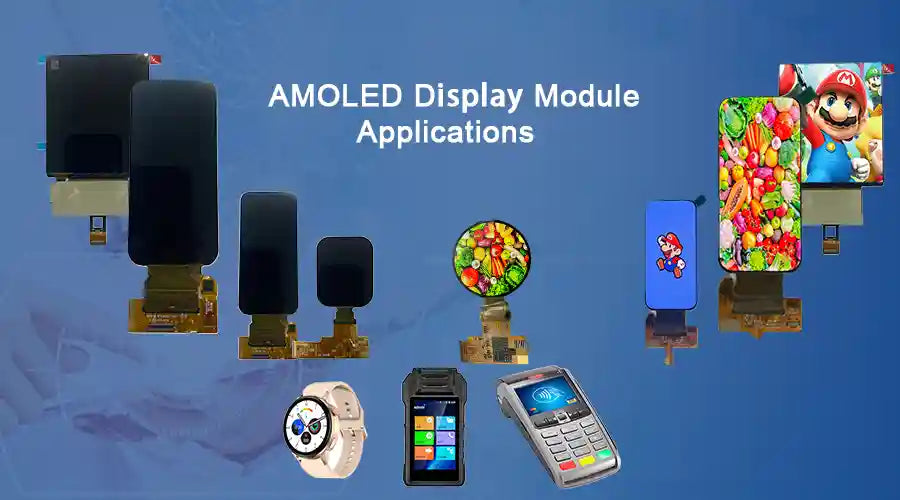
The industrial landscape in 2026 demands visual interfaces that can withstand extreme environments without compromising on clarity, responsiveness, or longevity. As Industry 4.0 matures and the Internet of Things (IoT) expands into every sector—from smart manufacturing floors to advanced medical facilities and EV smart cockpits—the limitations of traditional display technologies have become glaringly apparent.
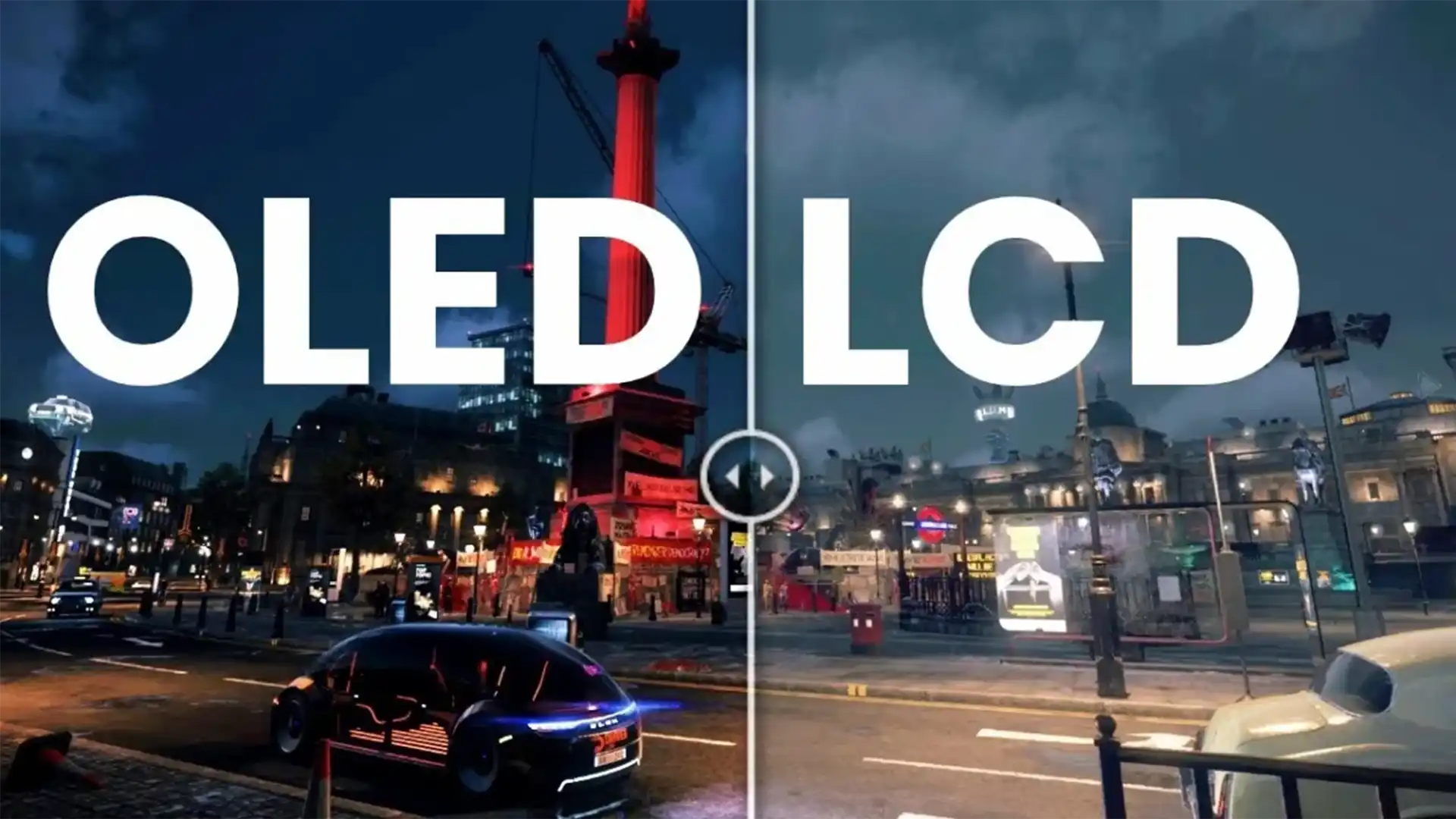
Traditional Liquid Crystal Displays (LCDs) often struggle with extreme temperature fluctuations, resulting in sluggish response times and ghosting effects. They suffer from poor contrast ratios in complex lighting environments and require bulky backlights that limit design flexibility. The solution to these industry-wide bottlenecks is the rapid evolution and deployment of the industrial-grade OLED DISPLAY.
This comprehensive guide explores how the latest OLED technologies deliver unprecedented reliability, revolutionize Human-Machine Interfaces (HMI), and solve long-standing lifespan challenges. Whether you are an engineer designing the next generation of medical ventilators or a procurement manager sourcing components for heavy machinery, understanding the 2026 standards for an OLED DISPLAY is critical to future-proofing your equipment.
1. High-Reliability Selection & Anti-Interference Design for Harsh Environments
When deploying an OLED DISPLAY in industrial and automotive sectors, the criteria for success extend far beyond mere pixel count. The display must act as a rugged, fail-safe portal between the operator and the machine. In 2026, high-reliability selection focuses heavily on thermal resilience, electromagnetic compatibility, and structural integrity.

Conquering Extreme Environments: Wide-Temperature Operations
One of the most significant advantages of a modern OLED DISPLAY over traditional TFT-LCDs is its inherent thermal resilience. LCDs rely on liquid crystals that physically change state; in sub-zero temperatures, this liquid becomes viscous, leading to severe response lag and visual ghosting. Conversely, at high temperatures, LCDs can suffer from isotropic clearing, where the screen goes completely black.
OLED technology, being solid-state and self-illuminating, bypasses these physical limitations entirely. The 2026 generation of industrial OLEDs is certified for wide-temperature operations ranging from -40°C to 85°C, and in some specialized automotive grades, up to 105°C. Because the organic light-emitting diodes react at the microsecond level regardless of ambient temperature, operators in freezing outdoor oil rigs or sweltering steel mills experience the exact same instantaneous touch response and fluid motion rendering.
EMI Resistance and Automotive-Grade Validation
In environments like power monitoring stations, CNC machining centers, and electric vehicle smart cockpits, Electromagnetic Interference (EMI) is a constant threat. High-voltage equipment can induce noise that disrupts display signals, causing flickering, false touch registrations, or complete module failure.
To combat this, a premium industrial OLED DISPLAY incorporates advanced anti-interference designs. This includes the integration of ultra-fine metal mesh touch sensors and specialized Indium Tin Oxide shielding layers that absorb and ground stray electromagnetic waves. Furthermore, these displays undergo rigorous automotive-grade validation processes, such as AEC-Q100-related component verification and radio disturbance compliance testing.
Enhancing Anti-Vibration Capabilities with COF/COG Packaging
Heavy machinery, railway systems, and automotive applications subject displays to continuous, high-frequency vibrations. Traditional display assemblies, which often rely on fragile ribbon cables and bulky connectors, are prone to mechanical failure under such stress.
The industry has shifted towards advanced packaging technologies to ensure structural integrity: Chip-on-Glass (COG) and Chip-on-Film (COF).
- COG (Chip-on-Glass): Mounts the display driver IC directly onto the glass substrate, eliminating a common point of mechanical failure.
- COF (Chip-on-Film): Mounts the IC onto a flexible polymer film. This allows the display borders to be folded backward, enabling ultra-narrow bezels while providing a highly resilient, shock-absorbing connection.
2. From Control Panels to Smart Cockpits: HMI Innovations
The Human-Machine Interface (HMI) is the critical bridge between human intent and machine execution. As systems become more complex, the HMI must become more intuitive, clear, and responsive. The integration of the OLED DISPLAY is driving a paradigm shift in how we interact with technology.
The Shift in Industrial Automation and Medical Instruments
Programmable Logic Controller touch screens and industrial PCs are rapidly transitioning to OLED technology. The primary driver is the need for absolute clarity and microsecond response times. In high-speed manufacturing, an operator must be able to read system statuses at a glance and input commands without a fraction of a second of lag.
In the medical field, the stakes are even higher. Life-critical devices such as patient monitors, ventilators, and surgical navigation systems require displays that offer true black levels. Because an OLED DISPLAY turns off individual pixels to render black, it achieves an effectively infinite contrast ratio. This allows medical professionals to distinguish subtle variations in ultrasound imaging or X-rays that would be washed out by the backlight bleed of a standard LCD.
Superior Visibility in Complex Lighting Conditions
Industrial displays are rarely viewed in perfectly lit, controlled environments. They are used on outdoor construction sites under direct sunlight, or in surgical operating rooms with intense overhead lighting.
An industrial OLED DISPLAY excels in these complex lighting conditions due to two main factors:
- High Peak Brightness and Contrast: While traditional screens rely on increasing backlight power, OLEDs maintain strong color saturation and contrast even at high brightness levels.
- Ultra-Wide Viewing Angles: OLEDs emit light uniformly in all directions. This guarantees a near 180-degree viewing angle without the color shifting or contrast degradation seen in many LCD panels.
Next-Generation Interactive Experiences
By 2026, the OLED DISPLAY is not just a passive output device; it is an active, multi-sensory interactive hub. In smart EV cockpits and advanced CNC controllers, we are seeing the integration of force-feedback touch directly into the OLED module. This provides tactile confirmation to the user, allowing them to feel a button press on a flat glass surface.
3. Mastering Lifespan Management & Burn-in Prevention in 2026
Historically, the single largest objection to adopting OLED technology in industrial settings was the fear of burn-in and overall lifespan degradation. Industrial HMIs often display static interfaces such as gauges, grids, and status bars for 24 hours a day, 7 days a week. In 2026, a combination of advanced software algorithms and hardware breakthroughs has effectively addressed this issue.
Advanced Algorithmic Solutions for Static Displays
Modern industrial display controllers utilize intelligent, real-time software interventions to protect the organic materials:
- Intelligent Pixel Shifting: The display controller imperceptibly shifts the entire static image by a few pixels at regular intervals. This distributes the thermal and electrical load across a wider array of pixels.
- Real-Time Brightness Compensation: Using built-in current sensors, the display monitors the degradation of individual pixels. If a pixel begins to lose efficiency, the algorithm automatically adjusts the driving behavior to preserve visual uniformity.
- Local Dimming for Static Elements: The system identifies static UI elements and subtly reduces their peak brightness compared to the dynamic parts of the screen.
Hardware Breakthroughs: Tandem Architecture
While software mitigates the symptoms, hardware innovation addresses the root cause. The most significant breakthrough is the adoption of Tandem OLED architecture. Unlike single-stack OLEDs, Tandem OLEDs stack two distinct organic emission layers on top of each other, connected by a charge generation layer.
This architecture allows the display to achieve the same brightness level while driving each individual layer at lower electrical current. Lower current means less heat generation and reduced material stress. As a result, a Tandem OLED DISPLAY can offer substantially higher brightness and a much longer service life than a traditional OLED panel.
Proven Durability: The 20,000-Hour Benchmark
The culmination of these software and hardware advancements is quantifiable. In rigorous industry testing, modern industrial OLED panels are subjected to continuous operation under static display conditions.
The benchmark data often referenced in the market is the 20,000-hour continuous operation level, where advanced OLED displays are expected to maintain strong luminance retention and controlled degradation. For industrial buyers, this represents a major step forward in long-term reliability and lifecycle predictability.
Conclusion: Future-Proofing Your Equipment
The transition from LCD to OLED in the industrial sector is no longer a futuristic concept. The modern industrial-grade OLED DISPLAY offers strong reliability in extreme temperatures, robust anti-interference design, and structural integrity that can withstand demanding environments.
Upgrading to industrial OLED standards can reduce long-term maintenance pressure, elevate the end-user experience, and improve the competitiveness of your hardware platform.
Ready to Elevate Your Industrial Interface?
Do not let outdated display technology limit your hardware innovation. Integrate reliable, high-performance visual solutions into your next-generation equipment.
Explore Our OLED DISPLAY Solutions TodayFrequently Asked Questions (FAQ)
1. Is an OLED DISPLAY suitable for outdoor industrial use?
Yes. Modern industrial OLEDs can offer strong brightness, high contrast, and wide-temperature adaptability, making them suitable for many outdoor and semi-outdoor industrial environments when matched with the correct enclosure and system design.
2. How does Tandem OLED help reduce burn-in risk?
Tandem OLED uses stacked emission layers so that each layer can operate at lower electrical stress for the same brightness target. This reduces heat and slows uneven pixel aging, which helps improve lifespan and reduce burn-in risk.
3. Can I get a custom-sized OLED DISPLAY for my specific machinery?
Yes. OLED technology offers excellent design flexibility, including custom sizes, elongated formats, and application-specific integration options. You can explore different form factors through BrownOpto.
4. Are OLED displays more fragile than LCDs in high-vibration environments?
No. When equipped with COF or COG packaging, an OLED DISPLAY can provide strong resistance to vibration and mechanical stress. The simplified module structure can also be beneficial in demanding equipment environments.
5. What is the cost difference between industrial LCD and OLED?
The initial cost of an industrial OLED DISPLAY may be higher than that of a conventional LCD, but total ownership value can be competitive when you consider system differentiation, performance gains, and maintenance advantages over the product lifecycle.


コメントを書く
このサイトはhCaptchaによって保護されており、hCaptchaプライバシーポリシーおよび利用規約が適用されます。