
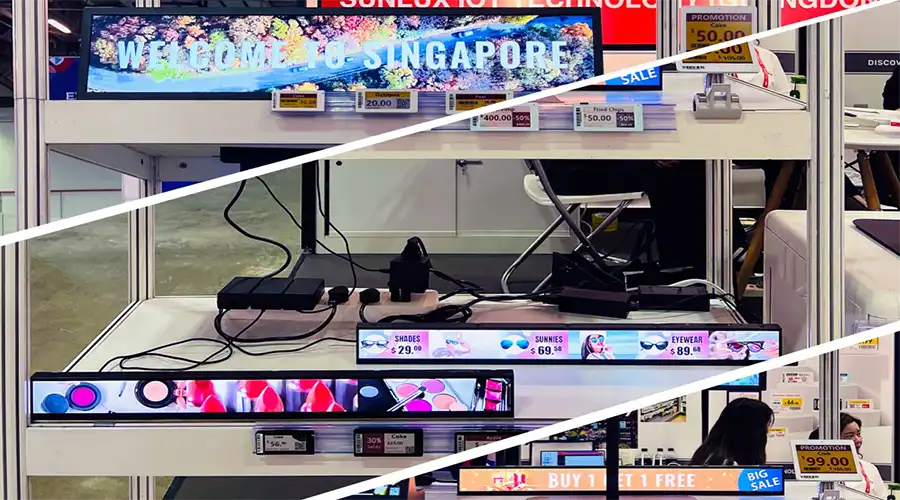
The retail landscape is undergoing a major transformation. As businesses move deeper into 2026, static paper shelf labels are being replaced by dynamic digital systems built around one specialized display format: the stretched bar LCD display.
No longer just a novelty, the bar LCD display has become a core element of modern smart retail infrastructure. From targeted promotions to real-time product messaging and operational updates, these ultra-wide screens are reshaping how brands communicate with customers at the point of purchase.
1. The Evolution of the Digital Shelf Edge
For decades, retailers relied on printed labels that were time-consuming to replace, vulnerable to pricing errors, and limited to static information. The stretched LCD display changed that model by bringing digital content to narrow shelf-edge spaces where traditional displays could not fit.
In 2026, the digital shelf is no longer just a pricing tool. It supports product storytelling, promotional messaging, and a more engaging in-store experience. By placing dynamic content directly next to the item, retailers can influence customer decisions at the exact moment of purchase.
2. What is a Stretched Bar LCD Display?
A stretched bar LCD display, sometimes called an ultra-wide LCD display or elongated LCD display, is a digital signage screen built with an aspect ratio far wider than it is tall. Common formats include 16:3, 32:9, and other custom dimensions designed for long, narrow installations.
Key Characteristics
- Ultra-wide format: Suitable for shelf edges, aisle headers, counters, and other constrained spaces.
- High brightness: Important for visibility under strong indoor retail lighting.
- Continuous-duty design: Often engineered for long operating hours in commercial and industrial environments.
These products are also described using terms such as narrow bar LCD display, ultra-long LCD screen, or non-standard LCD display. While naming may vary by supplier or market, the core purpose remains consistent: delivering digital content in spaces where conventional screens are impractical.
3. Key Applications in 2026 Retail Environments
The flexibility of the bar LCD display allows it to serve multiple roles across modern retail environments. Its narrow profile makes it particularly effective wherever space is limited but visibility and relevance are critical.
The Intelligent Shelf Edge
This is one of the most common use cases. Installed directly on shelving, a retail bar LCD display can support:
- Dynamic pricing: Prices can be updated quickly across locations to reflect promotions, competitor changes, or inventory timing.
- Product information access: Shoppers can use QR codes to access ingredient details, allergen information, or usage instructions.
- Brand storytelling: Short-form visual content can highlight product origin, quality, or campaign messaging.
Header and Banner Advertising
Mounted above aisles or product zones, an advertising bar LCD screen works as a directional and promotional header. These wide-format displays are effective for category identification, campaign visibility, and seasonal merchandising.
Point of Sale Integration
At checkout, compact bar LCD modules can face the customer and display transaction details, branded content, or add-on promotions such as batteries, accessories, and gift cards.
4. Technical Advantages: Why Choose Stretched LCDs?
Retailers and solution integrators increasingly choose stretched LCD displays because the hardware is optimized for installation scenarios that standard commercial monitors cannot serve efficiently.
Customization and Flexibility
Custom bar LCD display manufacturing allows suppliers to produce screens in dimensions tailored to shelving systems, kiosks, machinery, and architectural structures. This helps create a more integrated appearance and reduces wasted installation space.
Android and System-on-Chip
Many modern Android bar LCD displays include a built-in operating system and media playback capability. This reduces reliance on external players, simplifies deployment, and enables centralized remote content management through network connectivity.
Interactivity
Touch bar LCD display models add an interactive layer for customer engagement. Depending on the application, users can browse product options, navigate digital menus, or access promotions and service information directly on-screen.
5. B2B and Industrial Use Cases Beyond Retail
Although retail remains a primary driver, the commercial bar LCD display market extends well beyond store shelving. The same long-format design solves communication and visualization challenges in transportation, hospitality, offices, and industrial systems.
Transportation Information Display
In buses, trains, and transit stations, a stretched bar LCD display fits neatly into narrow installation zones above doors or along carriage interiors. It can be used for route maps, next-stop updates, public information, and advertising.
Elevator and Wayfinding
Elevator bar LCD displays are increasingly used in office towers, hotels, and mixed-use buildings. They provide floor guidance, building announcements, branding, and ambient content without occupying significant wall area.
Industrial Machinery
In industrial equipment, an industrial bar LCD display can be integrated into compact control panels where a long data view is required. This is useful for timelines, machine states, progress indicators, or waveform-style visualizations.
6. Future Trends: AI and IoT Integration
As smart environments continue to mature, the stretched LCD display is evolving from a passive output device into a connected interface node. Integration with sensors, cameras, and backend platforms allows the display to participate in broader decision-making systems.
- Inventory monitoring: Displays can work with shelf sensing systems to alert staff when stock is low or missing.
- Audience analytics: In some deployments, digital signage systems can adapt content based on anonymized viewer attributes and engagement signals.
Whether deployed as a menu board bar LCD, a transportation information strip, or an OEM bar LCD module for a specialized product, the technology is advancing rapidly. The bar LCD display is becoming a key interface layer in connected physical environments.
7. Frequently Asked Questions
Below are answers to common questions about stretched bar LCD technology.
What is the difference between a stretched bar LCD and a standard monitor?
A standard monitor usually uses a conventional aspect ratio such as 16:9 or 4:3. A stretched bar LCD display uses an ultra-wide format, allowing it to fit into long and narrow spaces such as shelf edges, transport headers, and equipment panels.
Can bar LCD displays be used in harsh environments?
Yes. Industrial-grade models are designed for demanding conditions and may include rugged enclosures, higher brightness, and wider operating temperature ranges depending on the application.
Do these displays require an external media player?
Not always. Many models include a built-in operating system or media board, allowing content playback and remote management without an additional external player.
What is a shelf edge LCD display?
A shelf edge LCD display is a stretched LCD format designed specifically for installation on retail shelving. It can present pricing, promotions, product information, and branded content directly beside merchandise.
Are touch bar LCD displays available?
Yes. Touch-enabled versions are available and are commonly used in interactive retail fixtures, kiosks, self-service interfaces, and product navigation systems.
Can I order a custom size?
Yes. Many manufacturers offer OEM or custom bar LCD display solutions with dimensions tailored to specific products, fixtures, equipment, or architectural requirements.


コメントを書く
このサイトはhCaptchaによって保護されており、hCaptchaプライバシーポリシーおよび利用規約が適用されます。