
TFT LCD Display Module Guide
A complete formatted version with fixed left-side navigation, article-range display behavior, and H2, H3, and H4 anchor navigation.
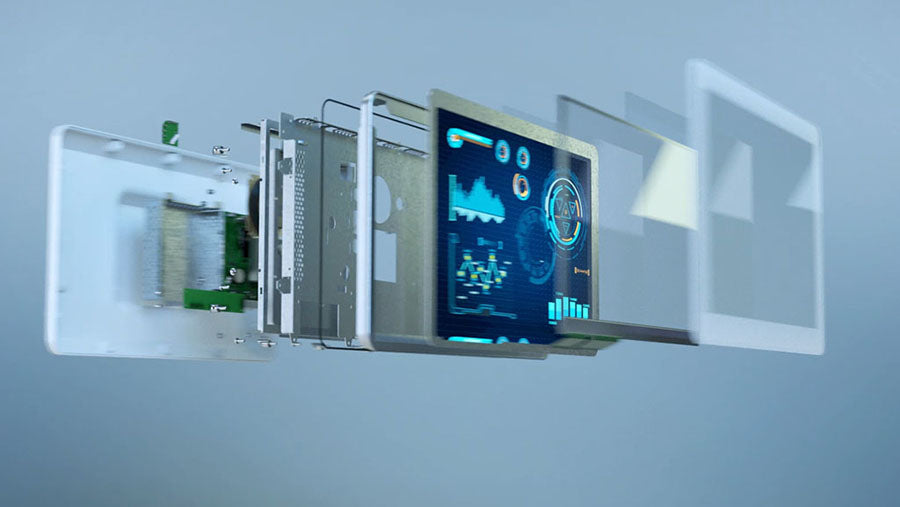
Structure and Principle of TFT LCD Display Module
The TFT LCD Display Module holds a significant position in modern display technology. Understanding its structure and working principle is crucial for optimizing its application and performance. This section provides a detailed overview of the structure and principle of the TFT LCD Display Module to help build a deeper understanding of this display technology.
1. Basic Structure of TFT LCD Display Module
The TFT LCD Display Module consists of several key components, each playing an essential role in the display process.
1) Liquid Crystal Layer:
- Liquid Crystal Molecules: The liquid crystal layer contains liquid crystal molecules that change their alignment under the influence of an electric field, thereby altering light transmittance.
- Function: The liquid crystal layer is the core of the display module, controlling the alignment of liquid crystal molecules to display images.
2) TFT Array:
- Thin-Film Transistors: The TFT array consists of multiple thin-film transistors, with each pixel corresponding to one TFT.
- Function: The TFT array controls the switching state of each pixel, accurately adjusting the alignment of liquid crystal molecules to achieve high-resolution display.
3) Color Filter:
- RGB Filters: The color filter contains red, green, and blue primary color filters, combining different colors of light to achieve color display.
- Function: The color filter works with the liquid crystal layer to produce richly colored images.
4) Backlight Unit:
- LED Backlight: Modern TFT LCD display modules typically use LED backlights to provide a uniform light source.
- Function: The backlight unit, together with the liquid crystal layer and color filter, forms the visible image.
5) Polarizer:
- Polarized Light: The polarizer converts natural light into polarized light, ensuring that the light can pass through the liquid crystal layer and be modulated by it.
- Function: The polarizer works with the liquid crystal layer to control light transmittance and form images.
6) Integrated Circuit (IC):
- Control and Processing: The IC is responsible for controlling and processing the signals that drive the TFT array and other components.
- Function: It ensures accurate timing and voltage control for each pixel, contributing to the overall performance of the display module.
7) Flexible Printed Circuit (FPC):
- Connection: The FPC connects the display module to external control systems, providing flexibility and reliability in the connection.
- Function: It ensures the transmission of signals and power between the display module and the external circuitry.
2. Working Principle of TFT LCD Display Module
The working principle of the TFT LCD Display Module is based on the optical properties of liquid crystal molecules and electric field control. The specific process is as follows.
1) Light Source Emission:
- Backlight Activation: The LED backlight emits uniform white light, which passes through the lower polarizer to form polarized light.
2) Liquid Crystal Molecule Modulation:
- Electric Field Effect: The TFT array provides voltage to each pixel, causing the liquid crystal molecules to change their alignment under the electric field.
- Light Modulation: The alignment of the liquid crystal molecules determines the light transmittance, and the modulated light passes through the liquid crystal layer.
3) Color Generation:
- Color Filter: The modulated light passes through the RGB color filter, generating red, green, and blue primary colors.
- Color Combination: Different colors of light combine on the screen to form richly colored images.
4) Image Display:
- Upper Polarizer: The modulated light passes through the upper polarizer to form the final visible image.
- Image Output: The TFT LCD Display Module outputs the generated image to the screen, allowing the user to see clear display content.
3. Advantages of TFT LCD Display Module
1) High Resolution:
- Fine Image Quality: The TFT LCD Display Module provides high-resolution display effects, suitable for various high-precision applications.
- Rich Colors: The combination of color filters and the liquid crystal layer allows the TFT LCD Display Module to display richly colored images.
2) Fast Response:
- Dynamic Images: TFT technology enables the display module to have a fast response time, suitable for dynamic video and gaming displays.
3) Low Power Consumption:
- Energy Efficiency: LED backlight technology and liquid crystal modulation characteristics enable the TFT LCD Display Module to maintain low power consumption while providing high-quality displays.
The TFT LCD Display Module, with its high resolution, rich colors, fast response, and low power consumption, has become a mainstream choice in modern display technology. By understanding its structure and working principle, it becomes easier to optimize its application and performance across consumer electronics, industrial equipment, and professional display fields.

Application Fields and Characteristics of TFT LCD Display Module
The TFT LCD Display Module has a wide range of applications in modern technology. Its high resolution, rich colors, fast response, and low power consumption make it widely used in various fields.
Application Fields
Consumer Electronics:
- Smartphones and Tablets: Due to high resolution and excellent color performance, TFT LCD display modules are widely used in smartphone and tablet screens, providing clear and delicate display effects.
- Laptops and Desktop Monitors: In laptops and desktop monitors, TFT LCD display modules provide high-quality display effects suitable for office work, entertainment, and design.
Industrial Equipment:
- Industrial Control Panels: TFT LCD display modules are widely used in industrial control panels, providing reliable display effects suitable for various industrial environments.
- Medical Equipment: In medical equipment, TFT LCD display modules provide high-precision displays, helping doctors perform accurate diagnoses and operations.
Automotive Electronics:
- In-Car Navigation and Entertainment Systems: TFT LCD display modules provide clear display effects in navigation and entertainment systems, enhancing the driving experience.
- Dashboard Displays: In automotive dashboards, TFT LCD display modules provide an intuitive display interface, helping drivers understand vehicle status in real time.
Home Appliances:
- Smart Home Devices: In smart home devices, TFT LCD display modules provide an intuitive operating interface and improve user experience.
- Televisions and Monitors: TFT LCD display modules provide high-quality display effects in televisions and monitors for home entertainment and work use.
Professional Displays:
- Aviation and Aerospace Displays: In aviation and aerospace fields, TFT LCD display modules provide reliable display effects suitable for complex environments.
- Military and Security Equipment: In military and security equipment, TFT LCD display modules provide high-precision displays for accurate operations and monitoring.
Characteristics
High Resolution and Pixel Density:
- Clarity and Detail Representation: TFT LCD display modules can provide high resolution and high pixel density, ensuring image and text clarity for fine-display applications such as medical imaging and design work.
Color Accuracy and Color Depth:
- Color Reproduction: Through high-precision color filters and liquid crystal materials, TFT LCD display modules can accurately reproduce rich colors, ensuring color accuracy and consistency of display content.
Response Time and Refresh Rate:
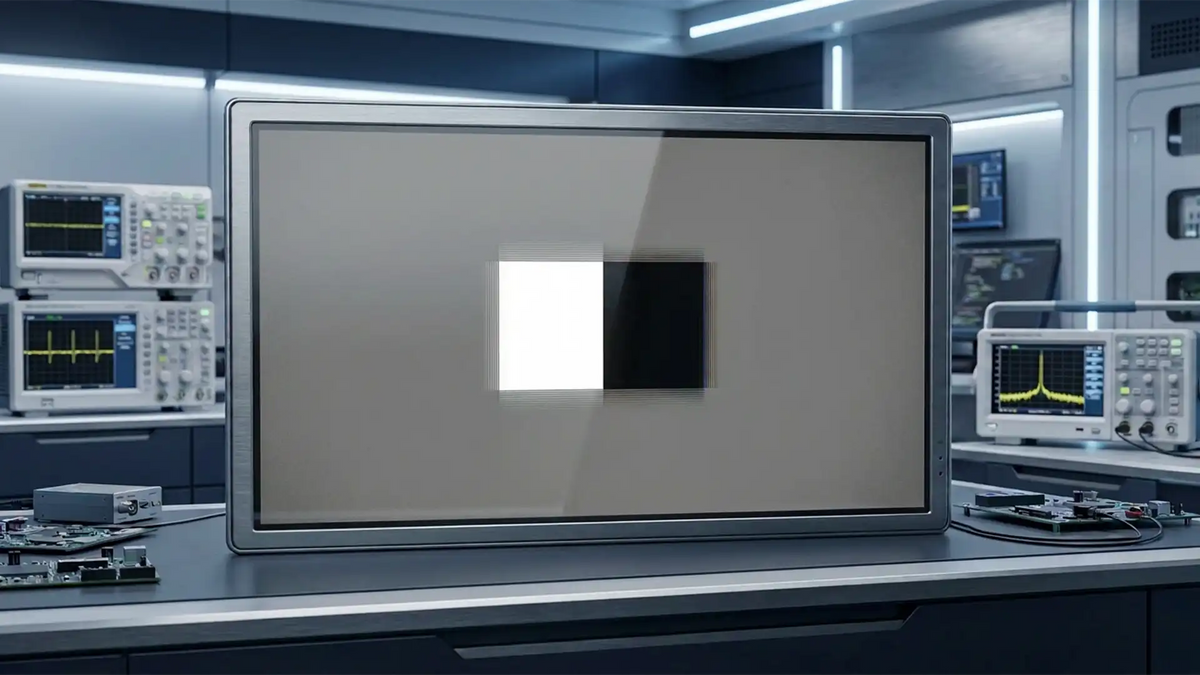
- Dynamic Performance: TFT LCD display modules have a short response time and high refresh rate, effectively reducing motion blur and ghosting.
Energy Efficiency and Thermal Management:
- Low Power Consumption Design: Efficient LED backlight technology and optimized circuit design support strong brightness under low power consumption with good thermal management.
Viewing Angle Stability and Contrast:
- Wide Viewing Angle Technology: TFT LCD display modules using wide-viewing-angle technology maintain stable color and contrast from different angles.
Reliability and Durability:
- Long Lifespan and Anti-Interference: TFT LCD display modules have high reliability, long lifespan, stable environmental performance, and good anti-electromagnetic interference behavior.
The TFT LCD Display Module, with high resolution, color accuracy, fast response, low power consumption, wide viewing angle, and high reliability, has become a mainstream choice across consumer electronics, industrial equipment, automotive electronics, home appliances, and professional displays.

Different Types of TFT LCD Display Modules and Their Features
TFT LCD modules play an important role in modern display technology. According to application scenarios and technological characteristics, TFT LCD display modules can be divided into various types.
- Standard TFT LCD Display Modules — high resolution, wide viewing angles, and good color reproduction for consumer electronics, industrial control, and medical equipment.
- IPS TFT LCD Display Modules — wider viewing angles and better color consistency, widely used in monitors, TVs, and high-end mobile devices.
- High Brightness TFT LCD Display Modules — clear display in strong light environments, suitable for outdoor equipment, in-car displays, and industrial control panels.
- Touchscreen TFT LCD Display Modules — integrated touch support with capacitive or resistive technologies for smartphones, tablets, POS terminals, and industrial systems.
- Round TFT LCD Display Modules — circular design for smartwatches, instrument panels, and other round-display applications.
- Dual-Sided TFT LCD Display Modules — two-display integration for special devices that need dual-sided display output.
- Flexible TFT LCD Display Modules — flexible substrates allowing bending or folding for wearable devices and innovative products.
- Transparent TFT LCD Display Modules — transparent visual properties suitable for AR devices, display cabinets, and transparent billboards.
- Ultra-Wide TFT LCD Display Modules — wide aspect ratios for data-rich applications such as monitoring systems and financial terminals.
With their unique technological features and applications, different types of TFT LCD display modules satisfy diverse needs across many industries.

Comparison between TFT LCD Display Modules and Other Display Modules
In modern display technology, TFT LCD, LED, and OLED are three major categories, each with distinct technological features and application scenarios.
TFT LCD Display Modules
- Working Principle: Uses liquid crystal molecules to change light transmittance under an electric field and relies on a backlight source.
- Advantages: High resolution, excellent color reproduction, wide application range, fast response, and low power consumption.
- Disadvantages: Relatively weaker contrast and black performance compared with OLED, and dependence on a backlight source.
LED Display Modules
- Working Principle: Uses many LED beads to emit light directly for image display.
- Advantages: High brightness, long lifespan, strong visibility, and suitability for large displays.
- Disadvantages: Lower pixel density for some use cases and higher costs for high-density implementations.
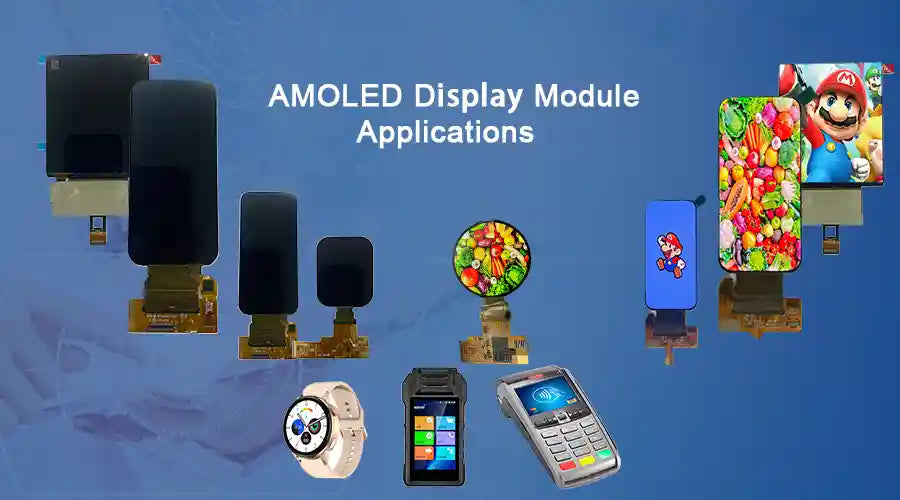
OLED Display Modules
- Working Principle: Uses organic materials that emit light directly under current, eliminating the need for a backlight.
- Advantages: Self-emissive, high contrast, strong black performance, fast response, and thin structure.
- Disadvantages: Organic material lifespan limitations, burn-in risk, and higher manufacturing costs.
Comparison and Analysis
- Display Quality: TFT LCD offers strong resolution and color reproduction; LED offers brightness; OLED offers high contrast and vivid colors.
- Viewing Angles: TFT LCD depends on panel type; IPS improves this significantly. OLED performs very well in off-angle viewing.
- Response Time: OLED is generally fastest, while TFT LCD and LED can also perform well depending on design.
- Power Consumption: Behavior depends on usage scenario and architecture, with backlight dependence affecting TFT LCD.
- Manufacturing Costs: TFT LCD generally supports cost-effective mass production, while LED and OLED can be more expensive depending on density and size.
- Lifespan and Reliability: TFT LCD and LED often offer strong lifespan characteristics, while OLED can face long-term aging concerns.
TFT LCD, LED, and OLED display modules each have strengths and limitations. Choosing the right display module should be based on specific application scenarios and performance requirements.

The Development and Trends of TFT LCD Displays
From CRT to LCD to TFT LCD
The evolution of display technology has been a remarkable journey, marked by major transitions from CRT displays to LCD and finally to TFT LCD. TFT LCD technology became a cornerstone of modern display solutions by improving image quality, energy efficiency, thickness, weight, and usability.
The Era of CRT Displays: CRT technology dominated earlier display markets but had significant limitations in size, weight, power consumption, and geometry stability.
The Transition to LCD Displays: LCD brought better power efficiency and smaller form factors, though early versions had limited viewing angles and slower response times.
The Rise of TFT LCD Displays: TFT technology allowed for better control of individual pixels, improving color accuracy, response time, and display quality. It became widely adopted across monitors, televisions, smartphones, and tablets.
Current Trends and Future Prospects: Trends include flexible and foldable designs, higher resolutions, higher refresh rates, better energy efficiency, sustainability, and integration with touch, AR, and VR technologies.

Further Development of TFT LCD Display Modules
The evolution of TFT LCD modules continues to be driven by advancements in technology and changing market demands. As consumer expectations for display quality and device form factors increase, several key trends are shaping the future of TFT LCD modules.
Higher Pixel Density
Higher resolution displays such as 4K and 8K, along with increasingly dense portable-device screens, are driving the demand for sharper images and more detailed content presentation.
Thinner and Lighter Designs
Flexible substrates, thinner encapsulation methods, and improved backlight structures are helping create thinner and lighter TFT LCD modules for modern devices.
Enhanced Performance and Features
Improvements in energy efficiency, adaptive brightness, wide color gamut, HDR support, rugged design, and longer lifespan are pushing TFT LCD technology forward.
Integration with Emerging Technologies
Touch integration, gesture control, AR, and VR demand high refresh rates, compact form factors, and strong visual performance, all of which continue to influence TFT LCD module development.
The future of TFT LCD display modules is defined by continuous refinement in pixel density, weight reduction, efficiency, durability, and compatibility with new interaction technologies.



Leave a comment
This site is protected by hCaptcha and the hCaptcha Privacy Policy and Terms of Service apply.