

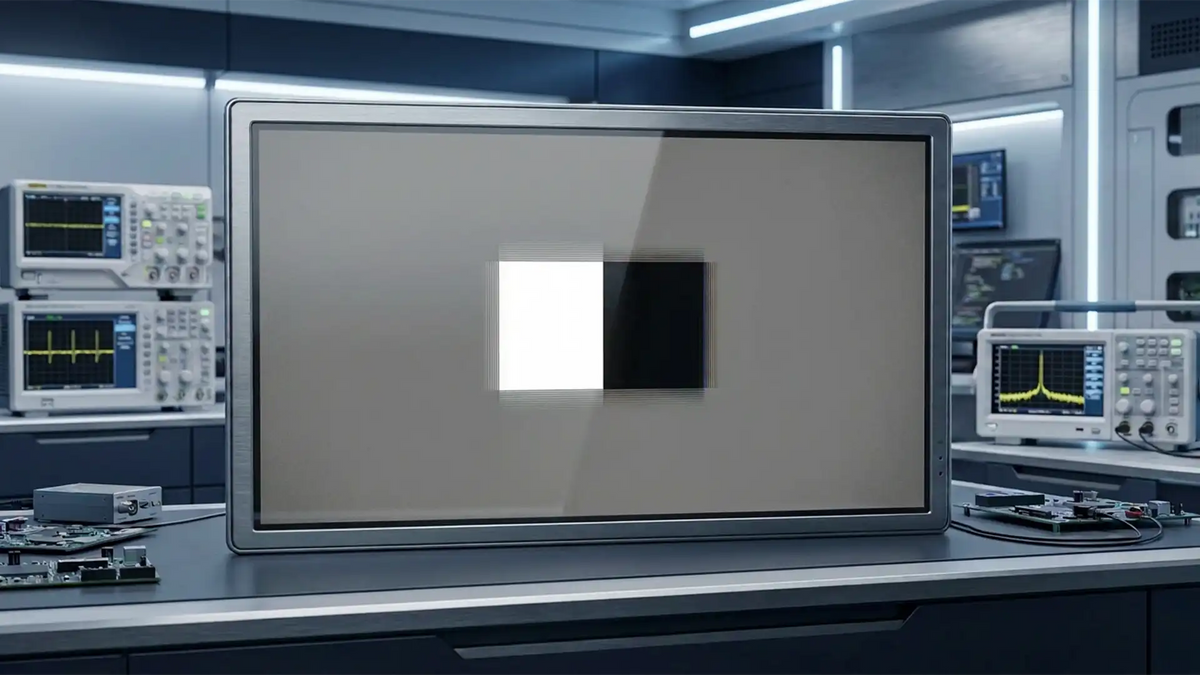
If you're designing an industrial HMI today, you already know why OLEDs look great. The infinite contrast and instant response times speak for themselves. But as any hardware engineer will tell you, getting a display to look good on a spec sheet is one thing; successfully integrating it into a complex piece of machinery is a completely different challenge.
Over the last few years, the way we drive and control these panels has changed drastically. We are not just dealing with simple analog grids anymore. Today's industrial OLED modules are packed with high-speed digital interfaces, dedicated power management ICs, and sometimes even their own embedded processors.
Let's take a look under the hood. In this guide, we will break down the internal architecture of modern industrial OLED displays, explain how they actually work, and highlight what engineers need to know to integrate them reliably.
1. The Basics: Why AMOLED Won the Industrial Market
Before we get into controllers and interfaces, we need to start with the pixels themselves. OLEDs are self-emissive devices, which means current must be delivered directly to every active pixel. The driving method behind that process determines brightness stability, resolution scalability, and long-term reliability.
PMOLED Limits in Industrial Use
In earlier generations, Passive Matrix OLEDs, or PMOLEDs, were widely used for simple displays. Their structure relies on a row-and-column grid, where each pixel is activated by pulsing current during a scanning cycle. That approach works for small monochrome panels, but it becomes inefficient as display size and resolution increase.
Why AMOLED Became the Standard
Active Matrix OLED, or AMOLED, solved these problems by placing a TFT and storage capacitor behind each pixel. Once data is written, the capacitor holds the charge and the pixel remains illuminated steadily until the next refresh cycle. This structure enables higher resolution, lower flicker, and more stable luminance.

2. The DDIC: Doing the Heavy Lifting
The Display Driver IC, or DDIC, is the core control component of the module. It is commonly mounted using chip-on-glass or chip-on-film packaging, and it translates incoming display data into the analog driving signals required by the OLED panel.
Signal Conversion and Pixel Control
At a basic level, the DDIC receives digital image data from the host system and maps that information into voltage and current values for the row and column drivers. This process must be highly accurate because even small signal deviations can affect grayscale uniformity, color rendering, and refresh stability.
Built-In Burn-In Management
In industrial environments, the DDIC also performs compensation tasks that are essential for long-term reliability. Static user interfaces, such as status dashboards and machine-control screens, can create uneven aging across the panel. To reduce that risk, modern DDICs implement pixel shifting, compensation algorithms, and current-balancing routines that operate automatically at the hardware level.
3. Ditching Parallel: The Shift to High-Speed Interfaces
As display resolution increased, traditional parallel buses became harder to manage. Wide trace counts, timing complexity, and EMI sensitivity made them less practical for compact industrial electronics. This is why modern OLED modules increasingly rely on high-speed serial interfaces.
Why MIPI DSI Leads
MIPI DSI has become the preferred interface for many compact and mid-size industrial OLED displays. It offers high bandwidth over a limited number of differential pairs, reducing PCB routing complexity while improving signal integrity.
When LVDS and eDP Make Sense
For larger displays or applications that require longer cable distances, LVDS remains a practical and widely adopted option. At the high end, embedded DisplayPort, or eDP, is increasingly used in medical systems and premium industrial monitors where higher resolution and advanced graphics performance are required.
4. Power and Timing: Keeping Things Stable
In larger or more advanced OLED architectures, display control is no longer handled by the DDIC alone. Timing and power regulation are often split across dedicated components.
The Role of the PMIC
The Power Management IC is responsible for generating and regulating the multiple voltage rails required by the OLED module. Because OLED power consumption changes dynamically with image content, the PMIC must respond quickly to load transients.
The Role of the TCON
The Timing Controller acts as the synchronization hub between the incoming video signal and the panel drivers. It decodes the display stream and ensures that row and column data are delivered in the correct sequence and timing window.
5. Smart Modules: Offloading Your Main CPU
One of the most important architectural trends in current industrial OLED design is the rise of smart display modules. Instead of forcing the host processor to handle every graphics task, these modules integrate additional processing capability directly on the display side.
Embedded MCU Architecture
A smart OLED module typically includes a lightweight MCU or dedicated graphics controller on the display board. Rather than streaming full-frame image data continuously, the host system can send compact instructions through interfaces such as UART or RS485.
System-Level Benefits for OEMs
This architecture can reduce software complexity, lower the processing burden on the main CPU, and simplify system design.
Need to Upgrade Your HMI Hardware?
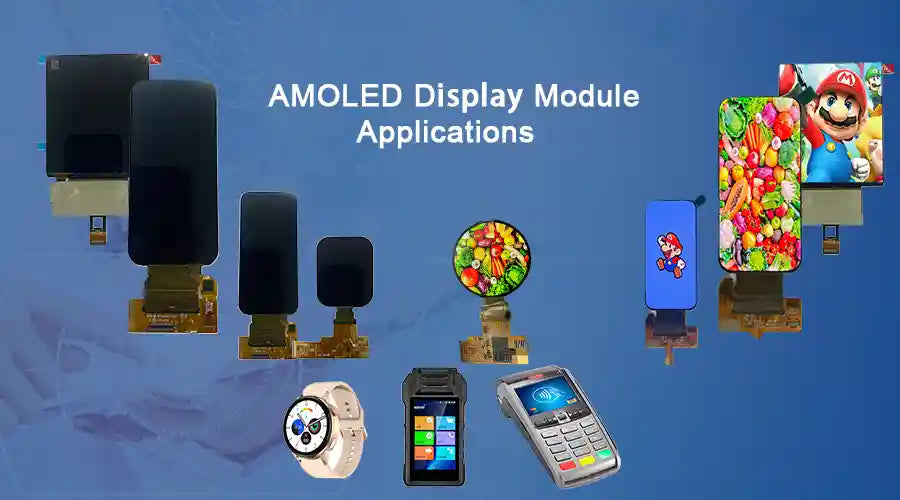
Whether you need raw MIPI panels or fully integrated smart modules, we build OLED displays designed for the demands of industrial engineering.
View Our OLED Display Lineup6. Quick FAQ for Integrators
Why should I avoid PMOLED for larger industrial HMIs?
PMOLED can work for small and simple displays, but it becomes inefficient for larger sizes and higher resolutions.
How do industrial OLED modules reduce burn-in risk?
Modern modules rely on DDIC-level compensation, including pixel shifting, current balancing, and aging correction routines.
Why is MIPI DSI preferred over traditional parallel interfaces?
MIPI DSI reduces pin count, simplifies routing, and improves resistance to electromagnetic interference.
What is the practical value of a smart OLED module?
It reduces the graphics workload on the host processor and allows the display module to manage visual output locally.


Leave a comment
This site is protected by hCaptcha and the hCaptcha Privacy Policy and Terms of Service apply.