
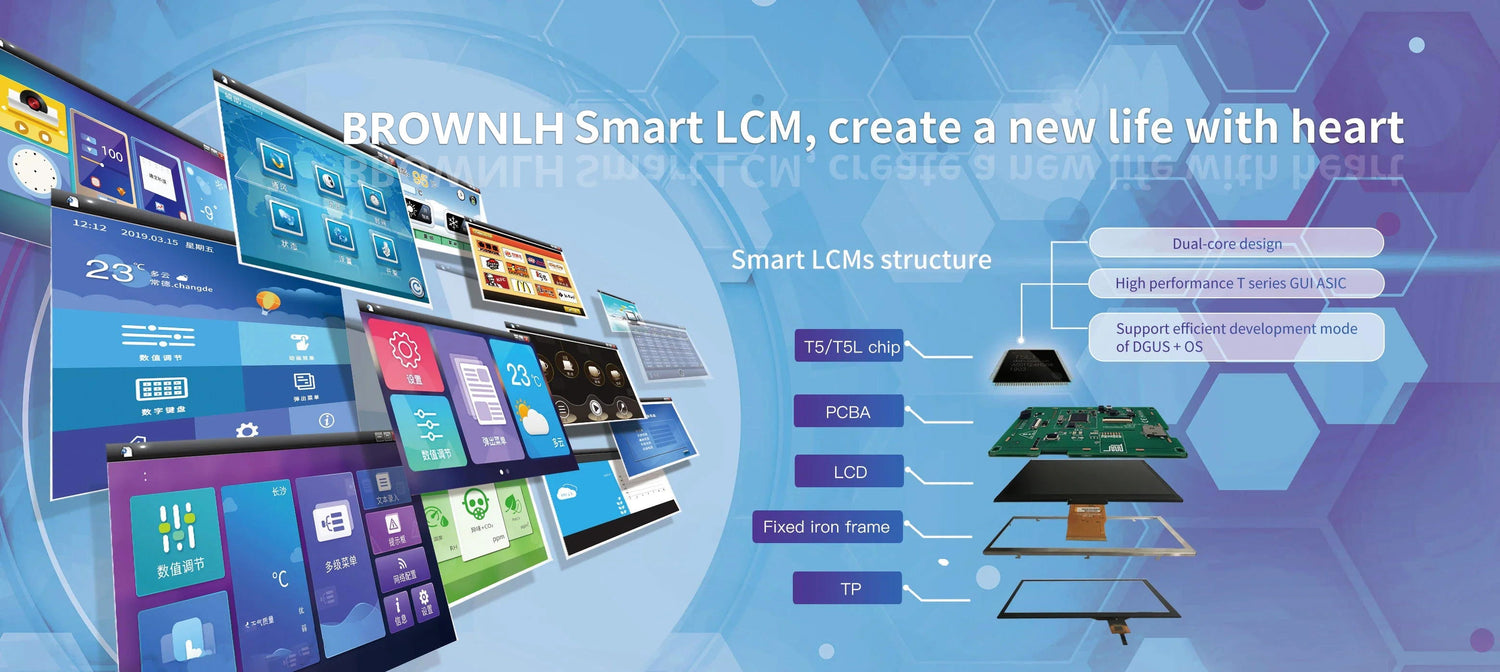
What is tft lcd display?
TFT LCD displays, known as Thin Film Transistor Liquid Crystal Displays, represent a significant advancement in visual technology. These displays are characterized by their ability to deliver high-resolution images and vivid colors. Unlike older LCD technologies, TFT LCDs incorporate tiny transistors at each pixel, allowing for precise control of image display. This results in clearer text and sharper images, making them ideal for various applications, including smartphones, televisions, and computer monitors. Their popularity stems from the combination of high image quality and energy efficiency, positioning them as a superior choice for devices requiring consistent, reliable visual performance.

The Versatile Uses of TFT LCD Displays: A Comprehensive Guide
TFT LCD (Thin-Film Transistor Liquid Crystal Display) technology has revolutionized the display industry, offering high-quality visuals and versatile applications across various fields. This comprehensive guide explores the diverse uses of TFT LCD displays and their impact on different industries.
1. Consumer Electronics
TFT LCD displays are integral to a wide range of consumer electronics, providing vibrant and clear visuals. Common applications include:
- Smartphones and Tablets: High-resolution screens for crisp images and videos.
- Laptops and Monitors: Enhanced color accuracy and wide viewing angles.
- Televisions: Ultra HD and 4K displays for immersive viewing experiences.
- Wearable Devices: Smartwatches and fitness trackers with compact, high-quality screens.
2. Automotive Industry
In the automotive sector, TFT LCD displays enhance both functionality and aesthetics:
- Dashboard Displays: Digital instrument clusters for real-time data and navigation.
- Infotainment Systems: Touchscreen interfaces for media, navigation, and vehicle settings.
- Rear-Seat Entertainment: High-definition screens for passenger entertainment.
3. Industrial Applications
TFT LCD technology is widely used in industrial settings for its durability and reliability:
- Control Panels: User-friendly interfaces for machinery and equipment control.
- Medical Devices: High-resolution displays for diagnostic equipment and patient monitoring.
- Point of Sale (POS) Systems: Clear and responsive screens for efficient transactions.
4. Gaming and Entertainment
The gaming and entertainment industries benefit greatly from TFT LCD displays:
- Gaming Monitors: High refresh rates and low response times for smooth gameplay.
- Handheld Gaming Devices: Portable consoles with vibrant displays for on-the-go gaming.
- Virtual Reality (VR) Headsets: Immersive visuals for an enhanced VR experience.
5. Advertising and Public Information
TFT LCD displays are effective tools for advertising and information dissemination:
- Digital Signage: Dynamic content display for advertisements and public information.
- Interactive Kiosks: Touchscreen interfaces for customer engagement and information access.
- Menu Boards: Clear and attractive displays for restaurants and cafes.
6. Education and Training
In educational settings, TFT LCD displays facilitate interactive learning
- Interactive Whiteboards: Touch-enabled displays for collaborative learning.
- E-Learning Devices: Tablets and laptops with high-quality screens for online education.
- Virtual Labs: Simulation-based learning with detailed visual representations.
7. Aerospace and Defense
TFT LCD technology is crucial in aerospace and defense for its reliability and performance:
- Cockpit Displays: High-resolution screens for flight information and navigation.
- Military Equipment: Durable and clear displays for tactical devices and communication systems.
- Simulation Systems: Realistic visuals for training and mission planning.
TFT LCD displays have become an essential component in various industries, offering unparalleled visual quality and versatility. From consumer electronics to aerospace, their applications are vast and continually evolving, driving innovation and enhancing user experiences across the board. As technology advances, the potential uses of TFT LCD displays will undoubtedly expand, further solidifying their importance in our digital world.

Exploring the Features and Applications of TFT LCD Displays
TFT LCD (Thin-Film Transistor Liquid Crystal Display) technology has become a cornerstone in the world of digital displays, known for its superior image quality, efficiency, and versatility. This section delves into the key features of TFT LCD displays and their wide-ranging applications across various fields.
Key Features of TFT LCD Displays
- High Resolution and Clarity: TFT LCD displays offer sharp, high-resolution images, making them ideal for applications requiring detailed visuals.
- Wide Viewing Angles: Advanced technology ensures consistent image quality from different viewing angles, enhancing user experience.
- Fast Response Time: Quick refresh rates and low response times are perfect for dynamic content, reducing motion blur.
- Energy Efficiency: TFT LCD displays consume less power compared to other display technologies, making them suitable for battery-powered devices.
- Durability: Built to withstand various environmental conditions, these displays are reliable in both consumer and industrial applications.
- Color Accuracy: Capable of displaying a wide color gamut, they provide vibrant and true-to-life colors.
Applications of TFT LCD Displays
- Consumer Electronics:
- Smartphones and Tablets: High-definition screens for media consumption and interactive applications.
- Laptops and Monitors: Enhanced productivity and entertainment with clear and vibrant displays.
- Automotive:
- Dashboard Displays: Digital clusters for real-time vehicle data and navigation.
- Infotainment Systems: Touchscreen interfaces for entertainment and control.
- Industrial:
- Control Panels: User-friendly interfaces for operating machinery and equipment.
- Medical Devices: High-resolution displays for accurate diagnostics and monitoring.
- Gaming:
- Monitors and Consoles: Fast response times and high refresh rates for an immersive gaming experience.
- VR Headsets: High-quality visuals for virtual reality applications.
- Advertising and Public Information:
- Digital Signage: Engaging and dynamic content for advertisements and information.
- Interactive Kiosks: Touch-enabled displays for customer interaction and information access.
- Education:
- Interactive Whiteboards: Facilitating collaborative and interactive learning.
- E-Learning Devices: High-quality screens for online education and digital content.
- Aerospace and Defense:
- Cockpit Displays: Reliable and clear visuals for navigation and flight information.
- Simulation Systems: Realistic training environments with detailed visual representations.
TFT LCD displays are a versatile and essential technology, offering high performance and adaptability across a multitude of applications. Their advanced features make them suitable for both everyday consumer use and specialized industrial applications. As technology continues to advance, the capabilities and applications of TFT LCD displays will continue to grow, driving innovation and enhancing the way we interact with digital content.

Unpacking the Technology Behind TFT LCD Displays and Their Key Features
TFT LCD (Thin-Film Transistor Liquid Crystal Display) technology is a pivotal advancement in the realm of digital displays, known for its high performance and wide range of applications. This section unpacks the underlying technology of TFT LCD displays and highlights their key features that make them indispensable in various industries.
Thin-Film Transistors
- Structure: TFT LCDs use a matrix of thin-film transistors, each controlling individual pixels. These transistors are made from semiconductor materials deposited on a glass substrate.
- Function: TFTs act as switches that regulate the flow of electrical current to each pixel, enabling precise control over brightness and color.
Liquid Crystal Layer
- Composition: The liquid crystal layer is sandwiched between two glass substrates. The liquid crystals align differently when subjected to an electric field, affecting the light passing through them.
- Operation: By adjusting the voltage applied to the TFTs, the orientation of the liquid crystals changes, modulating the light and producing images.
Backlighting
- Types: Common backlighting methods include LED and CCFL. LED backlighting is more energy-efficient and provides better color accuracy.
- Role: The backlight illuminates the liquid crystal layer, allowing the display to produce bright and vibrant images.
Key Features
- High Resolution and Clarity: TFT LCDs provide high pixel density, resulting in sharp and detailed images suitable for high-definition content.
- Wide Viewing Angles: Advanced TFT technology helps images remain consistent in color and contrast from different angles.
- Fast Response Time: Quick refresh rates and low response times reduce motion blur.
- Energy Efficiency: TFT LCDs consume less power than older display technologies.
- Durability: Designed to withstand temperature variations and mechanical stress.
- Color Accuracy: Capable of displaying a wide color gamut for vivid and true-to-life images.
The technology behind TFT LCD displays is a blend of precision engineering and practical design, resulting in displays that offer strong image quality, efficiency, and broad usability across many industries.

Vibrant Colors and High Resolution: Why TFT LCD Displays Are a Top Choice
In the world of digital displays, TFT LCD technology stands out for its ability to deliver vibrant colors and high resolution. These strengths make it a practical solution across consumer, commercial, and industrial products.
Color and Visual Performance
- Wide Color Gamut: TFT LCD displays can produce a broad range of colors for vivid image reproduction.
- Enhanced Contrast Ratios: Better contrast helps improve detail in both bright and dark content.
- Improved Backlighting: LED backlighting improves brightness uniformity and energy efficiency.
High-Resolution Support
- Sharp and Detailed Images: High pixel density supports detailed visuals and readable text.
- Support for HD and 4K Content: Suitable for modern media applications.
- Enhanced Viewing Experience: High resolution and stable color help create a clearer overall image.
Broad Product Compatibility
TFT LCD modules are available in a wide range of sizes, interfaces, and brightness options, making them easy to adapt to different products and industries.
Common Use Cases
- Consumer Electronics: Smartphones, tablets, laptops, and monitors.
- Television and Home Entertainment: HD and 4K televisions, home displays, and portable media systems.
- Professional and Industrial Use: Medical displays, engineering systems, and industrial interfaces.
- Gaming and Virtual Reality: Gaming monitors, portable systems, and immersive display devices.
TFT LCD displays remain widely used because they combine image quality, manufacturing maturity, and practical product flexibility.

The Importance of TFT LCD Displays in Industrial Applications
TFT LCD technology is increasingly used in industrial settings because it offers clear visual output, reliable operation, and strong adaptability across equipment types.
High Resolution and Clarity
Industrial systems often require clear presentation of numbers, menus, process data, and operating status. A display with sharp image quality helps improve accuracy and usability.
- Precise Display: High pixel density helps improve readability and detail.
- HD and 4K Support: Higher resolution can support more advanced industrial visualization needs.
Durability and Reliability
- Sturdy and Durable: Industrial TFT LCD displays can be used in environments involving temperature variation, humidity, and mechanical stress.
- Long Lifespan: Long operating life helps reduce maintenance and replacement frequency.
Efficiency and Power Consumption
- Low Power Consumption: Suitable for long-running equipment and embedded systems.
- LED Backlight Technology: Improves efficiency, brightness, and visual consistency.
Common Industrial Use Cases
- Industrial Control Panels: Used for operation, monitoring, and process control.
- Medical Devices: Used in diagnostic and patient monitoring equipment.
- Transportation and Logistics: Applied in vehicle systems, navigation, and warehouse management terminals.
TFT LCD displays continue to be a practical choice in industrial applications because they balance readability, durability, and system compatibility.

Applications of TFT LCD Displays in Education and Training
1. Smart Classrooms and Multimedia Teaching
- TFT LCD displays are widely used in smart classrooms because they can present videos, diagrams, and teaching materials with good clarity and color performance.
- Teachers can use them to display educational visuals that help improve explanation and understanding.
2. Interactive Whiteboards and Interactive Teaching
- TFT LCD displays are often used in interactive whiteboards and touch-based teaching systems.
- They allow writing, annotation, and direct classroom interaction, making lessons more visual and engaging.
3. Remote Education and Online Training
- With the growth of remote learning, TFT LCD displays are used in devices that support online classes and virtual training.
- Clear video presentation and readable interface content improve the learning experience.
4. Laboratory and Practical Teaching
- In laboratory and technical teaching, TFT LCD displays are used to show demonstrations, images, and operating processes.
- They are especially useful in medical, engineering, and technical education where clear visual detail matters.
5. Information Display and Announcements
- Schools and training institutions use TFT LCD displays for notices, schedules, announcements, and other public information.
- They help information reach students and staff more clearly and efficiently.
6. Resource Sharing and Collaborative Learning
- Connected display systems can support collaborative learning, content sharing, and synchronized classroom activities.
- This helps create more interactive and cooperative teaching environments.
TFT LCD displays continue to support education and training because they are flexible, clear, and easy to integrate into both traditional and digital learning systems.


Leave a comment
This site is protected by hCaptcha and the hCaptcha Privacy Policy and Terms of Service apply.