
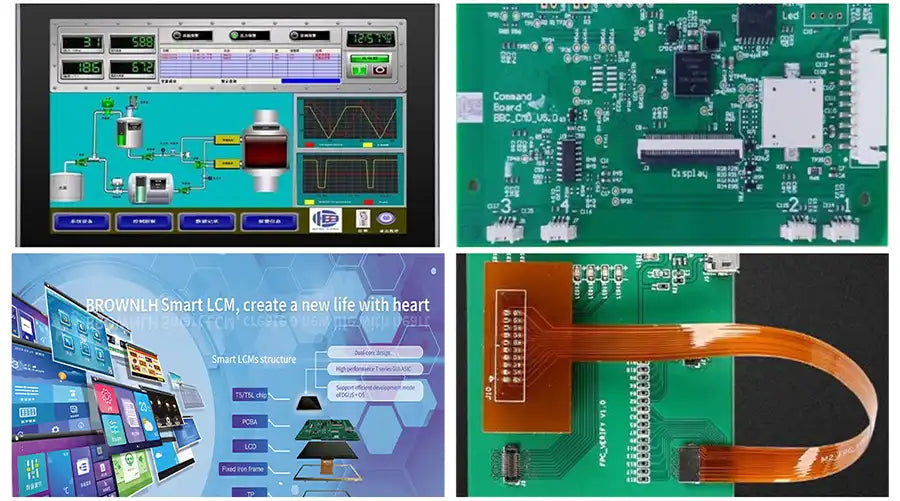
1. The Visual Revolution in Industry 4.0
For decades, industrial HMI design was defined by functional simplicity. Seven-segment displays, monochrome STN LCDs, and physical buttons dominated because they were rugged, inexpensive, and familiar. However, Industry 4.0 and the expansion of IoT-connected systems have fundamentally changed the role of the display.
Operators are no longer monitoring only simple values. They are navigating complex menus, interpreting layered datasets, and performing on-device diagnostics. At the same time, users now compare industrial equipment interfaces against the visual standards of smartphones and tablets. A dull, slow-response display on high-value machinery can undermine the perceived quality of the equipment itself.
OLED technology offers clear advantages, including high contrast, fast response time, and wide viewing angles. Yet the market is flooded with standard modules originally designed for consumer electronics such as wearables and portable gadgets. These modules may be cost-effective, but they are engineered for mild operating conditions that rarely match the factory floor.

2. The Physics of Failure: Why Standard OLEDs Die
To understand why customization matters, it is necessary to look at the failure modes of standard OLED modules at both material and structural levels. Unlike LCDs, OLEDs rely on organic compounds that are inherently more sensitive to environmental stress.
2.1 The Thermal Degradation Threshold
Consumer OLED modules are commonly rated for relatively narrow operating temperatures. In industrial environments, that is often insufficient. Organic emissive layers have a glass transition threshold. When ambient heat combined with panel self-heating pushes the material beyond that threshold, structural change begins inside the organic layers.
2.2 The Moisture Intrusion Catastrophe
The OLED cathode is typically built from metals that are highly reactive to oxygen and moisture. Standard encapsulation methods used in consumer devices are often optimized for shorter product life cycles. In industrial settings with condensation, washdown exposure, or long-term humidity stress, moisture can gradually penetrate adhesives and barrier layers.
Once moisture reaches the reactive layers, oxidation begins quickly. The result is growing non-conductive regions that appear as black voids and may eventually consume the panel.
2.3 The Burn-In Reality
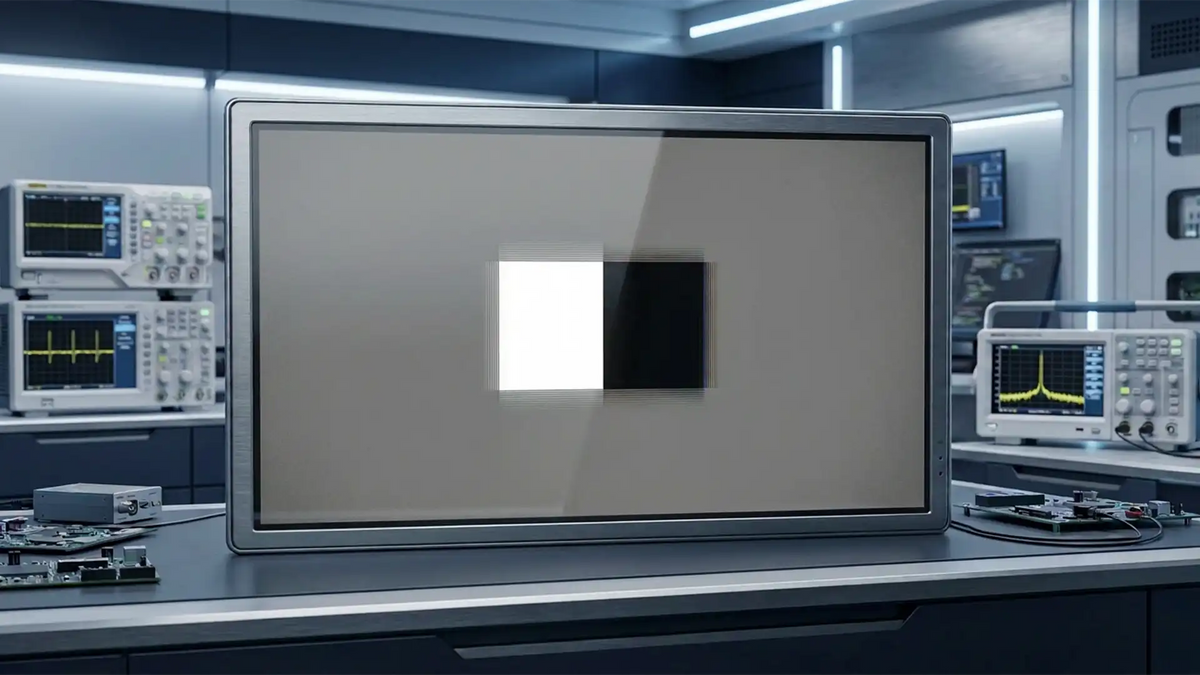
Differential aging remains one of the most important OLED design considerations. In consumer devices, content changes constantly. In industrial HMIs, static icons, alarms, and status bars can remain in fixed positions for extended periods. Standard modules often lack the driver logic and system tuning needed to reduce this effect. Without mitigation, image retention can become permanent much sooner than many industrial applications can tolerate.
3. Engineering the Custom Solution
Customization is not simply a matter of changing panel dimensions. It is a full redesign of the module stack for harsher environments. That work typically spans material selection, structural reinforcement, and optical optimization.
3.1 Material Science: The High-Tg Advantage
Industrial custom OLED modules can use specialized organic systems with improved thermal stability. By selecting materials with higher glass transition performance, the module can operate more reliably across wider environmental conditions.
Standard Range: -20°C to +60°C storage
Industrial Custom Range: up to -40°C to +85°C operating, depending on stack and system design
This matters in automotive, aerospace, energy, and outdoor equipment where low-temperature start-up and high-temperature enclosure survival are both critical.
3.2 Structural Mechanics: Ruggedization
Thin consumer glass structures are often unsuitable for handheld industrial devices, vehicle-mounted systems, or machinery exposed to vibration and impact. A custom module can integrate stronger materials and reinforced connection design.
| Component | Standard Consumer Spec | Industrial Custom Spec | Benefit |
|---|---|---|---|
| Cover Lens | 0.5mm Soda-Lime Glass | 1.1mm to 3.0mm strengthened cover glass | Improves impact resistance for harsher field use. |
| FPC | Single-layer, minimal copper | Multi-layer, EMI-shielded, corrosion-resistant design | Improves signal integrity and long-term durability. |
| Interconnect | Standard ACF bonding | Reinforced bonding with additional protection | Reduces line-out risk from vibration and thermal cycling. |
3.3 Optical Bonding: The Clarity Factor
Standard modules often leave an air gap between the cover lens and the display. In industrial or outdoor environments, this can reduce readability by increasing internal reflection and can also create condensation problems during rapid temperature shifts.
Custom Solution: Full optical bonding with LOCA or OCA turns the lens and display into a single optical body. This reduces internal reflection, improves structural rigidity, and helps eliminate fogging.

4. Advanced Touch and Interface Integration
Industrial users do not interact with displays under ideal consumer conditions. They may wear gloves, work with wet or oily hands, or operate near heavy electromagnetic interference. That changes the touch and interface requirements dramatically.
4.1 Capacitive Touch Tuning
Standard capacitive touch firmware is optimized for bare-finger use. Industrial touch systems need deeper controller tuning to respond accurately in difficult environments.
- Glove Mode: Increases sensitivity to recognize touch through gloves or protective materials.
- Water Rejection: Helps distinguish between real touch input and water-related false triggering.
- Noise Immunity: Supports operation in environments with switching power supplies, motors, or other EMI sources.
4.2 Interface Customization
Many consumer OLED modules use interfaces such as MIPI DSI, which suit high-performance application processors. Industrial control systems, however, often depend on SPI, I2C, or parallel MCU-friendly architectures. Custom FPC and control design can bridge this gap and allow a modern OLED to integrate into legacy hardware without requiring a full motherboard redesign.
5. Quality Assurance and Torture Testing
A datasheet makes claims. Validation proves them. Custom industrial OLED modules are typically qualified using far more severe tests than standard consumer modules would survive.
Test Protocol Examples
- Thermal Shock: Repeated cycling across extreme temperatures to test glass, adhesive, and FPC compatibility.
- High Temperature and High Humidity: Long-duration operation in humid heat to verify encapsulation and corrosion resistance.
- Drop Testing: Impact validation to confirm cover-lens and structural robustness.
- ESD Testing: Electrical discharge validation to ensure stable driver and touch-controller operation.
6. Supply Chain and Economic Analysis
The decision to customize often meets resistance because of upfront engineering costs. However, a broader total-cost-of-ownership view often shows that standard modules are more expensive over the full life of an industrial product.
6.1 The EOL Trap
Consumer electronics move quickly. A standard OLED module used today may be discontinued within a short cycle. Industrial products often remain in production or field support for many years. If the design depends on a standard module, repeated end-of-life notices can trigger enclosure redesign, new software work, new validation, and even re-certification.
The Custom Guarantee: A custom project can be tied to long-term supply planning, material banking, or controlled migration paths so the customer is not forced into repeated redesign cycles.
6.2 The Cost of Failure
7. Industry Case Studies
Case A: Portable Gas Detector
Challenge: A client needed a display for a gas detector used in harsh outdoor environments, where the module had to survive drops, salt exposure, and bright sunlight. Standard OLED modules showed poor readability and insufficient mechanical durability.
Custom Solution:
Display: High-brightness OLED architecture
Protection: Strengthened cover glass with anti-reflective treatment
Bonding: Full optical bonding to reduce internal reflection
Result: Improved outdoor readability and stronger resistance to impact and environmental exposure.
Case B: Medical Infusion Pump
Challenge: A medical equipment manufacturer needed a touchscreen interface that would operate reliably with gloves and in the presence of fluid contamination. Standard touch solutions produced false inputs and poor responsiveness.
Custom Solution:
Touch: Custom-tuned controller with glove and water-rejection algorithms
Surface: Anti-fingerprint and cleaning-resistant surface treatment
Result: More stable touch performance in demanding clinical environments and reduced operator frustration.
8. Future Outlook and Conclusion
The future of industrial HMI design is moving toward deeper integration, more flexible form factors, and more demanding visual performance. Transparent OLED is being explored for heads-up interfaces, while flexible OLED structures are being considered for curved and ergonomically shaped controls.
Despite the appeal of low-cost standard modules, the hidden cost of field failure, supply instability, and compromised usability makes them a weak choice for serious industrial engineering. Custom OLED modules provide the ruggedization, integration, and supply continuity required for real-world deployment. In industrial systems, reliability is not a secondary feature. It is the core requirement.
Frequently Asked Questions
What is the typical lead time for a custom OLED project?
Custom projects usually follow a staged timeline that includes design review, tooling or sample preparation, customer validation, and then mass production. In many cases, the total cycle from concept to production falls within roughly three to four months, depending on complexity and approval speed.
Is there a significant difference between PMOLED and AMOLED for industrial use?
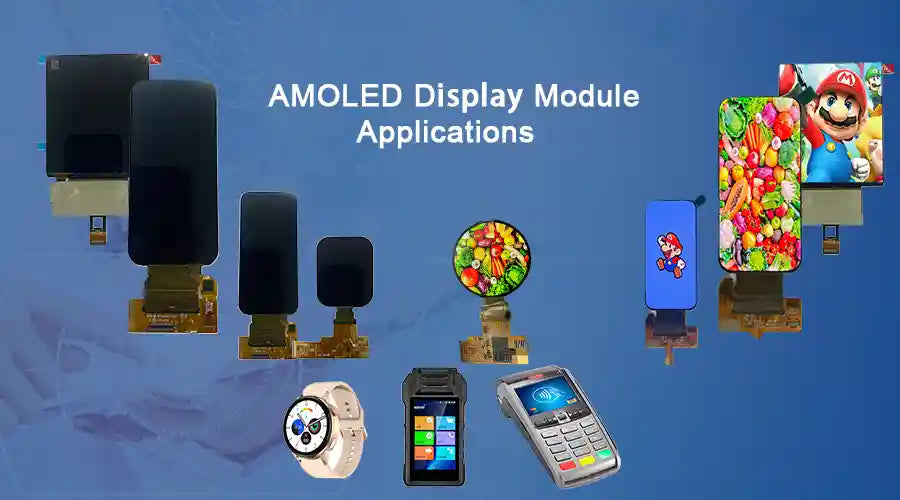
Yes. PMOLED is generally more suitable for smaller, simpler, lower-resolution applications such as text or icon displays. AMOLED supports higher resolution, full color, and more advanced graphical interfaces, making it better suited to complex industrial GUI applications.
How do you mitigate EMI in custom designs?
Typical strategies include shielded FPC design, careful grounding architecture, shorter signal paths, and, where appropriate, structural shielding through the module frame or surrounding mechanical design.
Can custom OLED modules be readable in direct sunlight?
Yes. Outdoor readability can be improved through a combination of higher brightness drive strategy, optical bonding, anti-reflective treatment, and circular polarizer design, depending on the application.
What happens if the driver IC becomes obsolete?
In a structured custom supply relationship, driver IC obsolescence is usually managed through advance notice, last-time-buy planning, or controlled engineering migration to a compatible replacement solution.

댓글 남기기
이 사이트는 hCaptcha에 의해 보호되며, hCaptcha의 개인 정보 보호 정책 과 서비스 약관 이 적용됩니다.