
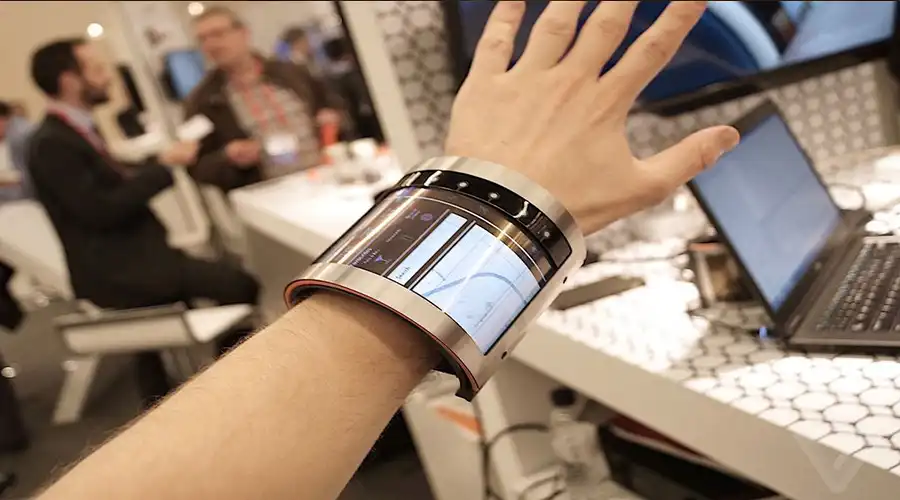
An in-depth analysis of the engineering breakthroughs powering the next generation of consumer electronics.
1. Introduction: The Shift to Flexible Forms
For over a decade, the black rectangle has dominated consumer electronics. Smartphones, tablets, and televisions have largely been defined by rigid substrates that limit form factor. Today, display technology is going through a major transition as flexible OLED architectures move from concept to mass-market reality.
Unlike LCDs, OLEDs are self-emissive and do not require a separate backlight unit. That allows the display stack to become thinner and structurally more adaptable. What was once a theoretical advantage has become the foundation for foldable, curved, and rollable consumer devices.
The industry has also moved beyond the early stage where users accepted fragility as the cost of innovation. Flexible devices are now expected to deliver meaningful durability, high visual quality, and day-to-day practicality. That shift is being driven by major breakthroughs in hinge mechanics, material science, support structures, and reliability engineering.

2. The Mechanics of the Fold: Hinge Evolution
While flexible OLED panels attract the most attention, the hinge is one of the most critical engineering systems in a foldable device. It is not a simple pivot. It is a precision mechanism designed to manage stress distribution, guide panel motion, maintain structural stability, and limit contamination by dust or debris.
The U-Shape vs. The Waterdrop
Early foldable designs used a tighter U-shaped folding path. Although functional, that geometry often created a visible closing gap between device halves and concentrated more stress into the folded region.
The industry has increasingly moved toward waterdrop-style hinge architectures. In these systems, the display retracts into a larger-radius cavity when the product closes. This produces two major benefits:
- Zero-gap or near-zero-gap closure: The device can close more cleanly and reduce the chance of foreign particles entering the internal space.
- Lower bending stress: The larger internal radius helps distribute strain more evenly across the fold area, which improves both durability and crease control.
3. Material Science: CPI vs. Ultra-Thin Glass (UTG)
The cover window is one of the most difficult layers to engineer in a foldable display. It must be flexible enough to survive repeated bending, while also providing a touch surface that feels smooth, durable, and premium in daily use.
The Era of Plastic
First-generation foldable devices relied heavily on colorless polyimide, or CPI. This material offered the flexibility needed for repeated folding, but it also came with compromises. CPI surfaces generally felt softer, scratched more easily, and could show permanent marks from fingernails or sharp objects.
The Revolution of UTG
Ultra-thin glass has become the preferred solution for many modern foldables. At extremely low thickness, glass becomes flexible enough to participate in repeated bending while retaining more of the feel and optical performance associated with conventional glass surfaces.
4. Solving the Crease Conundrum
The crease remains one of the most discussed aspects of foldable displays. Any material that undergoes repeated deformation will exhibit some stress signature, but current engineering strategies are reducing both the visible depth of the crease and the tactile awareness of it during use.
Modern crease reduction methods often combine multiple approaches. These can include larger fold radii, tuned support plates under the panel, optimized display stack thickness, and carefully selected optical adhesives that reduce the visual impact of surface distortion.
- Floating support structures: These can help support the fold region when the device is open and reduce the apparent dip across the center line.
- Optical adhesive tuning: Advanced adhesive systems can help reduce the way light bends around uneven geometry, making the crease appear less obvious under normal viewing conditions.

5. Rollable OLEDs: Beyond the Fold
Rollable and slidable OLED devices represent the next major stage of flexible electronics. Instead of folding sharply around a hinge, the panel wraps around a larger curved path and stores inside the body of the device. This can reduce thickness penalties and greatly reduce crease visibility.
How It Works
In a rollable product, part of the screen remains stored inside the chassis and extends outward when activated. The engineering challenge is that a thin OLED stack alone does not provide enough rigidity when fully deployed. To solve that problem, designers use backing systems such as interlocking support slats or sliding reinforcement structures that become rigid when extended and compact when retracted.
6. The Automotive Revolution: Flexible Cockpits
Automotive interiors are becoming one of the most important application areas for flexible OLED technology. Instead of adding flat screens onto dashboards, manufacturers are increasingly integrating curved and continuous displays that follow the design language of the cabin.
Tandem OLED Structures
Vehicle environments create severe demands on display systems, including heat, cold, vibration, and prolonged exposure to sunlight. For this reason, automotive OLEDs often use tandem structures with multiple emissive stacks. These designs can significantly improve brightness and extend display lifespan compared with conventional single-stack consumer OLED systems.
- Higher brightness: Important for visibility in daytime driving conditions.
- Longer service life: Distributing electrical and optical load across multiple emissive units improves durability for long automotive product cycles.

7. Durability and Testing Standards
Flexible OLED devices are no longer evaluated only by appearance. Durability has become a measurable engineering target, supported by cycle testing, environmental validation, and structural analysis.
- Folding cycle validation: Modern products are often tested for hundreds of thousands of open-and-close cycles.
- Water resistance: Advanced foldables can include meaningful water protection through sealing design and corrosion-control measures.
- Temperature reliability: Devices are evaluated under both low- and high-temperature conditions to verify that cover materials, adhesives, and support systems remain stable.
8. Market Outlook and Future Trends
As manufacturing yields improve and production costs decrease, flexible OLED technology is expected to move beyond flagship devices and into broader market segments. At the same time, designers are exploring new form factors that were previously impractical or impossible with rigid display systems.
Future directions are likely to include multi-axis foldable products, larger-format hybrid computing devices, and more adaptive hardware formats in which the display surface defines the device experience. The distinction between physical product shape and digital content presentation is becoming increasingly fluid.
9. Frequently Asked Questions
Do foldable phones still have a visible crease?
Yes, in most cases some crease visibility remains. However, it has been reduced significantly through hinge redesign, larger bend radii, optimized support structures, and improved display stack engineering.
Is Ultra-Thin Glass actually glass?
Yes. UTG is genuine glass processed to an extremely low thickness so it can flex. In commercial devices, it is typically combined with additional protective layers to improve safety and surface durability.
How long do foldable screens last?
Modern foldable devices are commonly engineered for very high folding-cycle counts. Actual lifespan depends on design quality, environmental exposure, and daily usage patterns, but reliability has improved substantially compared with first-generation products.
What is the difference between foldable and rollable OLED?
A foldable OLED bends around a fixed hinge region, while a rollable OLED wraps around a curved storage path inside the device. Rollable systems can reduce crease depth, but they require more complex extension and support mechanisms.
Are flexible screens used in cars safe?
Yes. Automotive-grade flexible OLED systems are engineered to much stricter environmental and lifecycle requirements than typical consumer electronics, including long-term durability under thermal, optical, and vibration stress.
Can I use a regular screen protector on a foldable phone?
Generally, no. Many foldable devices rely on a factory-applied top layer that is part of the intended display system. Using the wrong third-party protector can interfere with folding performance or damage the surface layers.


댓글 남기기
이 사이트는 hCaptcha에 의해 보호되며, hCaptcha의 개인 정보 보호 정책 과 서비스 약관 이 적용됩니다.