
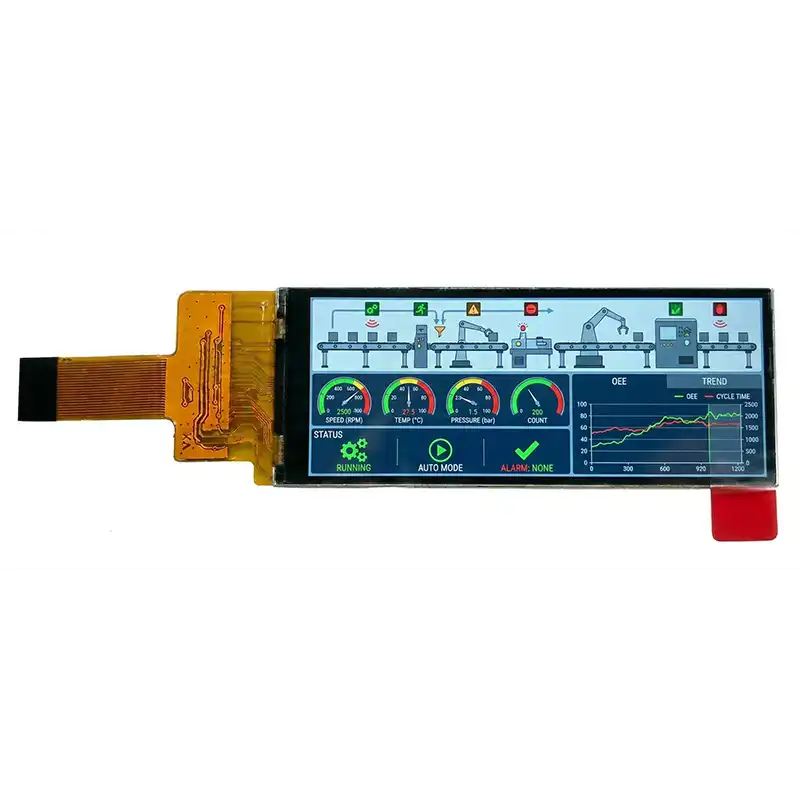
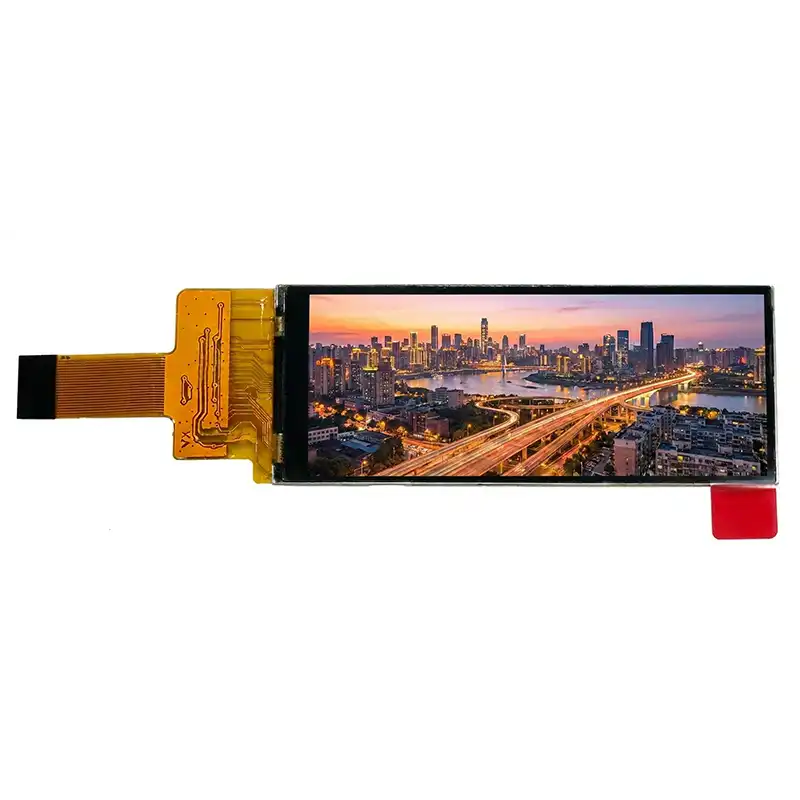
Bar Type LCD Module

Our Bar Type LCD Module series is developed for OEM manufacturers, industrial equipment developers, and system integrators that require a narrow, elongated display module for product integration. This is not positioned as a standard finished display for general retail use, but as a semi-finished display component that can better support custom hardware design, interface matching, and project-based development.

In many custom projects, standard screens do not fit the final product structure. Buyers often need a custom bar type LCD module that works with specific enclosure dimensions, control board architecture, front-panel layouts, brightness requirements, and application environments. That is why this product category is especially relevant for embedded systems, industrial devices, transportation equipment, and smart commercial terminals.

OEM / ODM Custom Integration Semi-Finished Module Industrial Use Project Support Display Customization

Who This Product Is For

  • Equipment manufacturers building their own device platforms
  • Industrial design teams needing a stretched display format
  • System integrators matching displays with custom control solutions
  • Buyers sourcing a bar type LCD module supplier for OEM projects
  • Developers needing a module rather than a finished display product
Meta Title

Custom Bar Type LCD Module Manufacturer for OEM & Industrial Projects

Meta Description

Custom Bar Type LCD Module manufacturer for OEM and industrial projects, with flexible size, brightness, interface, touch, structure, and embedded integration options.

Why This Page Is Positioned Around Custom Module Projects

A Bar Type LCD Module is selected very differently from a finished display. In real B2B projects, customers usually do not start by asking only for a screen size. They start with the product they are building. The key questions are often about available installation space, visible display area, enclosure design, hardware interface, user interaction, ambient light conditions, and long-term project fit. Because of this, the display module must support the product development process instead of limiting it.

This page is intentionally written around project-based selection logic rather than generic consumer description. That approach is important for both buyers and Google SEO. Buyers searching for a bar type LCD module manufacturer or custom bar type LCD module usually want to know whether the supplier understands real product integration challenges. Search engines also tend to prefer pages that demonstrate clear topical focus, practical value, and strong alignment with user intent. By centering the content on module-level customization, OEM integration, and application suitability, the page better matches the type of commercial search traffic most likely to convert.

Buyer-Focused Strengths of a Bar Type LCD Module

Better for OEM Design

A module-level solution gives product teams more flexibility than a finished display when structure, interface, and appearance must be coordinated.

Fits Narrow Spaces

The elongated display format helps make better use of limited front-panel area in industrial and embedded equipment.

Supports Custom Direction

Useful for projects requiring a bar type TFT LCD module with application-driven size, brightness, or mechanical planning.

Improves Product Identity

A long-format display can help create a more specialized interface and a cleaner final device appearance.

Why Standard Finished Displays May Not Fit OEM Projects

Common Problems with Standard Display Products

  • Fixed housing may not match the customer’s enclosure structure
  • Standard proportions may waste panel space in long and narrow equipment
  • Predefined interfaces may not align with the project’s hardware design
  • Finished products can increase redesign work during integration
  • General retail displays are often less suitable for embedded use planning

Why a Custom Bar Type LCD Module Is Often Better

  • Helps align display direction with the actual device concept
  • Supports closer matching between module and motherboard architecture
  • Reduces mismatch between visible area and front-panel layout
  • Improves engineering control during OEM product development
  • Provides a stronger base for long-term project supply and revision planning

Experience-based selection logic: In custom equipment projects, buyers often discover that the display issue is not only about screen size. It is usually connected to structure, interface, readability, and final assembly. A bar LCD module becomes valuable when the project needs a display component that can fit those conditions more naturally.

Key Points Buyers Usually Confirm Before Selection

Selection Point Why Buyers Check It Project Impact
Installation Space Determines whether the display format can fit the product structure Directly affects enclosure design and module suitability
Visible Area Ensures the screen supports the intended content layout Impacts interface readability and front-panel efficiency
Brightness Requirement Different environments require different visual performance Affects readability in real operating conditions
Interface Compatibility The display must work with the system architecture Reduces integration risk and avoids redesign
Touch Need Some devices require interaction at the display level Changes front design and user operation logic
Operating Environment Industrial and commercial use conditions vary widely Influences display planning and project suitability
Project Stage Early design and late-stage procurement have different priorities Helps define the most practical module path

Customization Options for a Bar Type LCD Module

A custom bar type LCD module is valuable because the display can be planned according to the real conditions of the final equipment. In OEM development, that flexibility often improves both technical fit and commercial viability. For example, one customer may prioritize a slim module outline for compact embedded installation, while another may focus on higher brightness for easier readability in stronger ambient light. Some projects need touch integration, while others care more about interface compatibility and front-panel proportion.

Size & Display Area

Suitable for applications where the visible area must match a long, narrow enclosure or a specific information layout.

Brightness Planning

Important for devices used in different lighting conditions, from indoor commercial terminals to more demanding environments.

Interface Direction

Helps the bar type TFT LCD module fit more effectively into the customer’s hardware system and control logic.

Touch & Front Integration

Supports products that require a more complete front-end interaction experience or a cleaner integrated appearance.

Mechanical Coordination

Important when the display must work with mounting concepts, internal assembly structure, and enclosure limitations.

Project-Oriented Adjustment

More practical for OEM development than forcing a standard finished display into a product that was not designed for it.

Application-Based Selection Logic

Industrial Equipment

Industrial devices often require a display that can fit into compact control areas while presenting machine status, process information, or operator guidance in a stable and efficient format. A bar type LCD module is often selected because it supports better integration with specialized equipment rather than looking like an external monitor added afterward.

Transportation Systems

Transportation applications benefit from long-format display layouts because route, scheduling, and passenger information can often be presented more clearly in a narrow visual area. In these projects, both readability and installation shape are important.

Smart Retail Devices

Shelf-edge systems, vending equipment, digital merchandising units, and smart cabinets often require narrow screens that fit modern commercial device designs. A custom bar type LCD module helps improve both product appearance and practical display efficiency.

Embedded Terminals and Branded Devices

For communication products, self-service terminals, and other proprietary electronics, a module-level solution offers more control over interface design, structure, and final product identity than a fixed finished display product.

How Module-Level Planning Helps Reduce Integration Risk

One of the strongest trust signals in B2B display sourcing is whether the supplier understands integration risk before volume decisions are made. In custom projects, display selection affects more than appearance. It can influence enclosure redesign, control board compatibility, front-panel usability, and even the timing of product validation. A bar type LCD module supplier focused on project development should therefore help buyers think beyond the screen itself.

When buyers review a display module early in the process, they can better coordinate the relationship between the active display area, external outline, mounting concept, and hardware path of the final product. This often reduces costly changes later. It also makes product development more efficient because the display direction is aligned with real design conditions rather than adjusted only after the product structure is already fixed.

For this reason, many customers prefer a bar type LCD module manufacturer that can support requirement review, application matching, and project communication instead of simply supplying a generic panel list. That kind of cooperation reflects both experience and practical expertise, which are key E-E-A-T signals for a product page like this.

Project Support Process

01

Requirement Review

Confirm the application type, installation concept, and general display direction needed for the project.

02

Selection Matching

Review display format, custom direction, and module-level suitability based on project conditions.

03

Integration Evaluation

Align the module with enclosure logic, interface expectations, and equipment development priorities.

04

Follow-Up Cooperation

Support project communication from early evaluation toward sample review and supply coordination.

Why This Structure Is Stronger for Google SEO and E-E-A-T

This page does more than define a product. It explains who the product is for, why standard alternatives may not fit, how buyers usually evaluate module selection, and why a custom approach matters in real project development. That helps strengthen topical depth and buyer usefulness, which are more aligned with Google’s quality expectations than a keyword-only product description.

The content also naturally covers high-relevance search phrases such as Bar Type LCD Module, custom bar type LCD module, bar type TFT LCD module, industrial bar LCD module, bar type LCD module supplier, and bar type LCD module manufacturer. More importantly, those keywords are supported by experience-driven and decision-oriented content. That balance improves relevance without making the page feel artificially optimized.

For a B2B product page, E-E-A-T is strengthened when the content clearly reflects real industry understanding. In this case, the strongest signals come from the way the page addresses selection logic, integration concerns, OEM project conditions, and application fit. That makes the page more credible to both buyers and search engines.

Custom Bar Type LCD Module for OEM and Industrial Projects

If you are sourcing a Bar Type LCD Module for a custom equipment project, it is usually helpful to confirm the installation direction, display area expectation, application environment, interface logic, and whether touch or front integration is needed. These points make solution matching more accurate and reduce unnecessary redesign risk.

A custom bar type LCD module is most suitable when the final product requires stronger compatibility with enclosure structure, hardware architecture, and branded interface design than a standard finished display can offer.

  • Suitable for OEM and ODM development
  • Better for embedded and industrial integration
  • Supports project-based customization direction
  • More relevant for buyers seeking long-term module cooperation

Filter

Sortieren nach:

Bar LCD Module Specifications

Our Bar LCD Module series is designed for OEM, industrial control, automotive display, smart home, and embedded integration projects. These stretched LCD modules are available in multiple sizes, resolutions, brightness levels, and interface options to support custom product development and application-based selection.

Compact Bar LCD Modules (2.5" - 4.9")

Size Orientation Resolution Brightness (nits) Interface Driver IC Main Application
2.5 inch Portrait 100 x 310 350 4-line / SPI ST7789 Smart Home, Portable Devices
2.99 inch Portrait 268 x 800 350 40pin / RGB / MIPI ST7701S Smart Home, Industrial Control
3.4 inch Portrait 180 x 640 300 SPI / MCU / MIPI AXS15231B Smart Home, Portable Devices
3.71 inch Portrait 240 x 960 300 40pin / RGB ST7701S-G5 Smart Home, Industrial Control
4.0 inch Portrait 400 x 960 500 40pin / RGB ST7701S Smart Home, Industrial Control
4.6 inch Portrait 320 x 960 400 40pin / RGB ST7701S Smart Home, Industrial Control
4.9 inch Portrait 202 x 960 400 40pin / RGB ST7701S Smart Home, Industrial Control

Industrial & Embedded Bar LCD Modules (6.2" - 9.16")

Size Orientation Resolution Brightness (nits) Interface Driver IC Main Application
6.2 inch Landscape 360 x 960 500 - 1000 40pin / RGB (20-pair LVDS) HX8290A06 Industrial Control, Automotive Display
6.7 inch Portrait 720 x 1560 1200 40pin / MIPI ST7123P Smartphone, Handheld Terminal
6.86 inch Portrait 480 x 1280 500 40pin / MIPI FL7705 Smart Home, Industrial Control
7.0 inch Portrait 280 x 1424 500 30pin / MIPI OTA7290B Smart Home, Industrial Control
8.01 inch Landscape 1600 x 480 500 40pin / LVDS HX8249 / HX8678 Automotive Display, Industrial Control
8.1 inch Portrait 600 x 1600 500 40pin / MIPI FL7707 Smart Home, Industrial Control
8.8 inch Landscape 1280 x 480 500 - 1000 60pin / LVDS EK79202 Automotive Display, Industrial Control
8.88 inch Portrait 480 x 1920 500 - 1200 40pin / MIPI OTA7290B Smart Home, Industrial Control
9.16 inch Portrait 462 x 1920 500 40pin / MIPI FL7707 Smart Home, Industrial Control

Large Bar LCD Modules for Automotive & Control Systems (10.3" - 15")

Size Orientation Resolution Brightness (nits) Interface Driver IC Main Application
10.3 inch Landscape 1920 x 720 1000 50pin / LVDS Not Provided Automotive Display, Industrial Control
11.2 inch Portrait 440 x 1920 500 40pin / MIPI FL7707 Smart Home, Industrial Control
12.3 inch Landscape 1920 x 720 1000 50pin / LVDS Not Provided Automotive Display, Industrial Control
15 inch Landscape 1920 x 720 500 60pin / LVDS HX82102 Automotive Display, Industrial Control

Contact Us

Do you have any question?

OLED DISPLAY

Blog posts
View all
TFT LCD Crosstalk: Definition, Causes and Solutions

TFT LCD Crosstalk: Definition, Causes and Solutions

Contents What Is TFT LCD Crosstalk? Basic Definition Why Crosstalk Matters Why Crosstalk Is More Visible in Modern Displays Types of Crosstalk in TFT LCD Panels Horizontal Crosstalk Vertical C...

Inside Industrial OLED DISPLAY Modules: A Hardware Engineer's Guide to Driving Architecture

Inside Industrial OLED DISPLAY Modules: A Hardware Engineer's Guide to Driving Architecture

Table of Contents 1. The Basics: Why AMOLED Won the Industrial Market PMOLED Limits in Industrial Use Why AMOLED Became the Standard 2. The DDIC: Doing the Heavy Lifting Signal Conversio...
The Ultimate 2026 Guide to Industrial OLED DISPLAY: High Reliability, HMI Innovation, and Lifespan Management

The Ultimate 2026 Guide to Industrial OLED DISPLAY: High Reliability, HMI Innovation, and Lifespan Management

Table of Contents 1. High-Reliability Selection & Anti-Interference Design for Harsh Environments Conquering Extreme Environments: Wide-Temperature Operations EMI Resistance and Automot...