
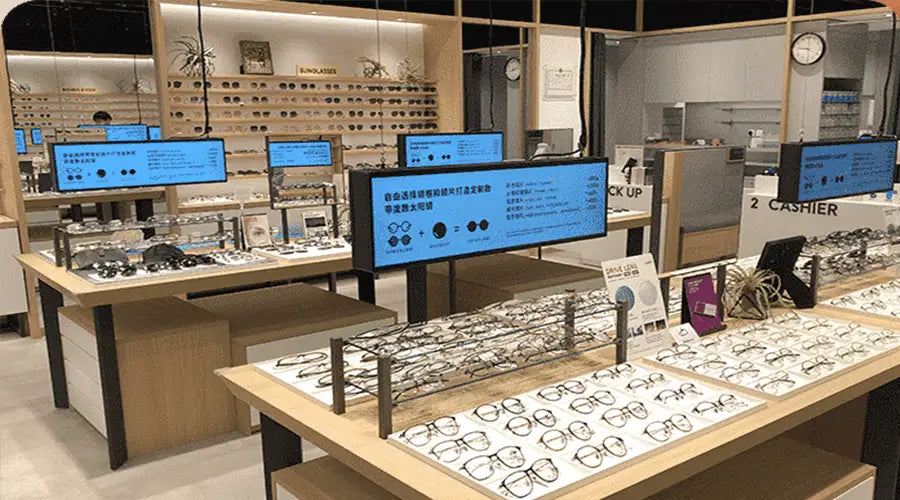
In the rapidly evolving landscape of digital signage and industrial interface design, the standard 16:9 aspect ratio is no longer the only practical solution. As architects, engineers, and retail designers push for better use of narrow and unconventional spaces, the bar LCD stretched display has become an increasingly important display category.
Often described as an ultra-wide display, shelf-edge screen, or stretched LCD module, this format transforms static surfaces into active communication areas. From subway headers to retail shelf edges, bar LCD displays help convert previously underused space into visible, functional digital real estate.
This shift is more than a design preference. It reflects a broader change in commercial and industrial display strategy. The guide below brings together engineering fundamentals, integration concerns, and procurement considerations for projects using bar LCD stretched technology.
1. Defining the Bar LCD Stretched Display
A bar LCD stretched display is a liquid crystal display with an aspect ratio much wider than a traditional monitor or television. While conventional consumer displays often use 16:9, stretched bar LCD products may use formats such as 16:3, 32:9, or highly customized elongated ratios.
These displays are designed for long, narrow installation zones where a standard screen would not fit physically or would look visually intrusive. Despite the unusual shape, they retain the core advantages of industrial TFT-LCD technology, including high resolution, fast response behavior, and strong color performance in a compact strip-style form factor.
The Attention Economy Driver
Demand for this format is strongly influenced by attention efficiency. In busy public spaces, large conventional displays can become part of the visual background. A narrow high-brightness screen placed directly at the point of decision, such as on a retail shelf or transport header, often attracts more immediate attention because it is positioned closer to the moment of action.
2. Engineering Mechanics: Native vs. Cut Panels
Understanding how the display is manufactured is important when evaluating cost structure, customization flexibility, and long-term durability. Two main production methods are commonly used.
Method A: Native Photomask Manufacturing
In native photomask manufacturing, the glass substrate is produced in stretched format from the beginning. The internal TFT layout and circuit design are built specifically for the bar-shaped panel geometry.
- Advantages: Strong structural consistency, reduced risk associated with cutting processes, and better economics for very high production volume.
- Limitations: High tooling cost and less flexibility in available sizes.
Method B: Panel Cutting Technology
This is one of the most common approaches for varied B2B requirements. A standard industrial panel is cut to a custom height using precision processes, then reworked and sealed for the new format.
The Science of LCD Cutting
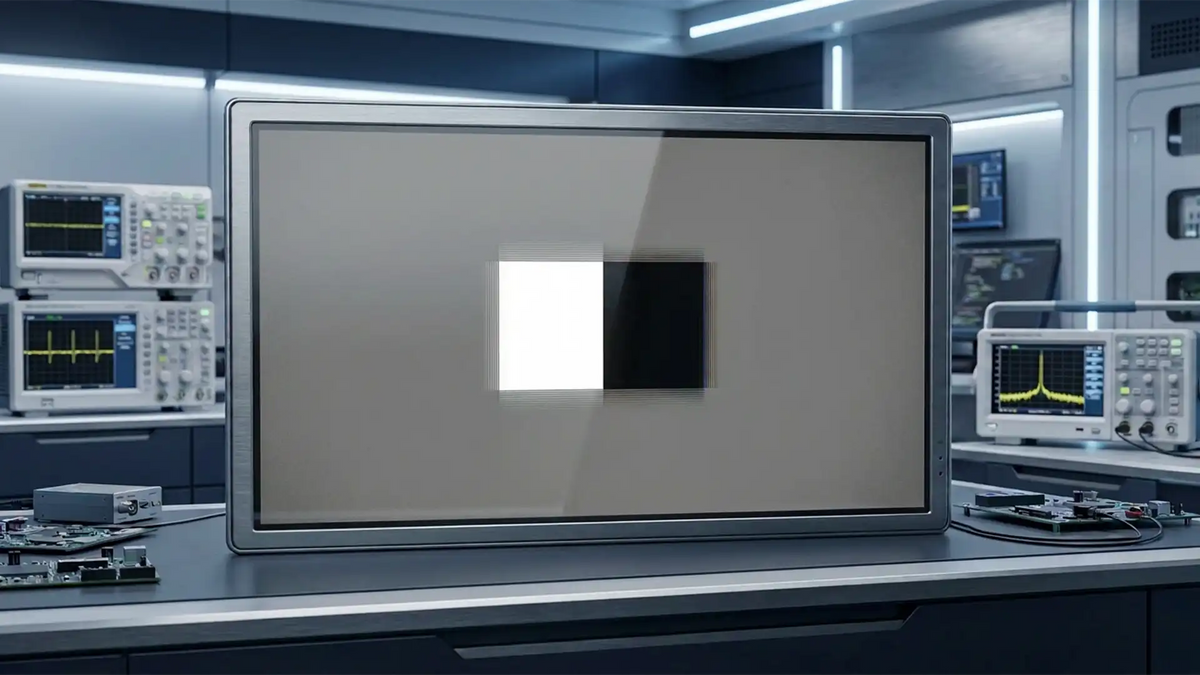
Cutting an LCD requires high precision. The process involves reshaping the glass, protecting the liquid crystal structure, and redesigning the supporting electronics to drive the remaining active area correctly. High-quality suppliers use reliable sealing methods to reduce moisture ingress risk and maintain long-term panel stability.
- Advantages: Greater flexibility, easier customization, and lower minimum order thresholds in many cases.
- Limitations: Performance and longevity depend heavily on supplier capability and sealing quality.

3. Critical Technical Specifications for Buyers
When reviewing a bar LCD datasheet, some specifications matter more than they would in consumer-grade displays because the deployment conditions are often more demanding.
| Specification | Importance for Bar LCD Displays |
|---|---|
| Brightness | These displays are often used in bright retail or public environments, so higher brightness is frequently necessary for readability. |
| Operating Temperature | Industrial and transport applications may expose the panel to wider environmental variation than standard indoor consumer settings. |
| Viewing Angle | Wide-angle technologies such as IPS are especially important because bar displays are often viewed from side positions or from above and below. |
| Interface Protocols | Compatibility with controller boards and media systems is critical because stretched resolutions are non-standard. |
| Surface Treatment | Anti-glare treatment can significantly improve readability under strong commercial lighting. |
4. Strategic Industry Applications
The long-format structure of bar LCD stretched displays makes them suitable for a wide range of vertical markets.
Smart Retail and Shelf Edge Technology
This is one of the most established applications. By replacing static shelf labels with elongated LCD strips, retailers can update product information dynamically, display promotional video, and combine pricing with brand content in a single narrow visual zone.
Public Transportation
Inside trains, buses, and airport spaces, available display zones are often narrow and linear. Bar LCD displays are well suited for route progress, next-stop information, wayfinding, and advertising headers where a standard display would not integrate cleanly.
Industrial HMI and Automation
In machine control and automation, operators may need a long timeline, process strip, or equipment overview without a tall display interrupting the workspace. A wide, shallow interface can improve usability and preserve line of sight.
Gaming and Casino
Gaming and casino environments use stretched displays in interface zones such as button decks and top-box areas, where unusual aspect ratios support branded animations, changing labels, and visually distinctive UI layouts.

5. Content Management and Software Configuration
Hardware alone is not enough. One of the most common challenges in stretched display projects is adapting content workflows to non-standard resolutions and layouts.
Resolution Management and EDID
Many bar LCD displays use unusual native pixel formats. If standard 16:9 content is pushed directly to the screen without adaptation, the result may appear stretched, compressed, or improperly framed. A compatible media player or controller should be configured for the display’s exact native resolution and timing.
Zoning and Split-Screen
Because stretched screens offer significant horizontal space, they are often most effective when divided into multiple content zones. A single panel can show branding, information, weather, pricing, or ticker-style content simultaneously across separate segments.
6. Installation, Thermal Management and Cabling
Installing a bar LCD display involves different constraints from mounting a standard television or monitor, especially in enclosed or narrow installations.
Heat Dissipation
High-brightness backlight systems can generate significant heat. In compact enclosures, poor airflow may affect both electronics and panel stability over time. Mechanical design should include appropriate passive or active thermal management based on brightness level and operating environment.
Mounting Standards
Some larger models use standard VESA mounting, while narrower shelf-edge products may rely on side brackets, custom frames, magnetic systems, or embedded fixture designs. Mechanical drawings should always be reviewed before enclosure fabrication.

7. Procurement Guide: Customization and MOQ
For B2B buyers, supply-chain understanding is as important as technical specification review. Size availability, lead time, MOQ, and integration support can all affect project success.
Standard vs. Custom Sizes
Some cut sizes are more common in the market and can usually be sourced more quickly. Fully custom dimensions may be available, but they often involve higher setup cost, longer lead time, and minimum quantity requirements depending on the supplier and project structure.
Buyer checklist: Before ordering, request the full mechanical drawing and confirm active area, outer dimension, bezel width, mounting structure, interface orientation, and power requirements. These details can affect enclosure fit and installation planning significantly.
Touch Screen Options
Many bar LCD displays can be paired with PCAP touch glass for interactive use. In these cases, it is important to verify that the touch solution is properly tuned for the unusual aspect ratio and active area so that edge response and coordinate mapping remain accurate.
8. Frequently Asked Questions
Can I use a standard PC to drive a bar LCD display?
Yes, in many cases. The key requirement is support for the panel’s native resolution and timing. Systems that allow custom resolution output are generally more flexible for stretched display applications.
What is the expected lifespan of a stretched LCD?
Lifespan depends on backlight design, brightness level, usage hours, and thermal conditions. Industrial-grade products are usually designed for much longer duty cycles than ordinary consumer screens.
Is a cut panel fragile?
Not necessarily. A properly processed and sealed cut panel can be robust when integrated with an appropriate frame, enclosure, and protective surface structure. Reliability depends heavily on manufacturing quality.
Do you provide the controller board?
Many suppliers provide a complete kit that includes the display, controller board, and required cables. Exact package contents vary by model and project requirement.


Leave a comment
This site is protected by hCaptcha and the hCaptcha Privacy Policy and Terms of Service apply.