
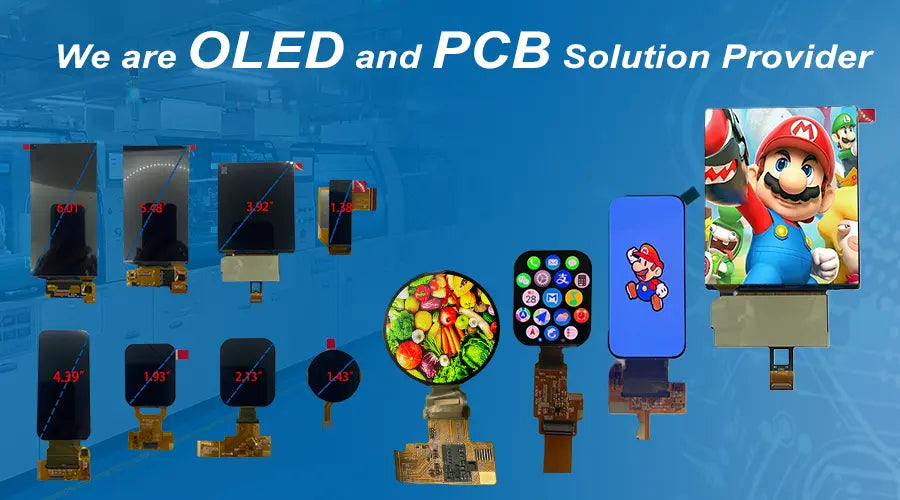
Introduction
OLED, short for Organic Light Emitting Diode, is one of the most important display technologies in current use. Instead of relying on a separate backlight, it uses organic materials that emit light directly when current passes through them. This makes it possible to build thinner displays with strong contrast, vivid color, and better black performance than conventional LCD structures.
OLED is now used across televisions, monitors, laptops, smartphones, wearable devices, and commercial display systems. This article explains what OLED means, how it works, the main OLED types, its strengths and limitations, how it compares with IPS, and where the technology is heading.
What Does OLED Mean?
OLED stands for Organic Light Emitting Diode. The term refers to a display structure in which each pixel generates its own light through organic emissive layers. Because there is no backlight, OLED displays can produce true black by turning individual pixels off completely. That is one of the main reasons they are known for strong contrast and a more immersive image.
OLED is also a broad category. It includes different implementations such as AMOLED and PMOLED. AMOLED is more common in high-resolution products like smartphones and larger portable devices, while PMOLED is more often used in smaller and simpler display modules.

What Does OLED Stand For?
OLED stands for Organic Light Emitting Diode. The word "organic" refers to the carbon-based materials used in the light-emitting layers. When voltage is applied, these materials emit light directly. Since the light comes from the pixel itself, OLED displays do not need the backlight structure required by LCD panels.
Understanding the term is useful when comparing OLED with LCD, IPS, LED-backlit displays, and newer variants such as AMOLED or Micro-OLED.
How Does OLED Work?
Each OLED pixel contains organic materials placed between electrodes. When current flows through the structure, electrons and holes recombine in the emissive layer and release energy in the form of light. Because this happens at the pixel level, brightness and color can be controlled with high precision.
A typical OLED structure includes a substrate, anode, cathode, and multiple organic functional layers. Since each pixel is self-emissive, the display can shut off selected pixels completely. This is what allows OLED panels to produce deep black levels and high perceived contrast.

Types of OLED Displays
AMOLED vs PMOLED
AMOLED uses a thin-film transistor backplane to control each pixel individually. That makes it suitable for higher resolution, smoother motion, and more complex user interfaces. PMOLED is simpler and is generally used in small displays where resolution and refresh demands are lower.
Flexible and Foldable OLEDs
Flexible OLEDs use plastic or other bendable substrates instead of rigid glass. This allows curved, foldable, and other non-traditional form factors. The same basic technology is behind foldable phones and some rollable display concepts.
Transparent OLED
Transparent OLED panels allow part of the background to remain visible through the display. They are mainly used in specialized commercial and automotive applications rather than mainstream consumer devices.
OLED Monitors and TVs
OLED monitors and televisions are popular for their contrast, color performance, and fast response. They are widely used in gaming, high-end home entertainment, and professional visual work where image quality matters.
Advantages of OLED Displays
- Strong contrast: Individual pixels can turn off completely, producing true black.
- Vivid color: OLED panels can deliver rich and visually striking color performance.
- Wide viewing angles: Image quality usually remains stable from different directions.
- Thin structure: No backlight is required, which helps reduce thickness.
- Good dark-scene efficiency: Power use can be lower when more of the image is dark.
- Fast response: OLED is well suited to motion-heavy content and interactive displays.
Disadvantages / Limitations
- Manufacturing cost is often higher than standard LCD.
- Static content can contribute to burn-in or uneven aging over time.
- Blue emissive materials generally age faster than red and green.
- OLED materials are sensitive to moisture and oxygen, so encapsulation is critical.
OLED vs IPS Displays
IPS is a type of LCD known for solid color performance and wide viewing angles. OLED, however, has several clear advantages in image contrast, black level, panel thickness, and response speed because it is self-emissive rather than backlit.
- True black instead of backlight-limited black
- Thinner display construction
- Faster response characteristics
- Lower power use in darker image conditions
For many premium devices, OLED provides a more visually impressive result than IPS. Even so, IPS still remains practical in products where cost, brightness consistency, or long-term static content behavior are more important.

Applications of OLED Displays
Televisions
OLED TVs are known for deep black levels, high contrast, and strong visual depth, which makes them popular in premium home entertainment.
Monitors and Laptops
OLED monitors and laptops are used in gaming, content creation, and other work that benefits from strong contrast and fast response. Some product discussions also mention possible OLED adoption in future high-end laptop lines.
Smartphones and Tablets
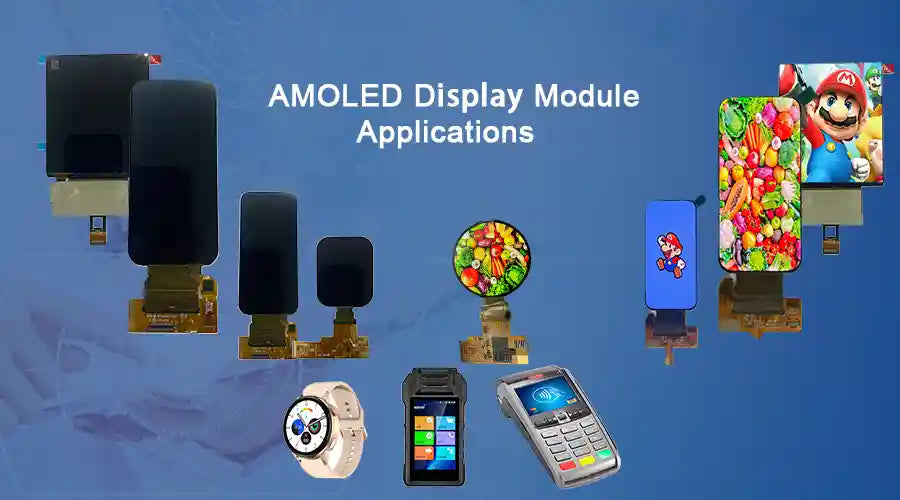
AMOLED is widely used in smartphones because it supports thin designs, vivid image quality, and efficient dark-mode performance.
Wearables
Smartwatches and other compact wearable products often use OLED because it works well in small sizes and can deliver bright, high-contrast visuals.
Advertising and Commercial Displays
Flexible and transparent OLED panels are used in premium signage, display showcases, and other specialized commercial applications.
Automotive Displays
OLED is also used in dashboards, instrument clusters, and infotainment systems where wide viewing angle and strong contrast are useful.

Future Trends and Industry Insights
OLED development continues to move toward flexible structures, foldable products, micro-OLED systems, higher refresh rates, and better efficiency. As manufacturing improves and cost pressure eases, the technology is likely to appear in a wider range of consumer, industrial, and commercial products.
Frequently Asked Questions
What does OLED mean?
OLED means Organic Light Emitting Diode. Each pixel generates its own light.
How does OLED work?
Current passes through organic emissive layers, and the pixel produces light directly.
What is the advantage of OLED over IPS?
OLED typically offers stronger contrast, true black, faster response, and a thinner display structure.
Is MacBook M4 OLED display?
That depends on the exact product model and release version. If you want, I can help rewrite this FAQ item more safely so it does not make a model-specific claim.
What is an OLED TV display?
It is a television display that uses self-emissive OLED pixels to produce light, which allows deep black and strong contrast.
Can OLED displays be customized?
Yes. Depending on the supplier and technology type, OLED displays can be customized in size, shape, structure, and application-specific features.
Conclusion
OLED displays have become one of the most important display technologies because they combine deep black levels, strong contrast, fast response, and thin panel design. From TVs and monitors to phones, wearables, and commercial systems, OLED continues to expand into more product categories and more specialized applications.


댓글 남기기
이 사이트는 hCaptcha에 의해 보호되며, hCaptcha의 개인 정보 보호 정책 과 서비스 약관 이 적용됩니다.