
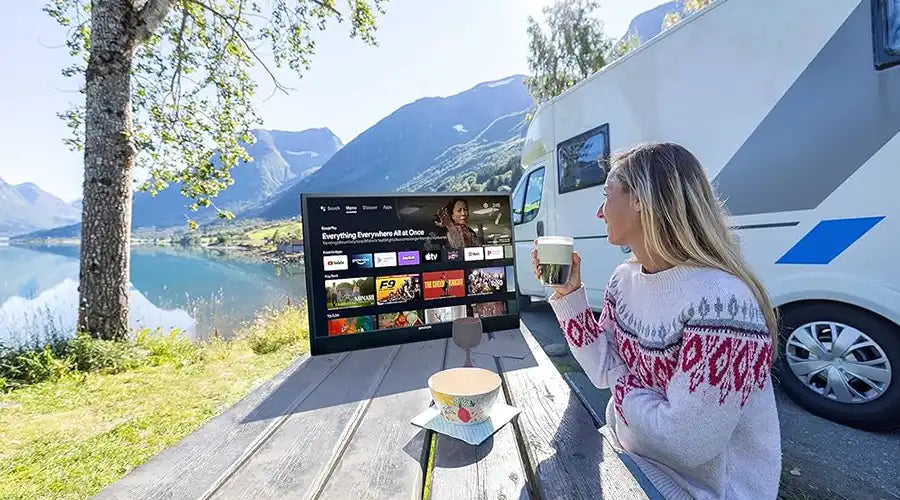
In 2026, the line between devices is blurring, but when it comes to personal entertainment and productivity, the choice often comes down to two contenders: the Portable TV and the Portable Monitor.
While they may look similar—especially in the popular 14 to 20-inch size range—they serve very different purposes. Are you looking for a "plug-and-play" entertainment center, or just a second screen for your laptop? Making the wrong choice can lead to frustration and extra costs.
1. What Is a Portable TV?
A Portable TV (often called a portable television or compact TV) is a standalone entertainment device. Unlike a monitor, it is designed to work independently without needing to be connected to a computer or game console.
In 2026, modern Portable TVs have evolved significantly. They typically feature:
- Built-in Operating Systems: Android TV, Google TV, or proprietary smart systems.
- Integrated Audio: High-quality speakers designed for media consumption.
- Power Independence: Built-in rechargeable batteries for cord-free viewing.
- Tuners: Digital tuners (ATSC/DVB) to catch local broadcast channels over the air.
2. What Is a Portable Monitor?
A portable monitor (also known as a mobile monitor or external display) is essentially a screen panel. It is a passive device.
Its primary function is to extend the display of another device. It usually lacks an operating system, has very weak (or no) speakers, and often requires a constant power connection or draws power from the connected laptop via USB-C.

3. Portable TV vs Portable Monitor: Key Differences
This is the most critical part of your decision. While they look alike, their internal hardware is vastly different.
| Feature | Portable TV | Portable Monitor |
|---|---|---|
| Built-in OS | Yes (Smart TV System) | No |
| Speakers | Yes (Louder, clearer) | Usually No (or very weak) |
| Remote Control | Yes | No |
| HDMI / USB | Yes | Yes |
| Battery Option | Yes (Standard) | Limited (Rare) |
| Standalone Use | Yes (Watch instantly) | No (Needs a laptop/phone) |
4. Which One Is Better for Home Use?
For home scenarios like the kitchen, bedroom, or a rented apartment, the Portable TV is generally the superior choice for the average user.
Why? Because of the "Plug and Play" factor. If you want to watch a cooking show in the kitchen, a Portable TV connects to Wi-Fi and streams Netflix or YouTube immediately. A portable monitor would require you to bring your laptop into the kitchen, connect cables, and risk damaging your computer near the sink just to get a picture.
5. Which One Is Better for Travel & Outdoor Use?
When it comes to camping, RV trips, or emergency kits, the portable TV for travel wins on convenience and reliability.
- Battery Life: Portable TVs are engineered with batteries meant to drive the screen and audio for hours.
- No Extra Gear: For an outdoor portable TV setup, you don't want to carry a laptop, a monitor, and a Bluetooth speaker. You just want one device that works.
- Reception: In areas without Wi-Fi, a Portable TV with an antenna can still pick up local news and weather, which a monitor cannot do.

6. Size Matters: 14–20 Inch Portable TV vs Monitor
The 14 to 20-inch range is the "sweet spot" for portability. Here is how the experience differs by size:
6.1 14–16 Inch: Daily Portable Viewing
At this size, a 14 inch portable TV is incredibly compact. It fits on a nightstand or a crowded camping table easily. While monitors of this size are common for laptop extension, as a standalone media player, the TV offers better immersion due to integrated sound.
6.2 18–20 Inch: Shared & Family Use
Moving up to a 20 inch portable TV changes the dynamic. This size is large enough for a small family or a group of friends to watch together. A 20-inch monitor, however, is often too large to be a convenient "laptop companion" but lacks the standalone smart features to be a good TV.
7. Cost Comparison in 2026
At first glance, a portable monitor might seem cheaper. However, let's look at the real cost.
To make a portable monitor function like a TV, you need to buy:
- The Monitor ($100 - $200)
- A Streaming Stick (e.g., Roku/Fire TV) ($30 - $50)
- A Bluetooth Speaker (for decent audio) ($40+)
- A Power Bank (to power the stick and screen) ($40+)
The Reality: A "cheap" monitor setup often costs more than a dedicated Portable TV that has all these features built-in.
8. Common Buying Mistakes
Many buyers regret their purchase because they misunderstood the product category. Avoid these errors:
- Buying a Monitor to watch Netflix: You will be frustrated by the lack of a remote control and the terrible audio quality.
- Ignoring Audio: Monitors are not designed to project sound. Portable TVs have acoustic chambers designed for audio output.
- Overlooking Cables: Monitors often require a mess of USB-C and HDMI cables to work. A Portable TV is wireless (on battery) and self-contained.

9. Which One Should You Choose in 2026?
The Verdict
Choose a Portable TV if: You want to watch movies, sports, or news instantly. You want a device for the kitchen, garden, or travel that works without a computer. You value convenience and "all-in-one" design.
Choose a Portable Monitor if: Your primary goal is productivity. You need a second screen for Excel spreadsheets or coding while working from a coffee shop.
10. Frequently Asked Questions (FAQ)
Can I use a portable monitor as a TV?
Do portable TVs require Wi-Fi to work?
What is the best size for a portable TV for camping?
Can I connect a game console to a portable TV?
Final Thoughts & Buyer Tips
In 2026, the Portable TV has re-established itself not just as a retro gadget, but as a smart home essential. Whether you are looking for a 14-inch personal screen or a 20-inch family display, the ability to stream, listen, and watch without external dongles makes the Portable TV the winner for entertainment.

Leave a comment
Este site está protegido pela Política de privacidade da hCaptcha e da hCaptcha e aplicam-se os Termos de serviço das mesmas.