
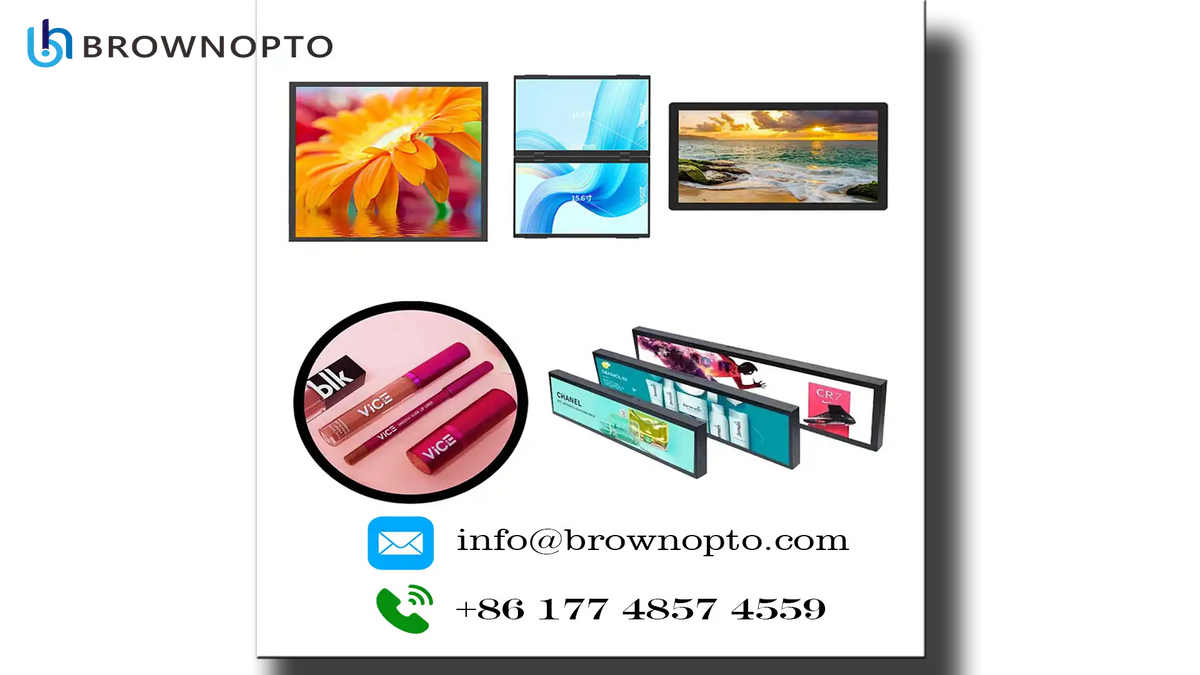
A practical guide to how bar LCD displays are transforming digital signage across retail, transportation, restaurants, public spaces, entertainment venues, and corporate environments.
In today’s fast-paced digital world, businesses and organizations are constantly searching for innovative ways to capture attention and deliver information. Among the latest display technologies, Bar LCD, also known as Stretched LCD, Bar Display, or Digital Signage, has emerged as a versatile and highly effective solution. With its unique ultra-wide aspect ratio and flexible installation options, the Bar LCD is transforming how brands communicate with customers, passengers, and audiences across many industries.
What Is a Bar LCD #
A Bar LCD, also called a Stretched LCD or Bar Display, is a special type of liquid crystal display with an ultra-wide or non-standard aspect ratio. Unlike traditional 16:9 or 4:3 displays, these screens are designed to be much longer in width than in height. This unique format makes them ideal for spaces where conventional displays would not fit or where an elongated display surface is required.
Bar LCDs are widely used in digital signage, where delivering clear and eye-catching information is essential. They support both static and dynamic content, including video, images, animation, and real-time data feeds.

Key Features and Advantages #
- Unique aspect ratio: The ultra-wide format fits narrow or unconventional installation spaces.
- High resolution and brightness: Delivers sharp visuals and strong readability in challenging lighting conditions.
- Flexible installation: Can be installed horizontally, vertically, or integrated into more complex display systems.
- Remote content management: Often works with digital signage platforms for centralized updates and scheduling.
- Commercial durability: Many models are designed for long operating hours and continuous-use environments.
Applications of Bar LCD Across Industries #
1. Retail and Supermarkets
Bar LCDs are changing how retailers communicate with customers. Their elongated format works well for shelf-edge display zones, checkout counters, and product showcase areas. Retailers use them to promote offers, display dynamic pricing, and highlight new arrivals, helping create a more engaging shopping experience.

2. Transportation and Smart Mobility
Transportation hubs such as airports, train stations, and bus terminals depend on clear and timely communication. Bar LCDs are used to show schedules, departure times, arrival updates, route information, advertising, and public notices. Their long horizontal format is especially effective in moving passenger environments.

3. Restaurants and Food Services
In food service environments, Bar LCDs can function as modern menu extensions or information strips. Their slim form makes them easy to place above counters, on walls, or within custom fixtures. They can display menu details, promotions, order information, and rotating daily content for quick-service and hospitality settings.

4. Public Spaces and Smart Cities
Hospitals, banks, government buildings, and community facilities use Bar LCDs for wayfinding, queue information, notices, and guidance systems. In smart city applications, they can also be integrated into bus stops, parking systems, and public information points where compact but visible communication is needed.

5. Exhibitions and Entertainment
Museums, galleries, exhibition halls, cinemas, karaoke venues, and gaming spaces use Bar LCDs to deliver schedules, supporting information, promotions, and visual enhancements. Their clean and modern shape allows them to blend naturally into exhibition design and entertainment interiors.

6. Corporate and Office Environments
In offices and corporate environments, Bar LCDs are often used in reception areas, meeting room zones, and internal communication points. They can show welcome content, room schedules, company updates, and event information while reinforcing a more modern workplace image.

Future Trends of Bar LCD Displays #
The future of Bar LCD technology is closely connected to trends such as artificial intelligence, the Internet of Things, and interactive digital systems. Intelligent displays will increasingly support personalized content, sensor-driven communication, and more adaptive user experiences. Important directions include:
- AI-driven content: More targeted messaging and real-time optimization based on data.
- IoT integration: Closer connection with smart infrastructure and operational systems.
- Energy efficiency: Lower-power design and stronger sustainability performance.
- Interactive functions: Combination with touch, sensors, or other immersive technologies.
Frequently Asked Questions #
What is the difference between a Bar LCD and a traditional display?
A Bar LCD uses a stretched or ultra-wide aspect ratio, which makes it more suitable for narrow spaces and elongated display applications where standard 16:9 screens are not ideal.
Can Bar LCDs be used outdoors?
Yes, if the product is designed with the required brightness, weather protection, and installation engineering for outdoor or semi-outdoor use.
How are Bar LCDs controlled?
Most Bar LCD systems can be managed through digital signage software, embedded Android platforms, external media players, or cloud-connected content management systems.
Are Bar LCDs energy-efficient?
Many modern Bar LCDs use energy-saving LED backlighting and optimized power design, making them suitable for extended operating hours.
Conclusion #
Bar LCDs, also known as stretched LCDs or bar displays, are reshaping digital signage with their distinct form factor and broad application flexibility. From retail shelves and restaurant environments to transportation hubs and corporate offices, they create new opportunities for visual communication, branding, and operational messaging.
As the technology continues to evolve, Bar LCDs are likely to play an even greater role in advertising, public information, customer engagement, and smart environment design. For businesses looking to modernize communication in limited or unconventional spaces, Bar LCD technology offers a practical and highly adaptable solution.

댓글 남기기
이 사이트는 hCaptcha에 의해 보호되며, hCaptcha의 개인 정보 보호 정책 과 서비스 약관 이 적용됩니다.