
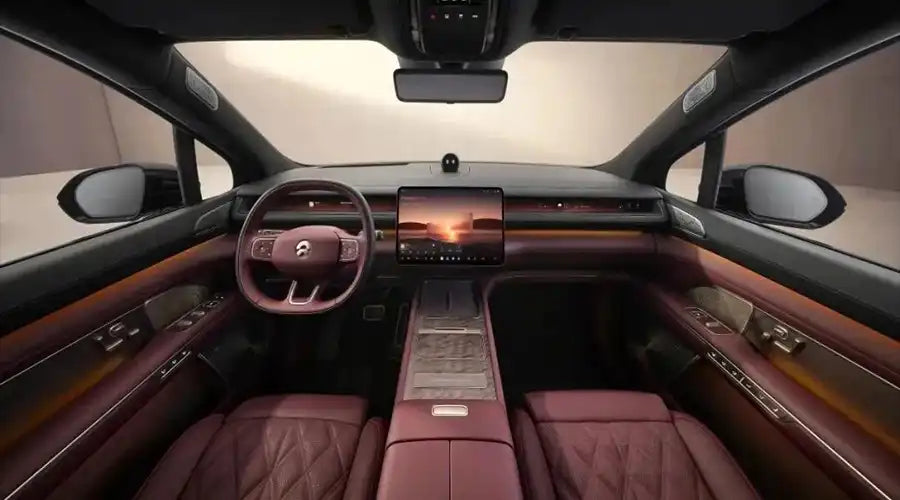
A practical professional guide that explains the “double backlight” misconception, introduces Tandem OLED and optical outcoupling strategies, and provides evaluation templates for smartphone and automotive display projects.
1. Introduction: Why “OLED Double Backlight” Appears #
In recent discussions, especially in vehicle display and outdoor readability topics, the phrase “OLED double backlight” appears frequently. From a display architecture perspective, an OLED Display has no backlight. Each pixel is self-emissive, and its luminance is determined by the efficiency of the organic stack, the drive current density, and the optical outcoupling design. By contrast, LCD brightness comes from a backlight unit that is modulated by the liquid crystal layer and polarizers.
This misunderstanding usually comes from two areas:
- People refer to a dual emission stack as “double backlight,” even though Tandem OLED is not a backlight structure.
- Optical outcoupling technologies such as micro-lens arrays, lower-loss polarizers, or coupling layers are casually described as brightness enhancement similar to backlight boosting.
This guide explains the real technical paths behind OLED brightness and lifetime improvement, with attention to BOE-related directions and practical evaluation needs in smartphone and automotive projects.

2. Core Technology I: Tandem OLED #
2.1 Architecture
Tandem OLED uses two or more emissive units connected in series through charge-generation layers. At the same visible luminance, the current density required per unit area can be reduced, which improves efficiency and lowers heat stress. At the same current level, peak luminance and expected lifetime can both improve. The electrical trade-off is that the drive voltage becomes higher.
2.2 Gains and Trade-Offs
- Brightness and lifetime: Lower current density at the same luminance generally improves lifetime and reduces organic aging pressure.
- Power behavior: Tandem structures can perform better during high-brightness and HDR conditions, though low-brightness efficiency still depends on driver and dimming strategy.
- Thickness and cost: Additional material layers and more complex process control increase manufacturing difficulty and cost sensitivity.
2.3 Key Metrics
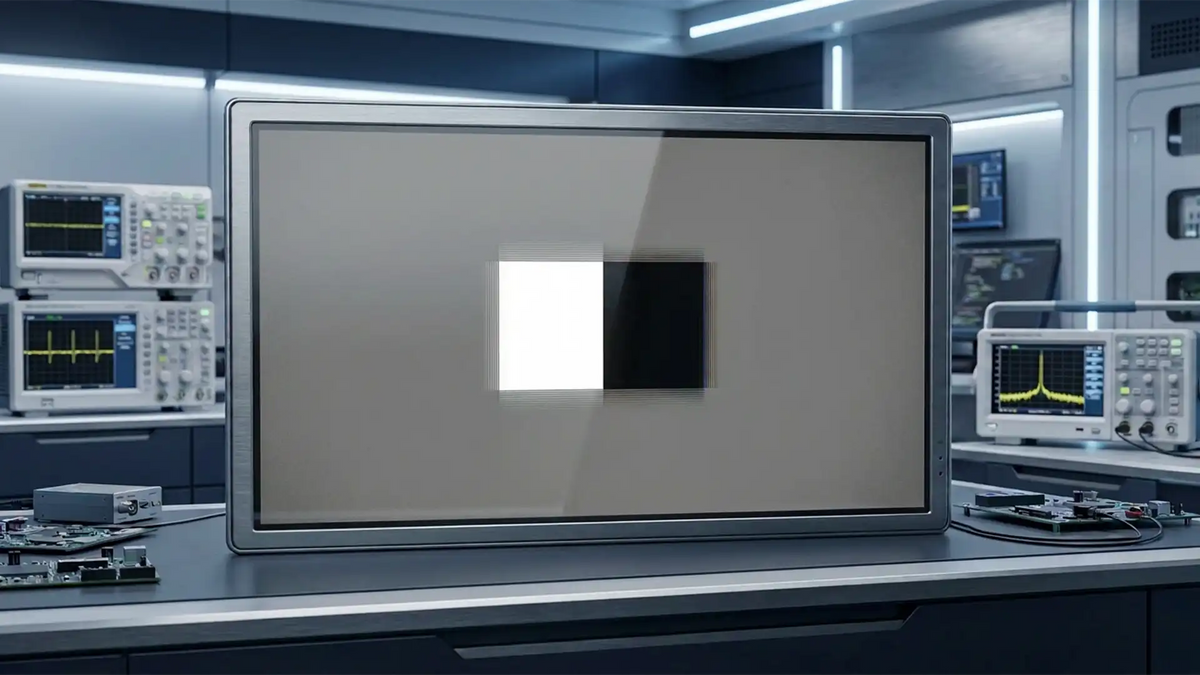
- Peak luminance: Usually measured using small HDR windows such as 3 percent or 10 percent area patterns.
- Full-white sustained luminance: A useful indicator for thermal performance and long-duration usability.
- Lifetime: Should include T95 or T50 tracking at room temperature and elevated temperatures, with chromatic drift monitoring.
- Drive behavior: PWM frequency, low-luminance stability, LTPO refresh control, and compensation cadence all matter in practical use.

3. Core Technology II: Optical Outcoupling and Brightness Enhancers #
3.1 Micro-Lens Arrays and Nano-Structures
Micro-lens arrays reduce waveguiding losses and help more internally generated light leave the OLED stack. This improves external efficiency and can raise luminance or reduce power for the same visual result. Engineers should still evaluate viewing-angle behavior, interaction with touch-grid structures, and long-term mechanical durability.
3.2 Polarizer and Compensation Optimization
Traditional black polarizers absorb useful light and reduce efficiency. Lower-loss polarizer systems and compensation structures can improve usable brightness and outdoor readability. Anti-reflection and anti-glare layers also play an important role in actual field performance.
3.3 High-Index Coupling and Packaging
High-index layers and thin-film encapsulation strategies can reduce interface reflection loss and improve light extraction. These optical decisions need to be coordinated with touch integration, cover-lens thickness, and system-level optical targets.
4. Clarifications and OLED vs LCD #
- OLED has no backlight unit: Tandem OLED is not a “double backlight” architecture.
- Brightness path difference: OLED improves through stack design, drive control, and optical extraction, while LCD improves through backlight power, local dimming, and optical tuning.
- Contrast behavior: OLED offers pixel-level black control, while LCD must balance black level and blooming limitations.
- Aging profile: OLED faces organic aging and image retention concerns, while LCD has different uniformity and halo-related trade-offs.
- Power shape: OLED often performs well in low-average-picture-level content, while LCD can be more favorable in full-white office-style scenes.

5. BOE Status and Application Snapshots #
This section summarizes public-facing technical themes associated with BOE’s OLED direction, especially in relation to brightness, lifetime, and major application categories.
5.1 Smartphones
- Technical direction: Tandem OLED is associated with premium-level brightness and longevity improvements.
- Display behavior focus: High-frequency PWM, LTPO adaptive refresh, and improved outdoor readability are key attention points.
- Important evaluation items: Window peak luminance, full-white sustain, low-brightness grayscale quality, and retention mitigation policy.
5.2 Automotive
- Application needs: High brightness, low reflectance, heat tolerance, curved integration, and long service life are especially important.
- Tandem OLED value: Lower current density at higher brightness helps reduce aging pressure and thermal load.
- System stack considerations: Driver robustness, heat spreaders, low-reflection cover glass, and environmental usability all matter.
5.3 Process and Ecosystem
- Encapsulation and touch: Thin-film encapsulation and on-cell touch integration are commonly highlighted for compact design.
- Calibration and compensation: Pixel compensation and white-balance maintenance are important for long-term consistency.
5.4 Showcase and Comparison Strategy
For engineering comparisons, it is useful to collect objective data from single-stack versus tandem samples and, where available, configurations with and without MLA. This allows real project teams to build evidence-based selection criteria instead of relying on broad marketing claims.
6. Design and Selection: Evaluation Checklists and Parameter Templates #
This section provides practical checklists and templates that can be directly adapted into product requirement documents and engineering validation plans.
6.1 Universal Evaluation Checklist
| Dimension | Metric or Definition | Guideline Target | Test Notes |
|---|---|---|---|
| Display luminance | Peak luminance using 3 percent or 10 percent windows | Phone and automotive programs should set explicit window targets | Log HDR trigger conditions, ambient light, and timing |
| Full-white sustain | 100 percent APL at fixed durations | Used as a hard thermal and use-case indicator | Record steady-state temperature and time curve |
| Power | Scene-based energy use | Benchmark against competitors or LCD baseline | Use a fixed content library and consistent setup |
| Lifetime | T95 or T50 with chromatic drift tracking | Program-specific requirement | Use accelerated test models and document assumptions |
| Uniformity | Luminance and chromatic consistency | Should meet project mura and ΔE limits | Use multi-point capture and image records |
| Dimming and comfort | PWM frequency and mixed-dimming behavior | High-frequency PWM with stable low-brightness control preferred | Use scope measurement and flicker analysis |
| Touch | Sensitivity and rejection performance | Should match wet, glove, or vehicle needs | Verify application-specific handling |
| Optics | Reflectance and glare | Low visible reflectance is preferred | Coordinate with AR and AG stack tuning |
| Reliability | Environmental and durability results | Must match phone or automotive qualification standard | Define functional and cosmetic failure criteria clearly |
| Cost and yield | Single stack vs tandem vs MLA trade-off | Total cost should align with warranty and target performance | Include risk and field-failure analysis |
6.2 Smartphone Project Parameter Template
| Parameter | Target or Range | Notes |
|---|---|---|
| Panel type | Flexible OLED, tandem preferred | State MLA presence if applicable |
| Size, resolution, and PPI | Defined by program class | Should match premium readability requirements |
| Refresh behavior | Adaptive refresh with LTPO if required | Power optimization target should be included |
| Peak luminance | Define HDR window target | Use repeatable HDR test patterns |
| Full-white sustain | Should meet real thermal use-case targets | Must be logged at steady state |
| Dimming strategy | High-frequency PWM with mixed control | Low-brightness comfort matters |
| Color accuracy | Project-specific color target | Include multi-white-point calibration if needed |
| Touch | High report rate with wet or glove options as needed | Stylus support if required |
| Cover and optics | UTG or strengthened cover solution | Reflectance target should be specified |
| Power | Benchmark target vs competitor products | Use scripted workloads |
| Reliability | Drop, bend, and thermal test compliance | Use internal and external standards |
| Retention risk | Compensation required | Include pixel-shift and aging data review |
| Supply | Mass-production and lead-time readiness | Dual-source planning if possible |
6.3 Automotive Project Parameter Template
| Parameter | Target or Range | Notes |
|---|---|---|
| Panel type | Rigid or flexible OLED, tandem required in many high-load cases | Define curvature radius if applicable |
| Size and resolution | Defined by IVI, cluster, or passenger-display architecture | Should align with viewing distance |
| Peak and full-white luminance | Must support sunlight readability goals | Window and full-white targets should both be specified |
| Reflectance and haze | Low reflectance with controlled haze | Needs AR and AG tuning |
| Operating and storage temperature | Must match parked-car and in-use requirements | High-temperature validation is critical |
| Lifetime | Program-specific T95 requirement | Use high-temperature extrapolation carefully |
| Dimming and comfort | Stable low-brightness operation with high-frequency PWM | Night-driving comfort matters |
| Interference handling | Wet touch, glove use, and EMC compliance | Should follow vehicle qualification needs |
| Reliability | Environmental and chemical resistance | Include full OEM test suite |
| System power | Should fit platform thermal and electrical budget | Compare to LCD alternative where needed |
| Warranty | Retention policy and compensation cadence | Must be defined early |
6.4 Recommended Validation Flow
- Freeze the key requirements, including tandem, MLA, and optical targets.
- Collect samples from at least two vendors, including reference single-stack options if possible.
- Run core lab tests covering luminance, power, color, PWM, reflectance, and touch behavior.
- Execute environmental and lifetime validation, including heat, humidity, UV, and thermal shock where needed.
- Complete system-level integration checks covering thermal design, EMC, mechanics, and UX review.
- Use full-white sustain and lifetime metrics as hard decision gates, not just marketing peak brightness claims.
7. Reliability and Health Topics #
7.1 Retention and Compensation
Because OLED uses organic emissive materials, differential aging can appear when static interface elements remain visible for long periods. Common engineering countermeasures include pixel shifting, compensation algorithms, and UI policies that reduce persistent stress on fixed bright elements.
7.2 Automotive and Environmental Robustness
- High temperature and humidity: Accelerated validation should include optical and touch checks after environmental exposure.
- UV resistance: Cover-lens and encapsulation choices both affect long-term outdoor stability.
- Mechanical stress: Curved modules must be evaluated for vibration, shock, and thermal expansion interactions.
7.3 Dimming and Visual Comfort
High-frequency PWM combined with mixed dimming can reduce visible flicker while preserving color quality and grayscale stability. In many products, lower brightness regions benefit from DC or mixed control instead of PWM-only behavior.

8. Supply Chain and 2025 Outlook #
- Materials: Blue-emitter efficiency and stability remain central improvement areas, while tandem and optical structures progress in parallel.
- Manufacturing: Yield optimization for tandem OLED remains important, especially in premium mobile and automotive-grade programs.
- Mid-size opportunity: OLED and MiniLED are likely to coexist in tablets and laptops depending on HDR, battery life, and cost balance.
- Pricing and adoption: Premium smartphones and automotive applications are likely to benefit first, with cost pressure easing over time as volume scales.
9. FAQ #
Q1: Does “OLED double backlight” actually exist?
No. OLED is self-emissive and has no backlight unit. The phrase usually refers incorrectly to Tandem OLED or to optical outcoupling structures such as MLA.
Q2: Can Tandem OLED and MLA be combined?
Yes. Tandem OLED improves efficiency and lifetime by reducing current density per luminance level, while MLA improves light extraction. Together they can improve brightness and usable efficiency, though cost and integration complexity also increase.
Q3: OLED or MiniLED LCD for automotive?
The answer depends on project priorities. OLED is attractive for contrast, curved integration, and design flexibility, while MiniLED LCD can remain competitive for sustained bright full-white content and cost-sensitive programs.
Q4: How should retention risk be quantified for warranty planning?
Use a standardized static-UI aging script, log luminance and color drift over time, and define acceptance windows along with compensation policy and recalibration strategy.
Q5: Is a higher PWM frequency always better?
Higher PWM frequency often helps reduce visible flicker, but low-brightness linearity, color stability, and driver efficiency must also be considered. Mixed dimming is often a better practical solution than PWM alone.
Q6: What evaluation items are most often overlooked?
Two common misses are failing to log thermal steady-state behavior during full-white sustain testing and failing to perform realistic reflectance and glare evaluation in real usage scenes such as vehicles or bright outdoor environments.


댓글 남기기
이 사이트는 hCaptcha에 의해 보호되며, hCaptcha의 개인 정보 보호 정책 과 서비스 약관 이 적용됩니다.